Key takeaways
- TRIUMPH-1 is the first large phase 3 trial of retatrutide in people with obesity and without diabetes. Over 80 weeks, the 12 mg dose lowered body weight by an average of 25.0%, compared with 3.9% on placebo.
- The effects went well beyond the scale. On 12 mg, fasting insulin fell about 59%, hsCRP (a marker of inflammation) about 64%, triglycerides 41% and systolic blood pressure about 12 mmHg.
- Knee osteoarthritis pain and sleep apnea both improved in dedicated sub-groups of the trial. Most of this is probably explained by the weight loss itself, not a separate drug effect on joints or airways.
- A phase 2 study showed large drops in liver fat, with most people on the higher doses returning to normal liver fat levels. Biopsy-based liver outcomes are not yet available.
- Retatrutide is investigational and not FDA approved. It cannot legally be compounded. We do not have heart attack, stroke or long-term safety outcome data yet, and side effects increased with dose.
Why this trial matters
I have written before about how GLP-1 medicines may affect longevity beyond weight loss. Retatrutide is the next step in that story. It is a single weekly injection that activates three hormone receptors: GLP-1, GIP and glucagon (Sanyal et al., Nature Medicine 2024). Semaglutide works on one of these, and tirzepatide works on two. The glucagon piece is the new part. It is thought to raise energy expenditure and to push the liver to burn more fat, which is one reason researchers have been watching liver and metabolic results closely.
TRIUMPH-1 was published in the New England Journal of Medicine on September 29, 2026. It enrolled 2,339 adults with obesity or overweight who did not have diabetes and randomly assigned them to 4 mg, 9 mg or 12 mg of retatrutide, or placebo, once a week for 80 weeks (Jastreboff et al., NEJM 2026). The average participant was 48 years old, weighed about 113 kg (249 lb) and had a BMI of 40. About 36% had prediabetes (Lilly Medical TRIUMPH-1 tables).
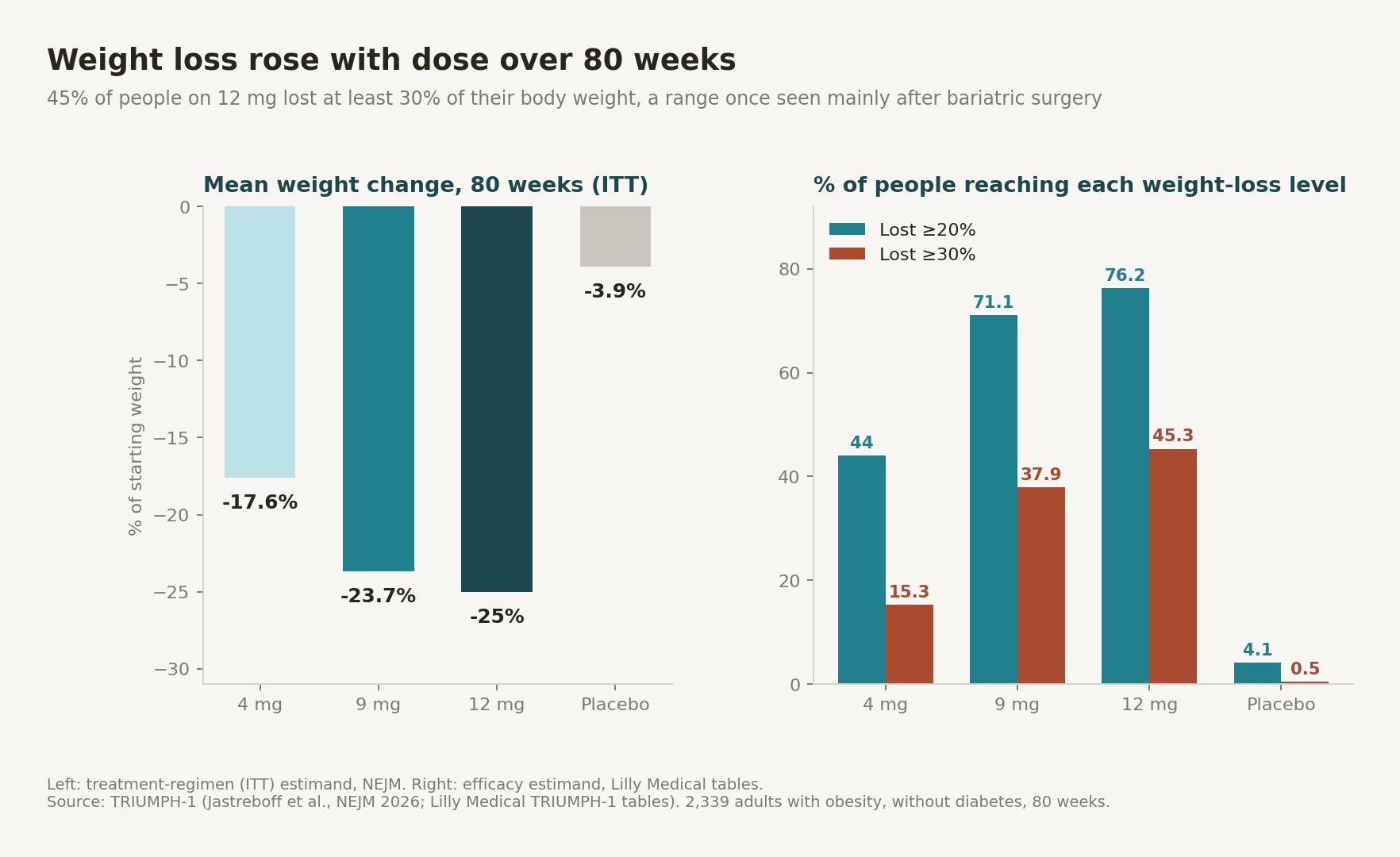
A quick note on the numbers you will see. Trials report two kinds of averages. The “treatment-regimen” result counts everyone who was randomized, including people who stopped the drug. The “efficacy” result shows what happened in people who stayed on treatment. The first is the more conservative and realistic number. I label which one I am using.
Weight loss: the headline result
Across all randomized participants, average weight fell 17.6%, 23.7% and 25.0% on 4, 9 and 12 mg, compared with 3.9% on placebo (NEJM). Among people who stayed on treatment, 12 mg produced a 28.3% loss, and 45.3% of them lost at least 30% of their body weight (Lilly Medical). Lilly reported an average loss of 70.3 lb on 12 mg, and in a smaller 104-week extension of people with a BMI of 35 or higher, weight loss reached 30.3% (Lilly topline release).
Those numbers are striking, but weight loss alone is not the reason I wanted to write about this trial. The more interesting question is what happened to the organs and risk factors that drive disease.
The pleiotropic effects: what else changed
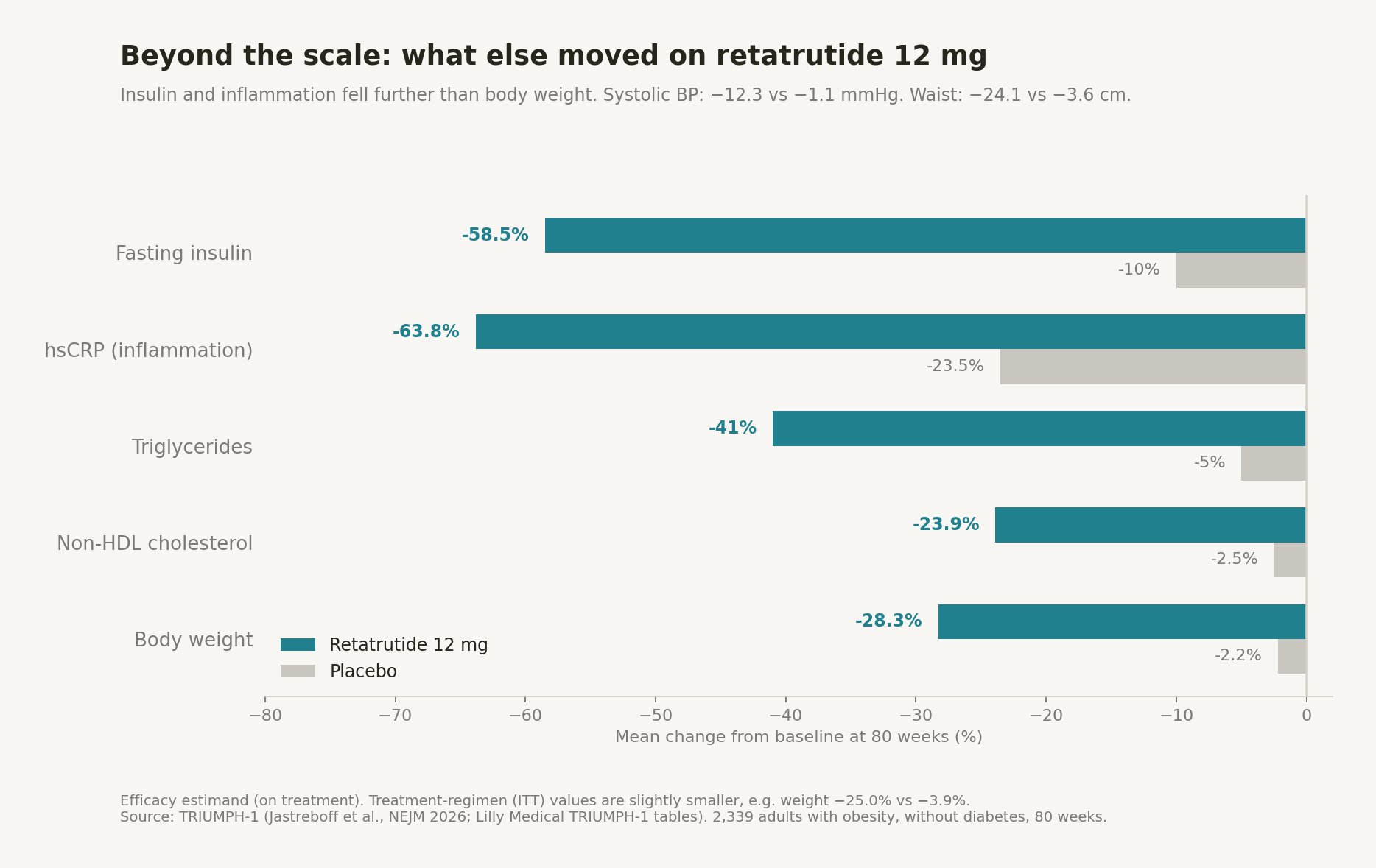
“Pleiotropic” simply means one drug having many effects. In TRIUMPH-1, the 12 mg dose (efficacy estimand) produced these changes compared with placebo (Lilly Medical TRIUMPH-1 tables):
| Measure (80 weeks) | Baseline | Retatrutide 12 mg | Placebo |
|---|---|---|---|
| Waist circumference | 118 cm | −24.1 cm | −3.6 cm |
| Systolic blood pressure | ~127 mmHg | −12.3 mmHg | −1.1 mmHg |
| Triglycerides | ~134 mg/dL | −41.0% | −5.0% |
| Non-HDL cholesterol | ~144 mg/dL | −23.9% | −2.5% |
| Fasting insulin | ~22 µIU/mL | −58.5% | −10.0% |
| hsCRP | ~6.5 mg/L | −63.8% | −23.5% |
| SF-36 physical function | – | +6.5 points | +2.4 points |
Three of these deserve a closer look.
Insulin resistance. A 58% drop in fasting insulin is a large change. High fasting insulin is often the earliest sign of metabolic trouble, years before glucose rises. The conservative treatment-regimen result was still −54.5% versus −11.0% on placebo.
Inflammation. hsCRP is a blood marker of low-grade inflammation that tracks with cardiovascular risk. Placebo also fell (by about 24%), which is a reminder that lifestyle counseling in trials helps too, but the drug effect was much larger.
Lipids. Triglycerides fell about 41% and non-HDL cholesterol about 24%. Non-HDL captures the cholesterol carried in all atherogenic particles. If you want to understand why we often measure ApoB and advanced lipids alongside standard panels, this is a good example: these are the particles that drive plaque.
What these results do not show is whether people had fewer heart attacks, strokes or deaths. Biomarkers are not outcomes. Lilly is running a dedicated cardiovascular and kidney outcomes trial, TRIUMPH-Outcomes (NCT06383390), which is still ongoing (PubMed).
Knees and sleep apnea
TRIUMPH-1 included “basket” sub-studies of people with specific weight-related conditions. In 574 participants with knee osteoarthritis, WOMAC pain scores (a 0–10 scale, with a baseline of about 6) fell by 3.2 to 3.6 points on retatrutide versus 1.9 on placebo. In the treatment-regimen analysis, the differences from placebo ranged from −1.4 to −1.8 points (P<0.001) (NEJM). Lilly described pain reductions of up to 73% (Lilly June 2026 release).
In 243 participants with obstructive sleep apnea, the apnea-hypopnea index (AHI, breathing interruptions per hour) fell by 22.9, 34.3 and 31.7 events per hour on 4, 9 and 12 mg, versus 9.9 on placebo. A companion trial in people with type 2 diabetes showed similar improvements (Grunstein et al., NEJM 2026).
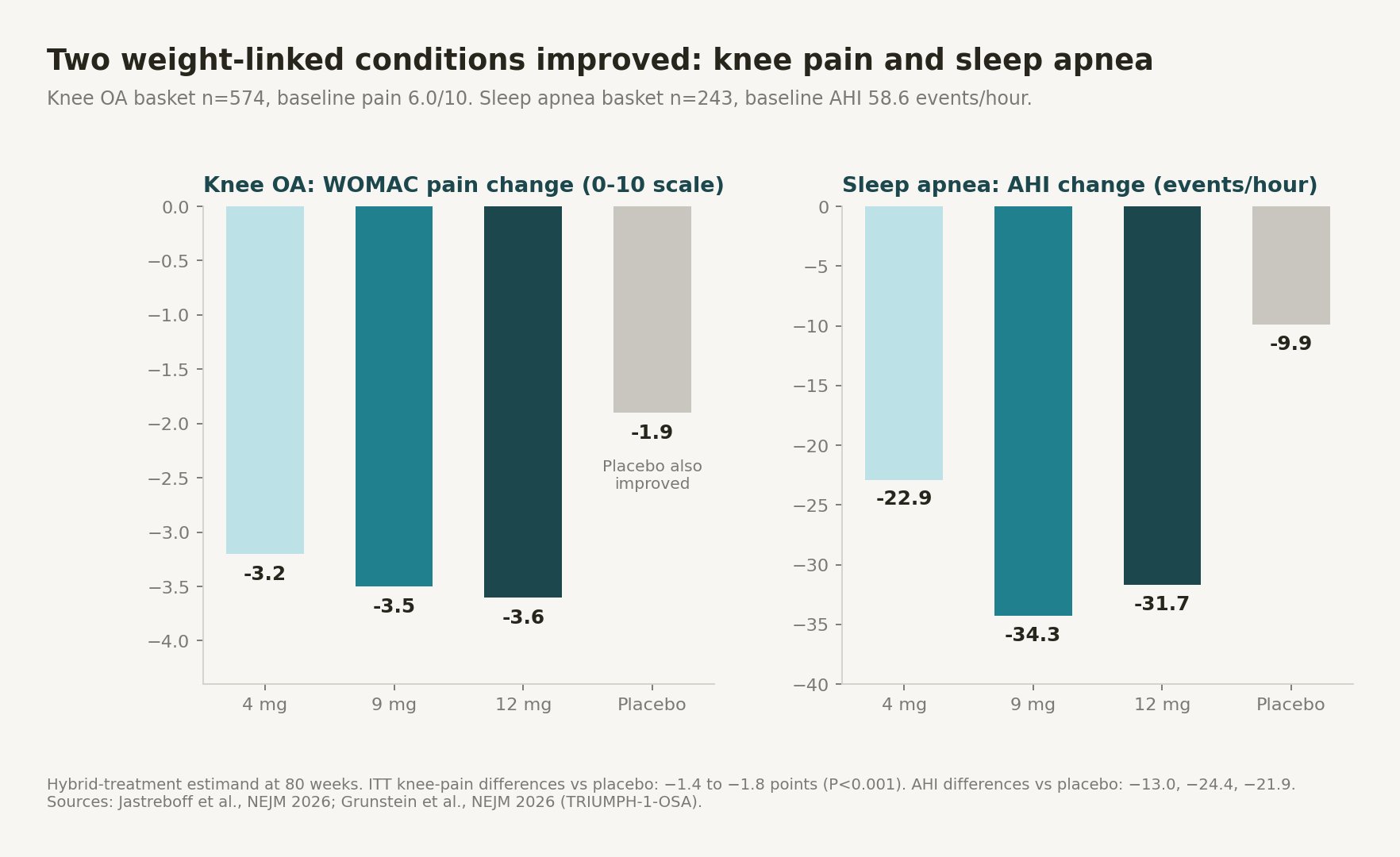
As a PM&R physician who treats a lot of knee arthritis, I find the knee data encouraging, with an important caveat. Losing a quarter of your body weight takes a great deal of load off the knee, and we would expect pain to improve for that reason alone. There is no evidence yet that retatrutide changes cartilage or joint structure. For patients with knee pain, weight loss is one tool alongside strength work and, when appropriate, regenerative knee procedures. Sleep apnea is similar. Less fat around the airway means fewer collapses at night. Good sleep habits and proper apnea treatment still matter.
Fatty liver: the glucagon effect
Liver data come from an earlier phase 2 sub-study, not TRIUMPH-1. In 98 adults with obesity and at least 10% liver fat on MRI, liver fat fell by 51% to 86% across doses at 48 weeks, versus about 5% on placebo. At 24 weeks, 79% of people on 8 mg and 86% on 12 mg had normal liver fat (under 5%), rising to 89% and 93% at 48 weeks (Sanyal et al., Nature Medicine 2024). Visceral fat fell by up to 48%.
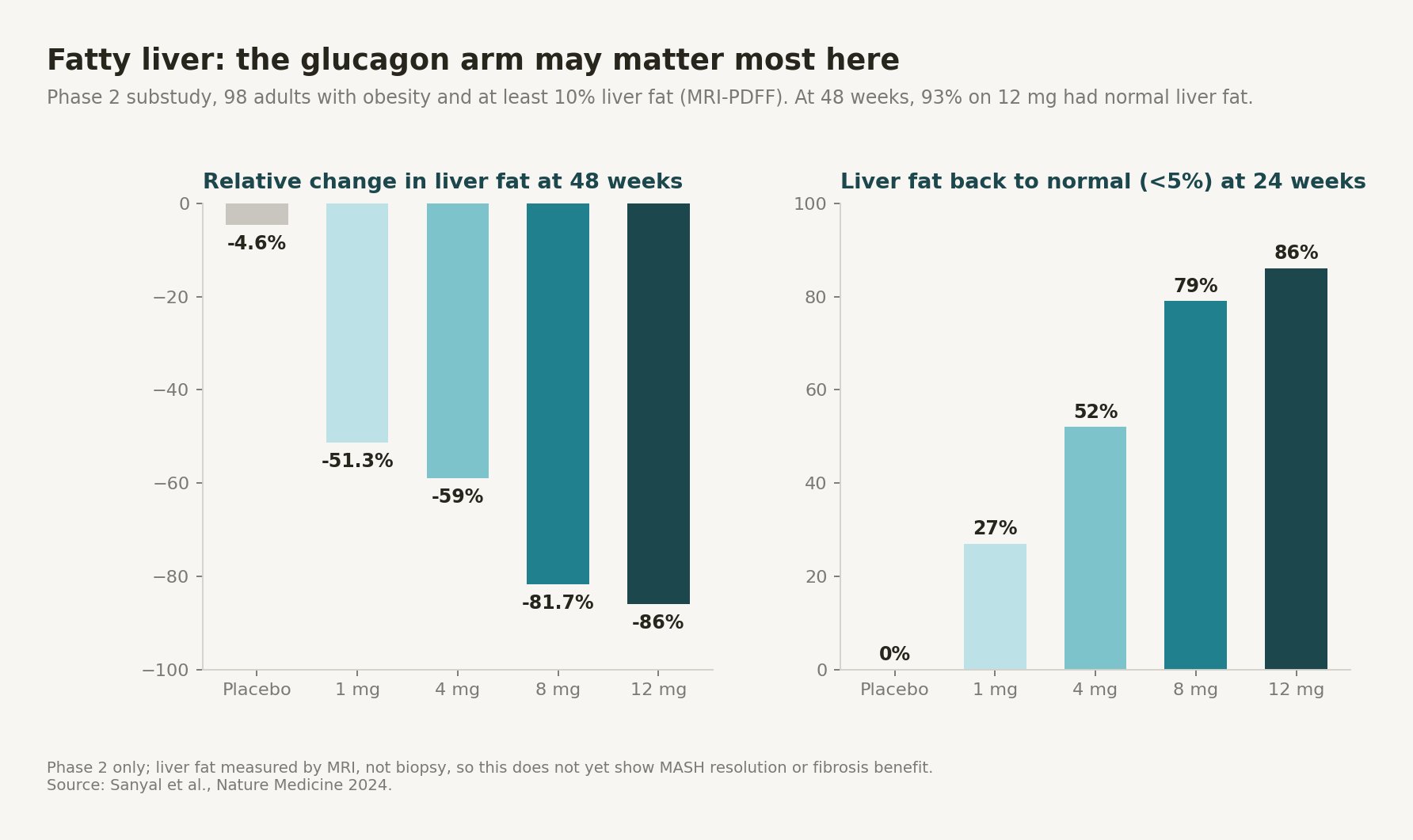
This is one of the most promising signals, but it is early. The study was small, and only a handful of people per group had MRI scans at 48 weeks. Liver fat on MRI is not the same as reversing liver inflammation (MASH) or scarring (fibrosis), which require biopsy-based trials.
Kidneys and body composition
Kidney results are mixed. A phase 2 post hoc analysis found that 8 and 12 mg increased estimated GFR and lowered urine albumin in people with obesity (Diabetes 2024 abstract). But in the TRANSCEND-CKD trial, the primary endpoint, measured GFR, did not differ from placebo, even though estimated GFR rose and albuminuria fell (HCPLive). Kidney benefit is plausible but unproven.
TRIUMPH-1 did not report body composition. In a smaller 36-week DXA sub-study in people with type 2 diabetes, lean mass made up roughly 37–38% of the weight lost on 8 and 12 mg (Diabetes & Metabolism Journal review). With losses this large, protecting muscle with protein and resistance training is not optional. This is one reason I like to track change with DEXA body composition scans rather than the scale alone.
The trade-offs
Side effects increased with dose. On 12 mg versus placebo, nausea occurred in 42.4% versus 14.8%, vomiting in 25.3% versus 4.8% and diarrhea in 32.0% versus 13.5%. Dysesthesia, an unusual skin sensation such as burning or tingling, occurred in 12.5% versus 0.9%. Low blood pressure was reported in 8.8% versus 0.9%, and was more common in people already taking blood pressure medicine. 11.2% stopped 12 mg because of side effects, compared with 4.6% on placebo (Lilly Medical).
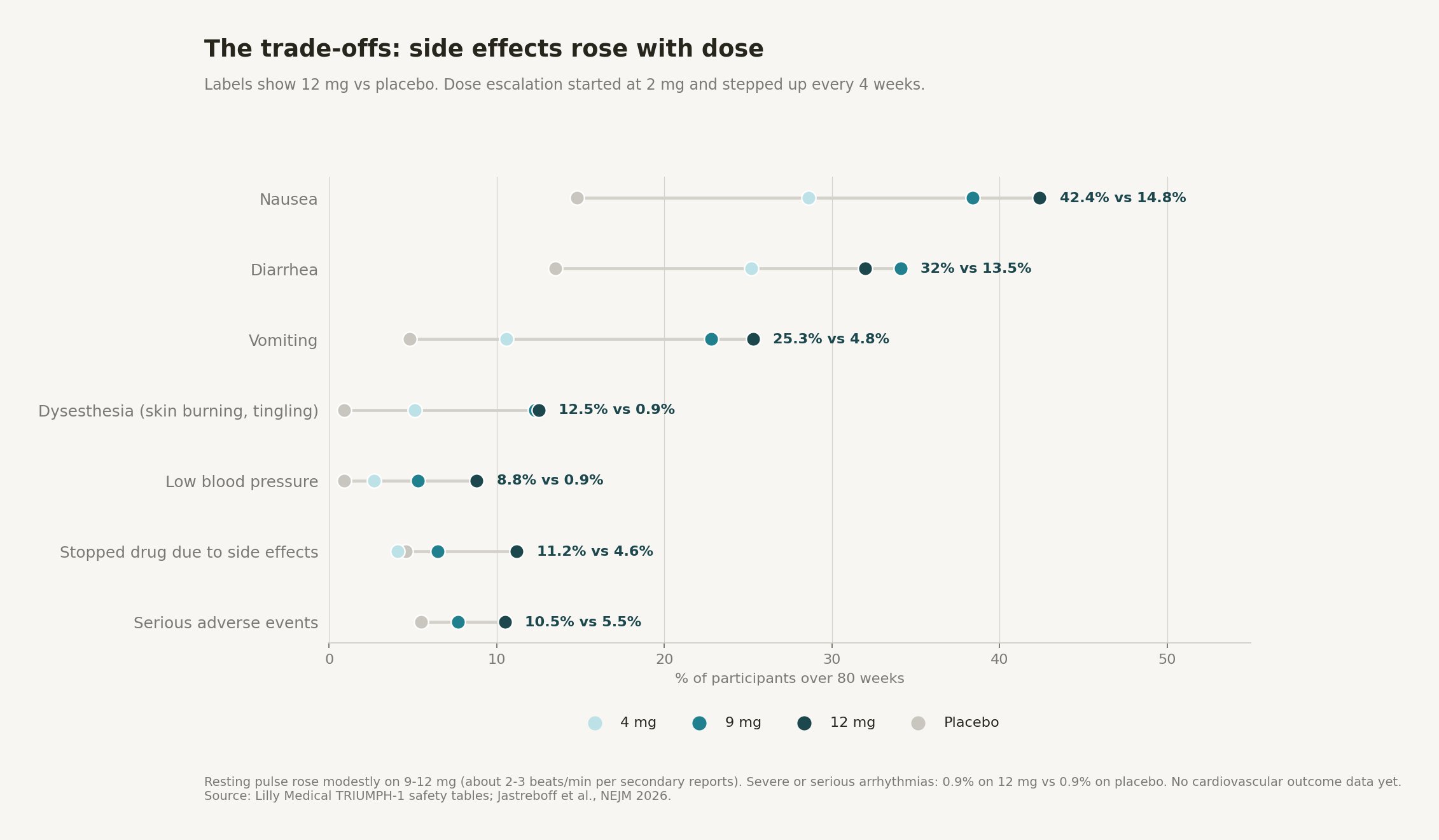
Serious adverse events were 10.5% on 12 mg versus 5.5% on placebo. Rates of pancreatitis, gallbladder events and major cardiovascular events were low and similar across groups, and no medullary thyroid cancers were reported. In the phase 2 trial, heart rate rose in a dose-dependent way, peaking around 24 weeks and then declining (Jastreboff et al., NEJM 2023). An 80-week trial cannot tell us about rare or long-term risks.
What is proven, promising and unknown
| Effect | Evidence grade | Why |
|---|---|---|
| Weight loss | Proven | Large phase 3 randomized trial, 80 weeks, consistent across doses. |
| BP, lipids, insulin, hsCRP | Proven (as biomarkers) | Randomized secondary endpoints. Effect on events is not yet known. |
| Knee OA pain | Proven, likely weight-driven | Randomized sub-study. No data on cartilage or structure. |
| Sleep apnea severity | Proven | Two randomized NEJM sub-studies. Likely weight-driven. |
| Liver fat | Promising | Phase 2, 98 people, MRI only. No biopsy outcomes. |
| Kidney protection | Uncertain | Biomarker signals, but primary measured-GFR endpoint not met. |
| Heart attack, stroke, death | Unknown | TRIUMPH-Outcomes ongoing. |
| Muscle preservation | Unknown in TRIUMPH-1 | No DXA in TRIUMPH-1; smaller studies suggest a meaningful lean loss. |
| Long-term safety | Unknown | Longest controlled data about 2 years. |
Can you get retatrutide now?
Not legally, outside a clinical trial. Lilly states that retatrutide is available only to participants in its clinical trials (Lilly) and plans to submit it for FDA review in the first quarter of 2027 (BioSpace). The FDA says retatrutide cannot be used in compounding under federal law and has issued warning letters to companies selling it as a “research” product (FDA). Products sold online have no guarantee of identity, purity or dose. I covered the broader peptide rules in my post on the FDA’s peptide compounding review.
Pravida Health does not prescribe or supply retatrutide. Pravida Health and I have no financial relationship with Eli Lilly, and this post is not sponsored. What we can do now is measure the same things this trial measured, including fasting insulin, lipids, inflammation, liver health and body composition, through advanced biomarker testing, and discuss approved options when they fit.
Want to know where your metabolic risk stands?
You can’t get retatrutide yet, but you can measure the same risk markers this trial tracked.
- Fasting insulin, ApoB, triglycerides and hsCRP
- Liver health markers and DEXA body composition
- A clear plan built on FDA-approved, evidence-based options
Pravida Health, 1801 Peachtree St NE, Suite 150, Atlanta, GA 30309. Call 404-900-7371, email info@pravida.com or request an appointment.
Frequently asked questions
What is retatrutide?
Retatrutide is an investigational once-weekly injection made by Eli Lilly that activates three hormone receptors: GLP-1, GIP and glucagon. It is not FDA approved, and Lilly plans to submit it for review in early 2027.
How much weight did people lose in TRIUMPH-1?
Over 80 weeks, average weight loss across all randomized participants was 17.6%, 23.7% and 25.0% on 4, 9 and 12 mg, compared with 3.9% on placebo. People who stayed on 12 mg lost an average of 28.3%.
What are the pleiotropic effects of retatrutide?
Beyond weight loss, 12 mg lowered fasting insulin by about 59%, hsCRP by about 64%, triglycerides by 41%, non-HDL cholesterol by 24% and systolic blood pressure by about 12 mmHg. It also improved knee osteoarthritis pain and sleep apnea, and an earlier study showed large reductions in liver fat.
What are the side effects of retatrutide?
The most common were nausea, diarrhea, constipation and vomiting, which increased with dose. Skin sensations called dysesthesia and low blood pressure were also more common than on placebo. About 11% of people stopped 12 mg because of side effects, versus about 5% on placebo.
Is it safe to buy retatrutide online?
No. Retatrutide is only legally available in clinical trials. The FDA says it cannot be compounded under federal law and has warned sellers marketing it for research use. Online products may not contain what the label says.
Sources
- Jastreboff AM, et al. Retatrutide for the treatment of obesity (TRIUMPH-1). New England Journal of Medicine, 2026. NEJM.
- Eli Lilly Medical Information. Results of retatrutide from TRIUMPH-1 in participants with obesity or overweight without type 2 diabetes. Lilly Medical.
- Eli Lilly. TRIUMPH-1 topline results press release. Lilly.
- Eli Lilly. Retatrutide knee osteoarthritis and sleep apnea results, June 2026. Lilly Investors.
- Grunstein RR, et al. Retatrutide for obstructive sleep apnea. New England Journal of Medicine, 2026. NEJM.
- Sanyal AJ, et al. Triple hormone receptor agonist retatrutide for metabolic dysfunction-associated steatotic liver disease. Nature Medicine, 2024. Nature Medicine.
- Jastreboff AM, et al. Triple-hormone-receptor agonist retatrutide for obesity: a phase 2 trial. New England Journal of Medicine, 2023. NEJM.
- Effect of retatrutide on kidney parameters. Diabetes, 2024;73(Suppl 1):754-P. Diabetes Journals.
- Retatrutide lowers albuminuria and glomerular pressure in obesity and CKD (TRANSCEND-CKD). HCPLive.
- TRIUMPH-Outcomes trial design (NCT06383390). PubMed.
- Body composition changes with incretin-based therapies. Diabetes & Metabolism Journal. e-DMJ.
- U.S. Food and Drug Administration. FDA’s concerns with unapproved GLP-1 drugs used for weight loss. FDA.
- FDA warning letter to a retatrutide “research peptide” seller. FDA.
- Eli Lilly Medical Information. Is retatrutide available in the consumer market? Lilly Medical.
- Lilly and FDA retatrutide biologic dispute as submission nears. BioSpace.