
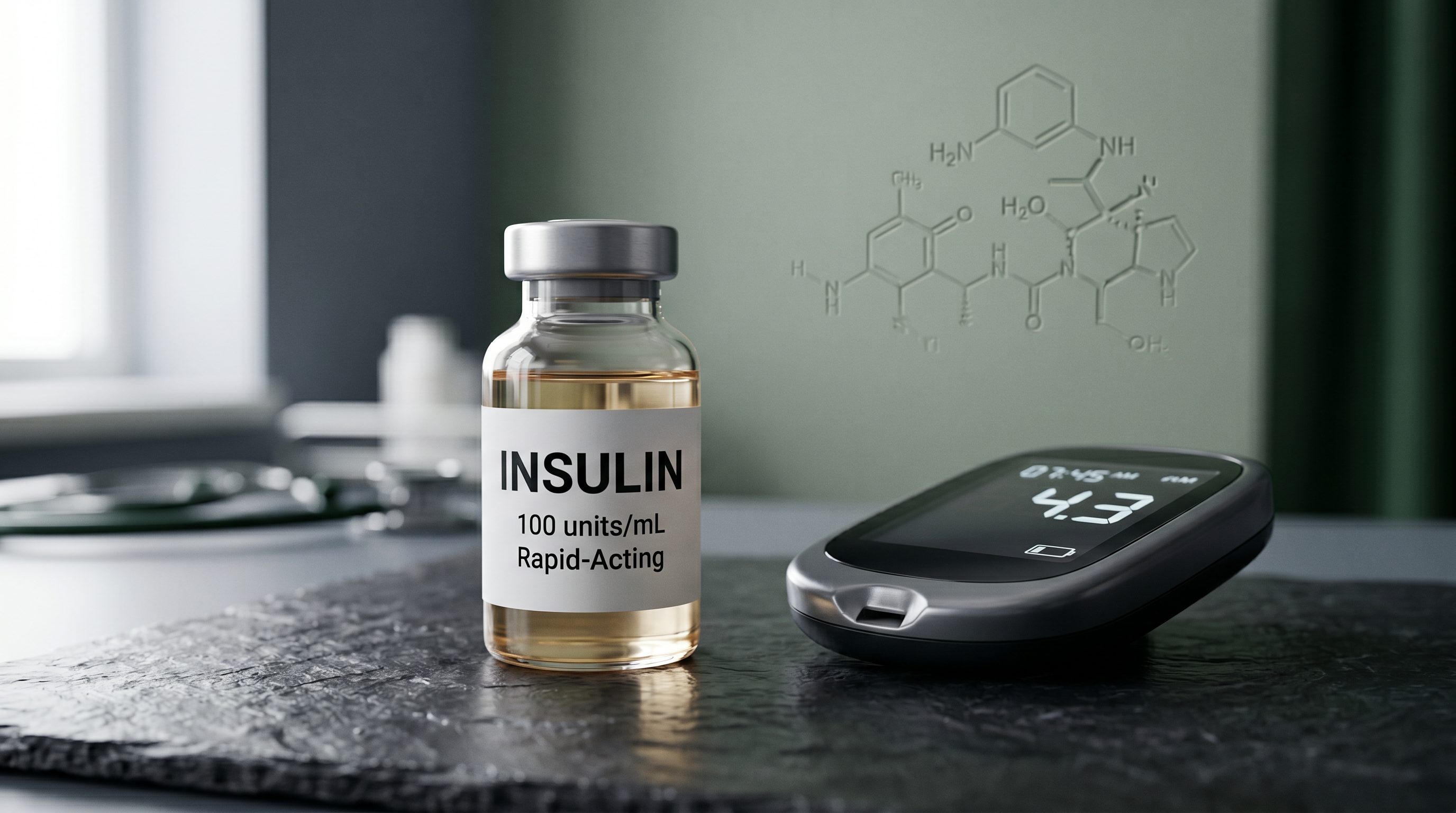
Your fasting glucose is 93 mg/dL. Normal. Your A1c is 5.2%. Excellent. Your doctor looks at those numbers and says you have no blood sugar problems.
What your doctor didn't measure: how much insulin your pancreas is secreting to maintain those “normal” glucose levels. Because here is the metabolic truth that standard care systematically ignores: glucose normalcy maintained by pathological insulin levels is not metabolic health. It is insulin resistance with glucose still in the normal range — a state that may persist for a decade before your fasting glucose rises enough to trigger concern.
Fasting insulin is the test that catches insulin resistance early — often 10 to 15 years before the standard diagnostic criteria for type 2 diabetes are met. It costs approximately $35 as a standalone test. It is almost never included in standard preventive labs. And if you're a 40-year-old executive who doesn't know your fasting insulin level, you have a significant gap in your metabolic picture.
What Is Fasting Insulin and What Does It Measure?
Insulin is a hormone secreted by the beta cells of the pancreas in response to rising blood glucose. Its primary job is to shuttle glucose from the bloodstream into cells — particularly muscle, liver, and fat cells. Insulin resistance is the condition in which cells don't respond properly to insulin's signal, requiring the pancreas to secrete progressively more insulin to achieve the same glucose-clearing effect.
Fasting insulin is measured after an overnight fast (typically 8+ hours) and reflects the baseline insulin secretion rate — the amount of insulin required to keep your glucose stable in the absence of dietary carbohydrate. In a metabolically healthy person, this is low — typically 2–5 μIU/mL.
As insulin resistance develops, the pancreas compensates by secreting more insulin. Fasting glucose may remain completely normal for years while fasting insulin rises — because the pancreas is working harder to maintain normal glucose levels. This is the pre-diabetic state that standard glucose testing cannot see. The patient whose labs look pristine on paper may be running their pancreas at twice the metabolic cost required for a genuinely insulin-sensitive person.
HOMA-IR (Homeostatic Model Assessment of Insulin Resistance) is a calculated index derived from fasting glucose and fasting insulin together: HOMA-IR = (fasting insulin μIU/mL × fasting glucose mg/dL) ÷ 405. It provides a more complete picture than either value alone. HOMA-IR below 1.5 is generally considered insulin-sensitive; above 2.0–2.5 suggests meaningful insulin resistance; above 3.0 is significant insulin resistance that warrants structured intervention.
Why It Matters: The Research
Insulin Resistance Precedes Diabetes by 10–15 Years
StatPearls, the clinical reference publication of the NCBI, states directly: “Insulin resistance is thought to precede the development of type 2 diabetes by 10 to 15 years.” During that decade-plus window, the pancreas compensates — fasting glucose looks normal, A1c is unremarkable — but the metabolic damage is accumulating. Endothelial dysfunction progresses. Visceral fat expands. Dyslipidemia worsens. The downstream consequences of hyperinsulinemia are in motion long before any standard lab value crosses a diagnostic threshold.
Fasting insulin is the biomarker that makes that decade of compensation visible. It is the earliest available signal that your metabolic machinery is working harder than it should — and it is the only widely available clinical test that can see this state before glucose becomes abnormal.
Fasting Insulin as a Mortality Predictor
Research links lower fasting insulin levels to significantly better health outcomes across multiple domains. Individuals with fasting insulin levels below 5 μIU/mL show significantly better metabolic health, enhanced insulin sensitivity, and reduced risk of metabolic syndrome and type 2 diabetes. For every 1 μIU/mL increase in fasting insulin above 5 μIU/mL — even within the conventional “normal” range below 25 μIU/mL — the risk of type 2 diabetes rises by 5–7%.
A 2024 study from the Archives of Endocrinology and Metabolism established reference intervals for fasting insulin and HOMA-IR in a population of adults, finding a fasting insulin 95% reference interval of 2.52–13.14 μU/mL — confirming that conventional “normal” thresholds of <25 μIU/mL are far too permissive for optimal metabolic health. A patient whose fasting insulin is 18 μIU/mL will never see a flag on their standard labs. From a functional standpoint, they are at meaningful risk.
Insulin Resistance Is a Root Cause of Multiple Chronic Diseases
A 2025 study in the Journal of Health, Population, and Nutrition analyzed 8,177 participants and found that insulin resistance indices were positively associated with hypertension, heart disease, dyslipidemia, hyperuricemia, and chronic kidney disease — simultaneously. The burden of multiple chronic diseases increased with worsening insulin resistance across all five IR indices studied. This is not a finding limited to diabetic populations. It applies across the full spectrum of insulin resistance severity.
A March 2026 Nature study demonstrated that HOMA-IR prediction models combining fasting glucose, fasting insulin, wearable data (resting heart rate, HRV, step count), and standard metabolic markers achieved an R² of 0.50 for predicting insulin resistance — confirming that the HOMA-IR calculation from fasting insulin and glucose remains the most accessible and validated clinical tool available for routine metabolic assessment.
HOMA-IR as an Early Diabetes Predictor
A 2025 machine learning study in JMIR Medical Informatics developed insulin resistance prediction models in non-diabetic populations. High-risk IR individuals — predicted by HOMA-IR-based models — had a 5.1-fold higher rate of developing diabetes than low-risk individuals over the follow-up period. This confirms that HOMA-IR identifies metabolically at-risk individuals years before clinical disease — and that acting on elevated HOMA-IR is not premature clinical enthusiasm. It is evidence-based prevention.
Optimal vs. Conventional Reference Ranges
Most labs flag fasting insulin as “high” only above 20–25 μIU/mL. But the research literature consistently shows that fasting insulin in the upper quartile of the conventional normal range is associated with meaningfully elevated metabolic risk. The emerging clinical consensus among metabolic medicine practitioners: fasting insulin optimally below 5–7 μIU/mL; HOMA-IR optimally below 1.5. These are functional targets — not diagnostic thresholds for disease, but benchmarks for metabolic excellence. The difference between “not yet diabetic” and “metabolically excellent” is large, and fasting insulin is one of the few tests that can reliably measure where someone stands between those two poles.
Insulin Resistance and the 12 Hallmarks of Aging
Insulin resistance doesn't just cause diabetes. It is a driver — and often an early driver — of nearly every major age-related disease. The pathways are well-established and span virtually every organ system relevant to longevity medicine:
- Cardiovascular disease: Hyperinsulinemia promotes dyslipidemia (elevated triglycerides, small dense LDL, low HDL), hypertension, and endothelial dysfunction — the foundational precursors to atherosclerosis.
- Cognitive decline: The brain is insulin-dependent; insulin resistance reduces cerebral glucose metabolism and is strongly associated with Alzheimer's risk, sometimes called “type 3 diabetes” in the research literature.
- Cancer: Insulin and IGF-1 are potent growth signals; hyperinsulinemia promotes cellular proliferation and has been associated with increased risk across multiple cancer types.
- Inflammation: Visceral fat — driven by and driving insulin resistance — secretes inflammatory cytokines including IL-6, TNF-α, and resistin that accelerate cellular aging across all tissues.
- Sarcopenia: Insulin resistance impairs muscle protein synthesis pathways, accelerating the age-related loss of skeletal muscle mass that determines metabolic resilience and functional longevity.
- Non-alcoholic fatty liver disease: Directly caused by hepatic insulin resistance; NAFLD is now the most common chronic liver disease in the developed world and a recognized driver of systemic metabolic dysfunction.
Insulin resistance intersects with virtually every one of the 12 hallmarks of aging — from mitochondrial dysfunction to chronic inflammation to altered intercellular communication. It is arguably the single most targetable root-cause driver of accelerated aging in the executive demographic, and it is invisible to every standard preventive lab until it is already advanced.
“Glucose normalcy maintained by pathological insulin levels is not metabolic health — it is insulin resistance hiding behind a number that still looks fine.”
The Gap in Standard Care
Standard preventive labs in the U.S. include fasting glucose and often hemoglobin A1c. Neither measures insulin. The justification typically offered: fasting insulin is not needed because fasting glucose and A1c are sufficient surrogates.
This argument collapses under the research. Glucose normality maintained by compensatory hyperinsulinemia is not insulin sensitivity — it is the precise definition of compensated insulin resistance. And the 10-to-15-year window between insulin resistance onset and glucose abnormality is exactly the window when intervention is most effective. By the time fasting glucose rises above 100 mg/dL or A1c crosses 5.7%, a substantial degree of metabolic damage has already accrued. Beta cell function has begun to decline. Visceral fat depots are established. Cardiovascular risk has been elevated for years.
The reason fasting insulin is excluded from standard panels is a combination of historical inertia, cost considerations, and the historical absence of FDA-approved pharmacological treatments specifically indicated for insulin resistance prior to prediabetes. The implicit logic: if there's nothing specific to prescribe, why test for it? But that logic applies poorly to a patient population that can intervene aggressively with lifestyle — the single most effective treatment for insulin resistance — if they know they have it. Knowing your HOMA-IR is 3.4 changes behavior in a way that seeing a fasting glucose of 96 mg/dL simply does not.
How We Use Fasting Insulin at Pravida Health
Fasting insulin and HOMA-IR are included in our comprehensive labwork across all membership tiers. These are not add-ons we order when something looks off. They are standard baseline assessments for every patient, because the information they provide is simply too important to omit from any serious metabolic evaluation.
We interpret fasting insulin not in isolation but as part of a metabolic matrix:
- Fasting insulin and HOMA-IR for insulin resistance status
- Fasting glucose and A1c for glycemic context
- Triglycerides and HDL for the dyslipidemia pattern driven by insulin resistance
- DEXA body composition for visceral fat — the most visible structural consequence of chronic insulin resistance
- CGM data (in Pinnacle membership) for real-time glycemic dynamics and meal-by-meal insulin burden
When a patient presents with a fasting insulin of 14 μIU/mL — technically “normal” by conventional standards, but elevated by functional benchmarks — alongside visceral fat at 145 cm² on DEXA, elevated triglycerides, and an appendicular lean mass-to-BMI ratio in the lower quartile, the clinical picture is unmistakable: significant metabolic dysfunction, preventable, and years ahead of any diagnostic flag on standard labs. That patient needs a different conversation than the one they are currently having with their internist.
The intervention protocol for insulin resistance is primarily lifestyle-based: structured Zone 2 aerobic exercise (the most potent intervention for improving insulin sensitivity at the skeletal muscle level), resistance training (which increases skeletal muscle glucose uptake capacity through GLUT-4 translocation), time-restricted eating or dietary carbohydrate modification calibrated to the individual's metabolic flexibility, sleep optimization (a single night of 4–5 hours of sleep reduces insulin sensitivity by approximately 25% the following morning), and stress management. We also evaluate GLP-1 receptor agonists — now supported by strong evidence for metabolic health benefits extending well beyond weight loss — in appropriate candidates where the pharmacological lever accelerates what lifestyle intervention alone may take years to achieve.
What You Can Do Today
- Ask for a fasting insulin test. Request it alongside your next standard fasting glucose and lipid panel. It costs approximately $35 out of pocket if not covered by insurance. Specify you want “fasting serum insulin” — drawn after an 8+ hour fast. Direct-access labs allow self-ordering without a physician referral if your doctor is not yet routinely including it.
- Calculate your HOMA-IR. Once you have fasting insulin and fasting glucose: (fasting insulin μIU/mL × fasting glucose mg/dL) ÷ 405. Below 1.5 is excellent. 1.5–2.5 suggests early insulin resistance worth addressing. Above 2.5 warrants structured, systematic intervention — not watchful waiting.
- Implement post-meal walking. A 10–20 minute walk after your two largest meals improves insulin sensitivity measurably — supported by multiple CGM studies and metabolic research. It is the lowest-friction intervention available and compounds with consistency.
- Prioritize 7–8 hours of sleep. A single night of 4–5 hours of sleep raises fasting glucose and reduces insulin sensitivity by approximately 25% the following morning. Chronic sleep deprivation is a potent, underappreciated driver of insulin resistance that no dietary or exercise intervention can fully compensate for.
- Add Zone 2 exercise. Three to four hours per week of sustained moderate-intensity aerobic exercise — conversational pace, nasal breathing, roughly 60–70% of max heart rate — is the most consistently documented lifestyle intervention for improving HOMA-IR. Start with 30 minutes, five days per week, and build from there. The metabolic return on this single investment is exceptional.
Frequently Asked Questions
What is a normal fasting insulin level?
The conventional lab reference range is typically below 20–25 μIU/mL. However, for optimal metabolic health, most functional medicine and longevity medicine practitioners target fasting insulin below 5–7 μIU/mL. Research shows that individuals with fasting insulin above 5 μIU/mL — even within “normal” conventional ranges — have meaningfully elevated risk of type 2 diabetes, cardiovascular disease, and metabolic dysfunction. A result that doesn't trigger a lab flag is not the same as a result that reflects metabolic excellence.
What is HOMA-IR and how is it calculated?
HOMA-IR (Homeostatic Model Assessment of Insulin Resistance) is calculated as: (fasting insulin in μIU/mL × fasting glucose in mg/dL) ÷ 405. A score below 1.5 suggests good insulin sensitivity. Scores between 1.5 and 2.5 indicate early insulin resistance worth addressing with lifestyle modification. Scores above 2.5–3.0 indicate significant insulin resistance requiring structured intervention. HOMA-IR is the most widely validated and accessible clinical tool for quantifying insulin resistance outside of research settings.
Can insulin resistance be reversed?
Yes — particularly in earlier stages. Insulin resistance is highly responsive to lifestyle interventions: Zone 2 aerobic exercise, resistance training, dietary modification (especially carbohydrate quality and quantity), sleep optimization, and stress management. Weight loss — particularly visceral fat reduction — dramatically improves insulin sensitivity. In appropriate patients, GLP-1 receptor agonists and metformin are pharmacological tools with documented insulin-sensitizing effects. The earlier the intervention, the greater the reversal possible — which is precisely why identifying it before glucose becomes abnormal is so important.
Why doesn't my doctor order fasting insulin?
Fasting insulin is not included in standard preventive labs in the U.S. primarily due to historical practice patterns, cost considerations, and the absence of FDA-approved medications specifically indicated for insulin resistance prior to prediabetes. The implicit clinical logic: if there is nothing to prescribe for the finding, why screen for it? However, the clinical rationale for including it in comprehensive preventive assessment is strong — particularly for individuals with metabolic risk factors, a family history of type 2 diabetes, or any interest in optimizing their long-term metabolic trajectory.
How does insulin resistance relate to weight gain?
Insulin resistance and visceral fat accumulation are bidirectionally related. Elevated insulin promotes fat storage, particularly in visceral depots. Visceral fat, in turn, releases inflammatory cytokines and free fatty acids that worsen insulin resistance. This creates a self-reinforcing cycle that becomes increasingly difficult to break without targeted intervention. Understanding this bidirectional relationship explains why traditional calorie-focused approaches frequently fail — and why addressing insulin sensitivity directly, through the metabolic matrix, produces more durable results.
Want to Know Your Fasting Insulin and HOMA-IR?
Schedule a consultation at Pravida Health, where fasting insulin and HOMA-IR are standard in our comprehensive metabolic assessment. We'll build a personalized plan around your results.
Book a Consultation View Memberships