Key takeaways
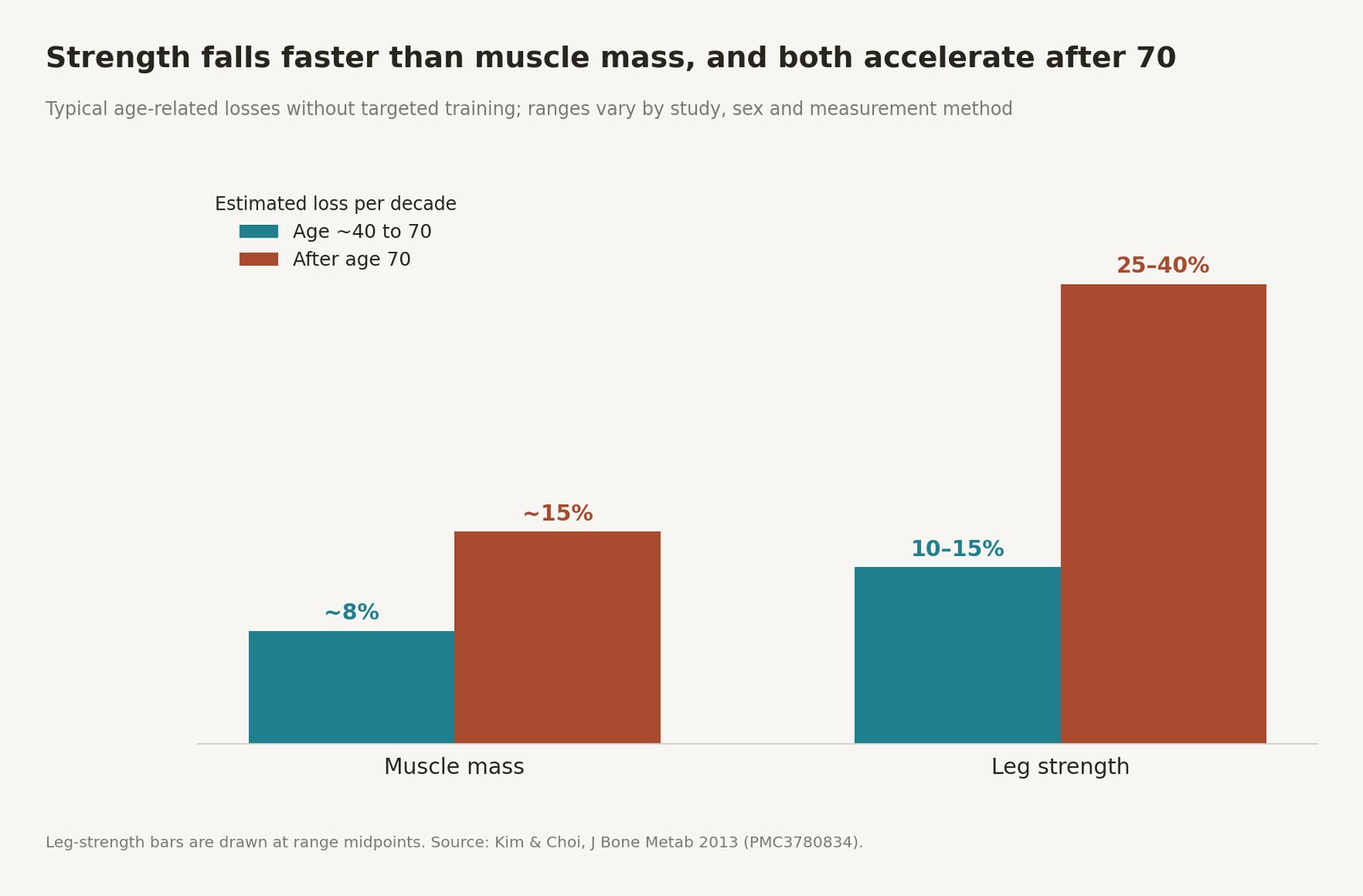
- Aging costs muscle, strength and power every decade. Muscle mass falls about 8% per decade from around age 40, and leg strength falls faster, with steeper losses after 70.
- Heavy lifting and landing can build bone, not just protect it. In the LIFTMOR trials, supervised deadlifts, squats, presses and drop landings increased spine bone density in women and men with low bone mass.
- You don’t have to choose between lifting and cardio. Low cardiorespiratory fitness carried more mortality risk than smoking or diabetes in a 122,000-person cohort, and lifting appears to add the most benefit when it is combined with aerobic training.
- CrossFit’s injury rate is moderate, not extreme, at roughly 3 injuries per 1,000 training hours in pooled studies. Most of that research is in adults in their early 30s, so masters athletes need a coach who scales and a program that periodizes.
- The dose is what matters, not whether it’s CrossFit. The same movements scale from a 45-year-old competitor to a 70-year-old with osteopenia. What changes is load, impact, volume and recovery.
Why a physician is writing about CrossFit for masters athletes
Not many physicians have completed CrossFit’s Level 1 course for physicians (CFMD-L1), and I’m one of them. CrossFit has run private Level 1 courses for physicians and other licensed healthcare professionals to teach its methodology and foundational movements, with the stated aim of bridging fitness and healthcare (CrossFit). I bring that training into a regenerative medicine and longevity practice where I see the other side of the story every week: the 58-year-old with a painful knee who stopped moving, the 67-year-old whose first sign of osteoporosis was a fracture, and the executive who runs every day but can’t get up off the floor without using his hands.
My view, stated plainly: most CrossFit workouts can be scaled so that almost anyone with good coaching and sound technique can take part, provided the program has enough periodization and recovery built in. I also think several of CrossFit’s core movements line up closely with the things that go wrong as we age: a spine that can’t hold neutral under load, muscle loss, a weak posterior chain, and bones that thin for lack of impact. Used well, these movements can support longevity rather than cause the overuse injuries people assume they will.
That’s my opinion. Below is what the evidence supports, where it is thin, and how I would dose it for two groups: masters athletes (roughly 40 to 55) and late masters athletes (55 and older). Pravida Health has no affiliation with CrossFit, LLC, and nothing here is an endorsement of any gym.
The problem we’re training against: muscle, strength and power loss
A progressive loss of muscle mass begins around age 40. It has been estimated at about 8% per decade until age 70 and about 15% per decade after that. Leg strength falls even faster, by 10–15% per decade until 70 and 25–40% per decade afterward (Kim & Choi, J Bone Metab 2013).
Power, which is force multiplied by speed, drops earlier and more steeply than strength, and it is a stronger predictor of physical function in older adults. It is what lets you catch yourself when you trip, climb stairs briskly, or get out of a low chair (Reid & Fielding, Exerc Sport Sci Rev 2012). A 2022 meta-analysis of randomized trials in adults over 65 found that power training, meaning moving a load with intent and speed, improved muscle power more than traditional slow strength training, with a large effect size (SMD 0.99) (Eur Rev Aging Phys Act 2022).
This is why I push back when people say older adults should “just walk.” Walking is valuable, but it doesn’t load muscle heavily, doesn’t train fast force, and doesn’t put much stress on the hip or spine. A well-coached CrossFit class, properly scaled, does all three.
Four movement pillars that map onto aging
1. Neutral spine under load
CrossFit’s coaching starts with midline stabilization: holding a neutral spine while the hips and shoulders do the work. That is the same principle behind the spine-sparing approach I describe in my McGill back-mechanic home plan. The deadlift is the clearest example. Picking a load up from the floor with a braced, neutral back is a skill most adults need every day, whether they are lifting a grandchild, a suitcase or a bag of mulch.
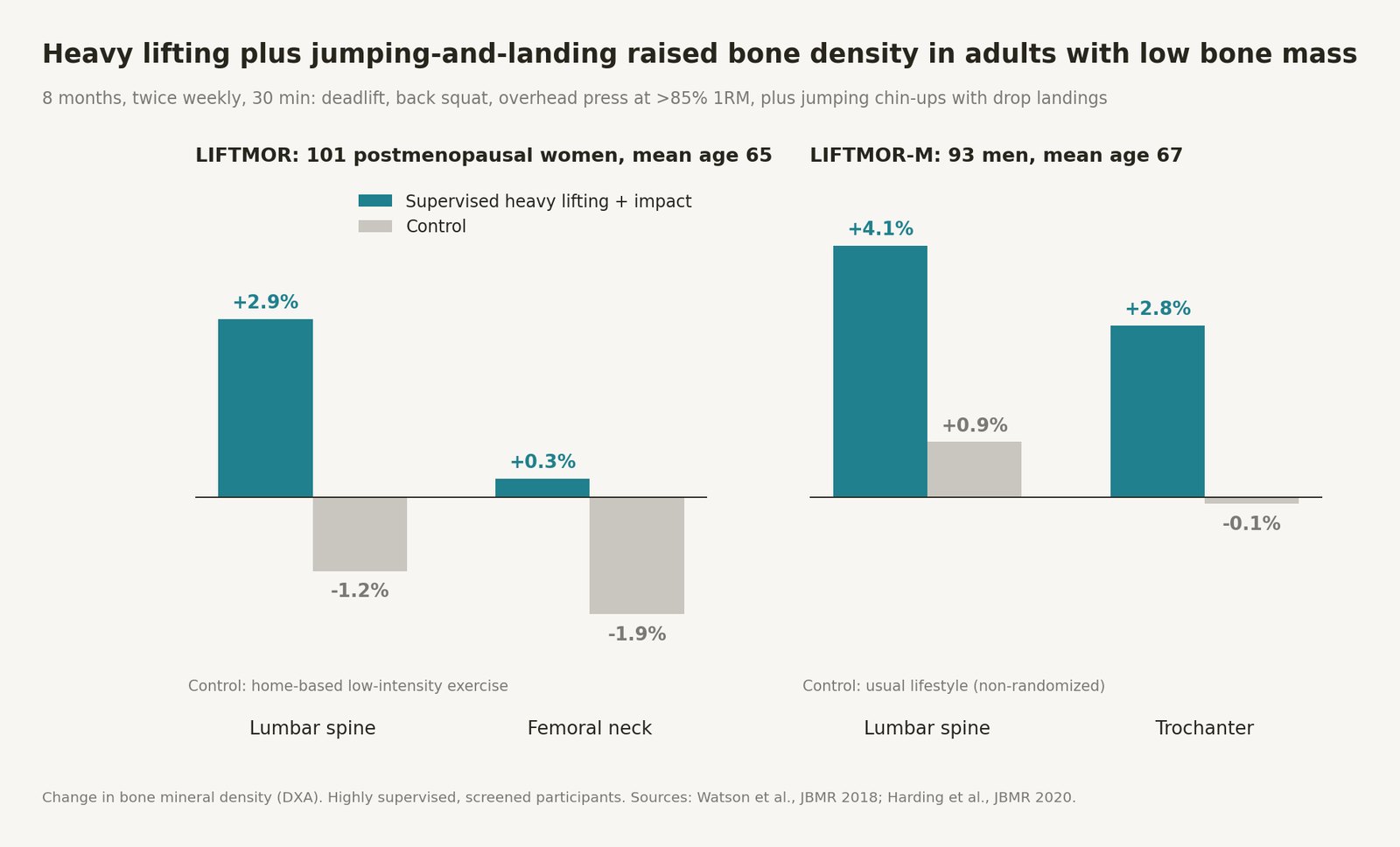
The strongest safety signal comes from bone research rather than CrossFit research. In the LIFTMOR trial, postmenopausal women with low bone mass did supervised deadlifts, back squats and overhead presses for 5 sets of 5 at more than 85% of their one-rep max, twice a week for eight months. There was one adverse event, a minor lower-back spasm, across the group (Watson et al., JBMR 2018). That is a highly supervised, carefully screened population, and it is not permission to max out unsupervised. But it does undercut the idea that heavy lifting with good form is inherently dangerous for older bodies.
2. Heavy lifting to fight sarcopenia
Resistance training is the best-supported non-drug treatment for sarcopenia. A 2026 meta-analysis of randomized trials in older women with sarcopenia found that it improved handgrip strength (SMD 0.43), knee-extension strength (SMD 0.85), gait speed, the Timed Up and Go test, and the 30-second chair stand (Zhou et al., Front Public Health 2026). Those are not gym numbers. They are measures of whether someone can cross a street before the light changes or get off the toilet unassisted.
CrossFit’s strength work (squats, deadlifts, presses, cleans, and loaded carries) covers the major movement patterns in one program. For a late masters athlete, “heavy” is relative. A 60-pound trap-bar deadlift done with good form and slowly progressed can be the right heavy.
3. Aggressive hip extension and the posterior chain
The glutes and hamstrings, which drive hip extension, are among the muscles that decline most visibly with age. In one laboratory study, older adults had 49% lower peak hip-extension torque and 68% lower rate of torque development than young adults (UNESP study). Rate of torque development is the fast force you need to take a quick recovery step when you trip.
This matters because of hip fractures. Most fragility hip-fracture falls happen at around standing height, often involving sideways or backward motion with an inadequate protective response (PMC12877242). Roughly one in six older adults dies within a year after hip-fracture surgery (Scientific Reports 2019).
Kettlebell swings, hip thrusts, cleans and box jumps all train powerful hip extension. I want to be careful here: no trial has shown that kettlebell swings prevent hip fractures. The reasoning is mechanistic. Posterior-chain power supports balance recovery, and balance recovery prevents falls. That is plausible and consistent with the power-training data, but it has not been proven for fracture outcomes.
4. Jumping and landing for bone
Bone responds to impact and fast, high-strain loading. A 2023 meta-analysis of 18 jump-training trials (666 participants) found that jumping increased femoral-neck bone density by 1.5% overall, and by about 1% in older adults. It did not significantly change total-hip or lumbar-spine density in the older subgroup (Florence et al., J Sports Sci 2023). The median dose was about 50 jumps, four times a week.
The LIFTMOR programs paired heavy lifting with jumping chin-ups and drop landings. In women, spine bone density rose 2.9% while the control group lost 1.2%, and femoral-neck density held steady while controls lost 1.9% (Watson et al., JBMR 2018). In men with low bone mass (mean age 67), the same approach raised spine density 4.1% versus 0.9% in controls (Harding et al., JBMR 2020).
The practical point: if you have low bone density, impact should be introduced gradually and under supervision, and some people with prior vertebral fractures should not jump at all. That is exactly why a DEXA scan with trabecular bone score belongs before the first box jump, not after the first fracture.
Why “lifting or cardio” is a false choice
Many athletes pick a tribe: the lifter who hasn’t been out of breath in years, or the runner who can’t deadlift their body weight. The evidence favors doing both.
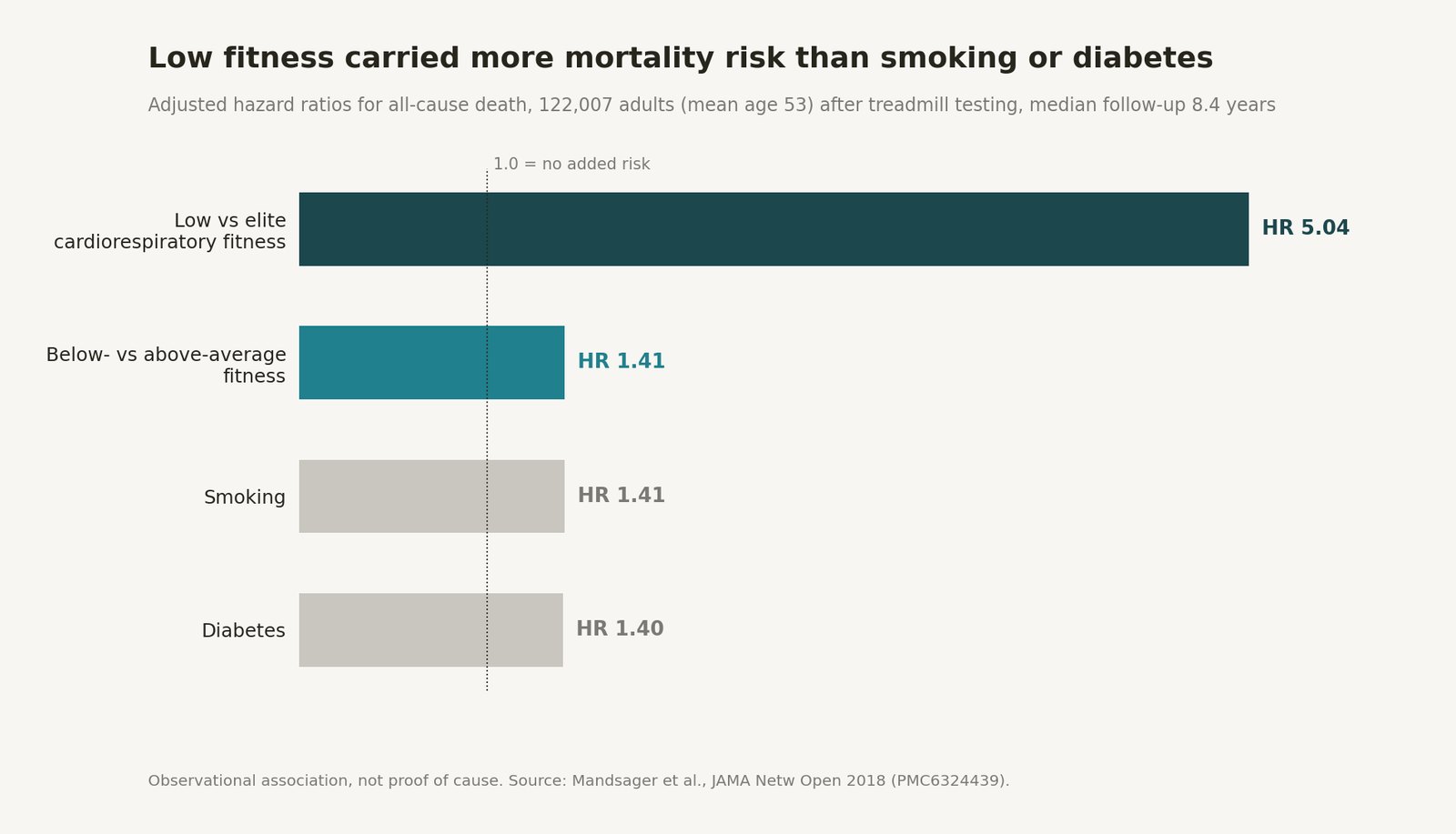
In a Cleveland Clinic cohort of 122,007 adults followed for a median of 8.4 years after treadmill testing, low cardiorespiratory fitness was associated with about five times the risk of death compared with elite fitness (adjusted HR 5.04). Even below-average versus above-average fitness (HR 1.41) carried risk similar to smoking (HR 1.41) or diabetes (HR 1.40) (Mandsager et al., JAMA Netw Open 2018).
Muscle-strengthening activity is independently associated with 10–17% lower risk of death, cardiovascular disease, cancer and diabetes, with the largest benefit at roughly 30–60 minutes per week. Combining it with aerobic activity was associated with lower all-cause, cardiovascular and cancer mortality than doing neither (Momma et al., BJSM 2022). In the NIH-AARP cohort of adults aged 59 to 82, doing both aerobic exercise and weight training gave the greatest reduction in mortality risk, while weight training alone, without aerobic exercise, was not associated with lower mortality (Shailendra et al., Int J Epidemiol 2024).
That lines up with the federal guidelines: 150–300 minutes of moderate (or 75–150 of vigorous) aerobic activity per week, muscle strengthening on two or more days, and, for older adults, multicomponent training that includes balance (Physical Activity Guidelines for Americans). A CrossFit metcon (a “metabolic conditioning” workout) typically mixes rowing or biking, bodyweight work, and loaded movement across short, medium and long time domains. That challenges the phosphagen, glycolytic and aerobic energy systems within one program. If you want to measure where you start, VO2 max testing gives you a baseline and training zones.
Isn’t CrossFit an injury factory?
This is the most common objection, and it deserves an honest answer.
A 2018 systematic review reported a CrossFit injury rate of about 3.1 per 1,000 training hours, most often at the shoulder, lower back and elbow (Claudino et al., Sports Med Open 2018). A later meta-analysis pooled an incidence of 3.2 per 1,000 hours (German Journal of Sports Medicine 2021). The authors of a large four-year survey concluded that CrossFit is relatively safe compared with more traditional training, but that people in their first year of training were more likely to be injured (Montalvo et al., OJSM 2018).
The risk-factor data are the most useful part for masters athletes. A 2022 systematic review found limited evidence that switching between prescribed (“Rx”) and scaled loads was associated with about 3.5 times the odds of injury, that previous injury roughly tripled the odds, and that longer participation was protective (Int J Sports Med 2022). In a Czech cross-sectional study, injured athletes were younger and trained more hours per week (J Sports Sci Med 2025).
Here is the evidence gap I want readers to see: the prospective studies in that review had an average participant age of 32. We have far less CrossFit-specific injury data for people over 55. So my recommendations for late masters athletes draw on the LIFTMOR and power-training trials, on general exercise science, and on clinical judgment. They do not come from CrossFit trials in 70-year-olds, because there aren’t many.
How to scale it: masters vs late masters
The CrossFit Games themselves now run age-group divisions from 35–39 up through 70+ (CrossFit Games 2026). Most masters athletes will never compete, and they shouldn’t train as if they will. The methodology stays the same. What changes is the dose.
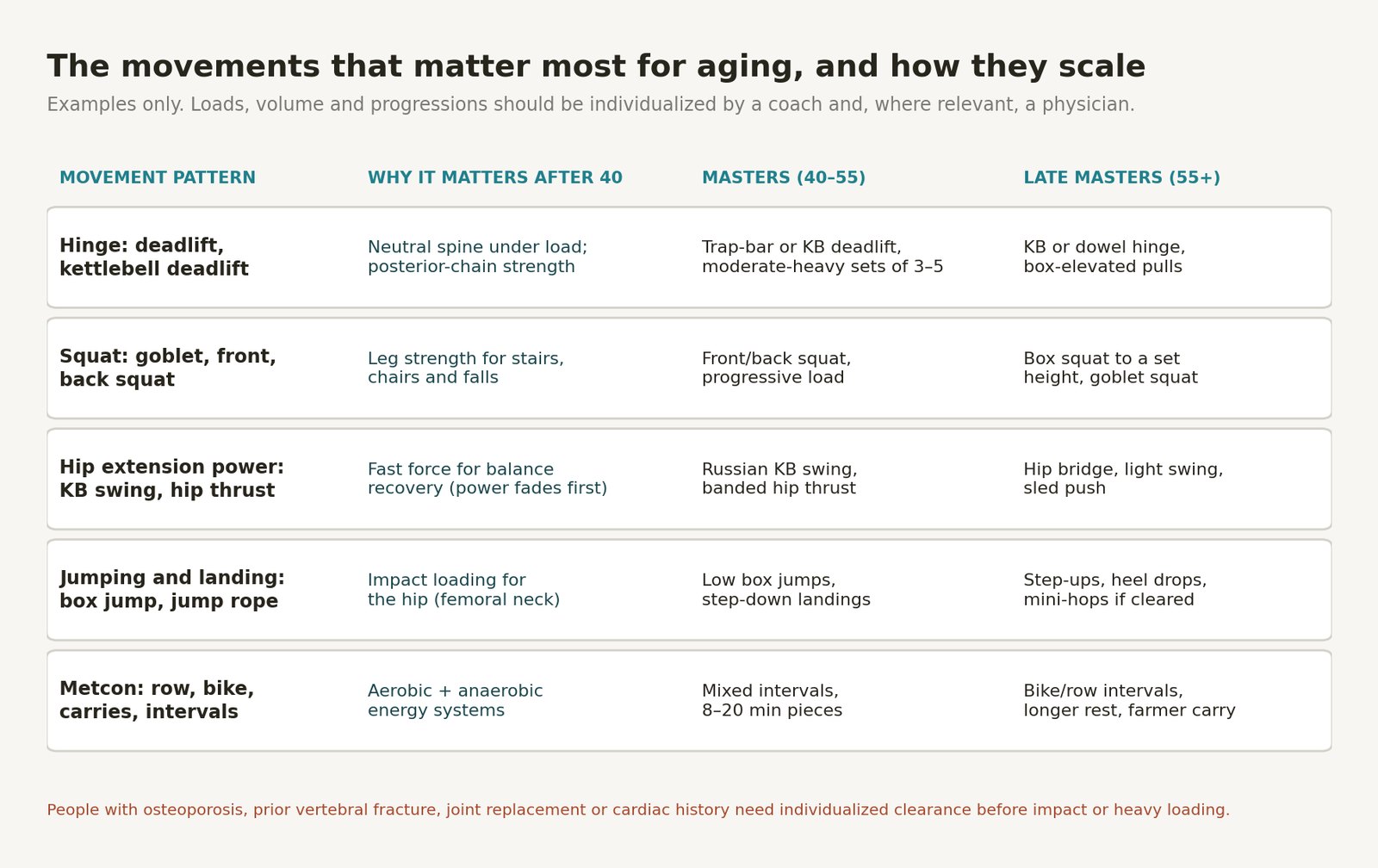
Masters (about 40–55). Most can train the full menu of movements with smart load selection. The priorities are protecting tendons and shoulders, which recover more slowly than muscle; keeping high-impact and high-rep gymnastics volume in check; and resisting the temptation to “Rx” every workout. Pick one version of the workout and stay with it for the whole session, since flipping between Rx and scaled mid-program is one of the few risk factors with data behind it.
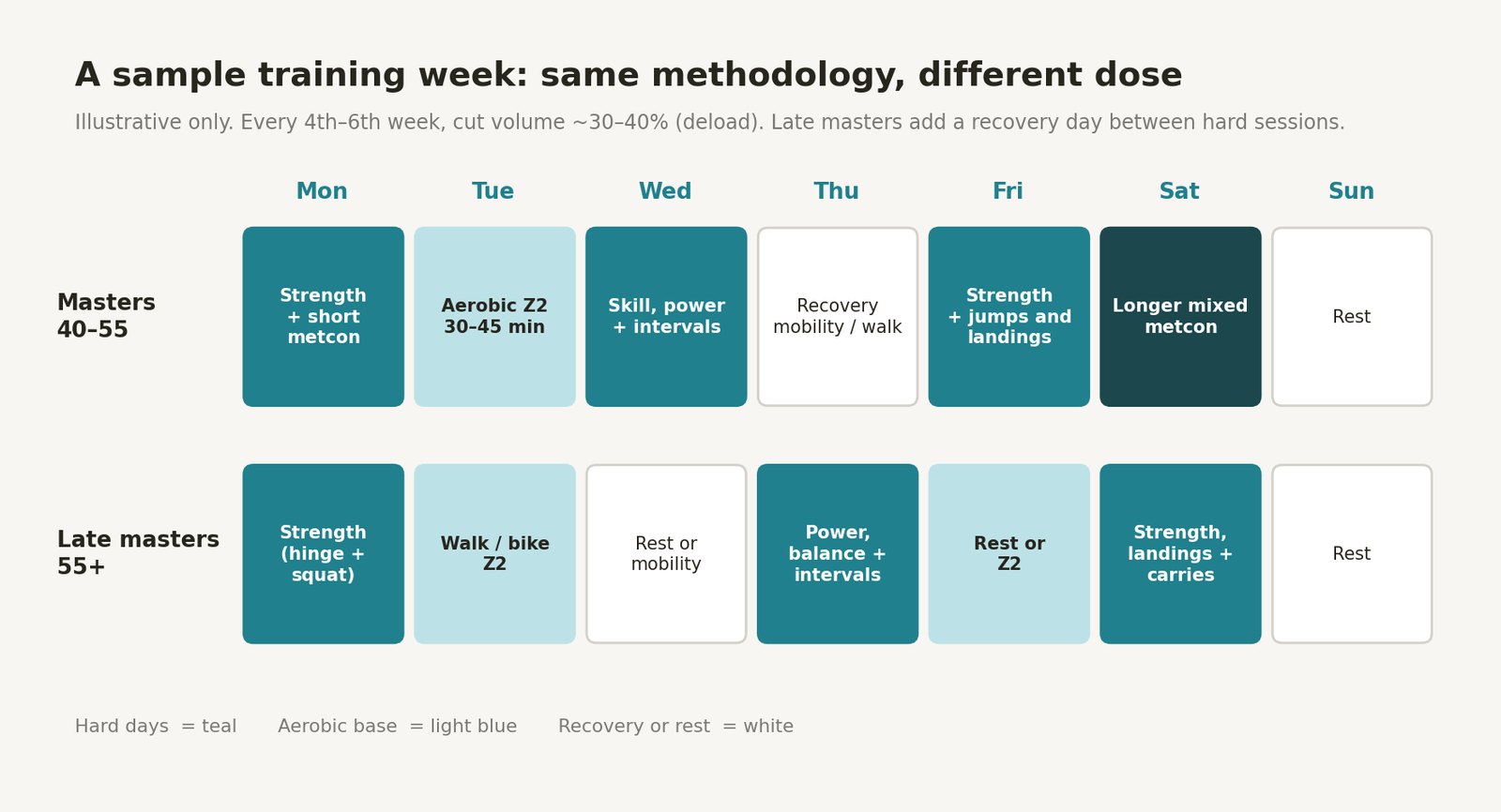
Late masters (55+). Keep strength work heavy relative to the individual, but reduce the number of hard days, lengthen rest between intervals, and build impact up slowly, starting with step-downs and small hops before any box jumps. Balance and floor-to-standing transitions become training goals in their own right. For many people in this group, two strength-focused days, one power-and-balance day, and plenty of easy aerobic work is the sweet spot.
Periodization and recovery are not optional
The most common failure I see is not a single bad lift. It is accumulated load with no plan: hard workouts five or six days a week, the same movements repeated, no deload weeks, short sleep, and too little protein. Some simple rules help:
- Plan training in 3–5 week blocks, then take a lighter deload week with about 30–40% less volume.
- Keep no more than two or three truly hard days per week after 55, with an easy day between them.
- Rotate movement patterns so the same tendons are not loaded hard on back-to-back days, especially shoulders, elbows and Achilles.
- Treat sleep, protein intake and pain that lasts more than 48 hours as training data.
- Progress one variable at a time: load, or speed, or impact, or volume.
Before you start: a physician checklist
Talk to your physician first if any of these apply
- Chest pain, fainting, or unusual shortness of breath with exertion, or known heart disease. A cardiac evaluation, which may include coronary CT angiography, may come before high-intensity work.
- Osteoporosis, prior fragility fracture, or a vertebral compression fracture. Get a DEXA scan and individualized impact and flexion limits.
- A joint replacement, recent surgery, or a regenerative procedure. Follow your surgeon’s or physician’s return-to-load plan.
- Uncontrolled blood pressure, diabetes on insulin, or medications that affect balance or heart rate.
- Persistent joint swelling or pain that changes how you move.
A useful longevity baseline includes body composition and bone density, cardiorespiratory fitness, grip and leg strength, and a movement screen, so you can see whether the training is working. Book a consultation to set yours.
Frequently asked questions
Is CrossFit safe for people over 50?
For most healthy adults, a well-coached and properly scaled program is reasonable. Pooled studies show about 3 injuries per 1,000 training hours, but most of that research is in people in their early 30s. Newcomers, people with prior injuries, and people who switch between Rx and scaled loads carry more risk. Get medical clearance if you have heart, bone or joint conditions.
Can lifting weights and jumping improve bone density after menopause?
In the LIFTMOR trial, supervised heavy lifting plus drop landings raised lumbar spine bone density by 2.9% in postmenopausal women with low bone mass, while controls lost 1.2%. Participants were screened and closely supervised, so impact should be introduced gradually and individualized.
What is the difference between masters and late masters athletes?
In this article, masters athletes are roughly 40 to 55 and late masters are 55 and older. Both can use the same movements. Late masters generally need fewer hard days, longer recovery, slower impact progressions and more emphasis on balance and power.
Is strength training or cardio better for longevity?
Both matter, and together they appear best. Low cardiorespiratory fitness was associated with about five times the mortality risk of elite fitness, and muscle-strengthening activity is linked to 10 to 17% lower risk of death and chronic disease. Combining the two was associated with the greatest reduction in mortality.
How many days a week should a 60-year-old do CrossFit?
Many do well with two or three hard sessions per week, separated by easy aerobic or mobility days, plus a deload week every four to six weeks. The right number depends on recovery, sleep, health conditions and training history.
Where I land
I don’t think CrossFit is magic, and I don’t think it is inherently dangerous. It is a delivery system for things older bodies badly need: heavy, well-coached strength work, a neutral spine under load, powerful hip extension, progressive impact for bone, and conditioning across every energy system. The risk lives mostly in the programming: too much volume, too little recovery, ego-driven loading, and coaches who don’t scale. Get those right, and a 50- or 70-year-old can train with intensity for decades.
If you’re a masters athlete, or you want to become one, and you’d like a physician-guided baseline before you start, you can book a consultation here.
Key sources referenced in this article
- CrossFit. CrossFit Level 1 Certificate Course for Healthcare Professionals. CrossFit; The 2026 CrossFit Games season by division. CrossFit.
- Kim TN, Choi KM. Sarcopenia: definition, epidemiology, and pathophysiology. J Bone Metab. 2013;20(1):1–10. PMC3780834.
- Reid KF, Fielding RA. Skeletal muscle power: a critical determinant of physical functioning in older adults. Exerc Sport Sci Rev. 2012;40(1):4–12. PMC3245773.
- Effectiveness of power training compared to strength training in older adults: a systematic review and meta-analysis. Eur Rev Aging Phys Act. 2022;19:18. PMC9367108.
- Zhou Y, Wen K, Zhang X, et al. Effects of resistance training on muscle mass, strength, and physical function in older women with sarcopenia: a systematic review and meta-analysis. Front Public Health. 2026;13:1735899. PMC12883749.
- Watson SL, Weeks BK, Weis LJ, et al. High-intensity resistance and impact training improves bone mineral density and physical function in postmenopausal women with osteopenia and osteoporosis: the LIFTMOR randomized controlled trial. J Bone Miner Res. 2018;33(2):211–220. PubMed 28975661.
- Harding AT, Weeks BK, Lambert C, et al. A comparison of bone-targeted exercise strategies to reduce fracture risk in middle-aged and older men with osteopenia and osteoporosis: LIFTMOR-M. J Bone Miner Res. 2020. doi:10.1002/jbmr.4008.
- Florence GE, Oosthuyse T, Bosch AN. Skeletal site-specific effects of jump training on bone mineral density in adults: a systematic review and meta-analysis. J Sports Sci. 2023;41:2063–2076. PubMed 38305252.
- Neuromuscular performance in the hip joint of elderly fallers and non-fallers. UNESP repository.
- Characteristics of fragility hip fracture-related falls in older adults. PMC12877242; One-year mortality after hip fracture surgery and prognostic factors. Sci Rep. 2019. Nature Scientific Reports.
- Mandsager K, Harb S, Cremer P, et al. Association of cardiorespiratory fitness with long-term mortality among adults undergoing exercise treadmill testing. JAMA Netw Open. 2018;1(6):e183605. PMC6324439.
- Momma H, Kawakami R, Honda T, Sawada SS. Muscle-strengthening activities are associated with lower risk and mortality in major non-communicable diseases. Br J Sports Med. 2022;56(13):755–763. PubMed 35228201.
- Shailendra P, Baldock KL, Li LSK, et al. Weight training and risk of all-cause, cardiovascular disease and cancer mortality among older adults. Int J Epidemiol. 2024;53(3):dyae074. IJE.
- U.S. Department of Health and Human Services. Physical Activity Guidelines for Americans, 2nd edition, Executive Summary. ODPHP.
- Claudino JG, Gabbett TJ, Bourgeois F, et al. CrossFit overview: systematic review and meta-analysis. Sports Med Open. 2018;4:11. PMC5826907.
- Musculoskeletal injuries in CrossFit: a systematic review and meta-analysis of injury rates and locations. Ger J Sports Med. 2021. German Journal of Sports Medicine.
- Montalvo AM, et al. A 4-year analysis of the incidence of injuries among CrossFit-trained participants. Orthop J Sports Med. 2018. PMC6201188.
- Risk factors for musculoskeletal injury in CrossFit: a systematic review. Int J Sports Med. 2023;44(4):247–257. PMC10072928.
- Epidemiology and risk factors of CrossFit-related injuries: a cross-sectional study among athletes in the Czech Republic. J Sports Sci Med. JSSM.