
Key takeaways
- Some chronic low back pain comes from the vertebral bone, not the disc or the joints. This is called vertebrogenic pain. It travels through a small nerve inside the vertebra called the basivertebral nerve.
- The MRI clue is called a Modic change. Type 1 and type 2 Modic changes at the vertebral endplates are the imaging marker used to select patients. Many patients, and many physicians, have never heard of them.
- Basivertebral nerve ablation (BVNA) has unusually long follow-up for a spine procedure. In a pooled analysis of 249 patients followed for a mean of 5.6 years, disability scores fell from 44.5 to 16.5 and pain from 6.8 to 2.4 out of 10.
- The evidence has real limits. Against a sham procedure, the main trial’s intent-to-treat result was not statistically significant at 3 months. Most studies were funded by the device maker, and selection criteria are strict.
- It is not regenerative medicine. BVNA turns off a pain signal; it does not repair tissue. I explain below why I consider it for the right patient, and why I generally avoid facet ablation.
Why I’m writing about a nerve ablation
Most of what I write about is regenerative: PRP and bone marrow concentrate for the lumbar spine, laser treatment of the disc, and MR spectroscopy to find a painful disc. Basivertebral nerve ablation is different. It uses heat to switch off a nerve inside the vertebra rather than putting a biologic into it. I still think patients should know about it, for two reasons. First, it has some of the longest controlled follow-up of any minimally invasive procedure for chronic low back pain. Second, the condition it treats, vertebrogenic pain, is still widely missed.
What vertebrogenic pain is
Each lumbar vertebra has a top and bottom surface called the endplate, where bone meets disc. The endplates are richly supplied with nerves. Most of those nerve fibers come from the basivertebral nerve, which enters the back of the vertebral body through a small channel and branches toward both endplates (Pain and Therapy). Damaged endplates carry more pain-sensing nerve fibers than healthy ones (Pain and Therapy).
The working theory is that repeated stress or injury cracks the endplate. Material from the disc then leaks into the bone marrow, which leads to inflammation, then to fatty change and scarring of the marrow (Journal of Clinical Medicine review). The pain is usually midline, deep and aching. It is often worse with sitting, bending and lifting. It is not sciatica, and it does not usually run down the leg.
Modic changes, explained for patients
In 1988 the radiologist Michael Modic described a pattern of signal changes in the bone next to degenerated discs (ISASS). Today those changes carry his name. They come in three types (Radiopaedia):
- Type 1 is bone marrow edema and inflammation next to the endplate. It is the type most strongly linked to back pain (PubMed Central).
- Type 2 is replacement of normal marrow by fat. It is often a later, more settled stage.
- Type 3 is hardened, sclerotic bone. It is not a target for BVNA.
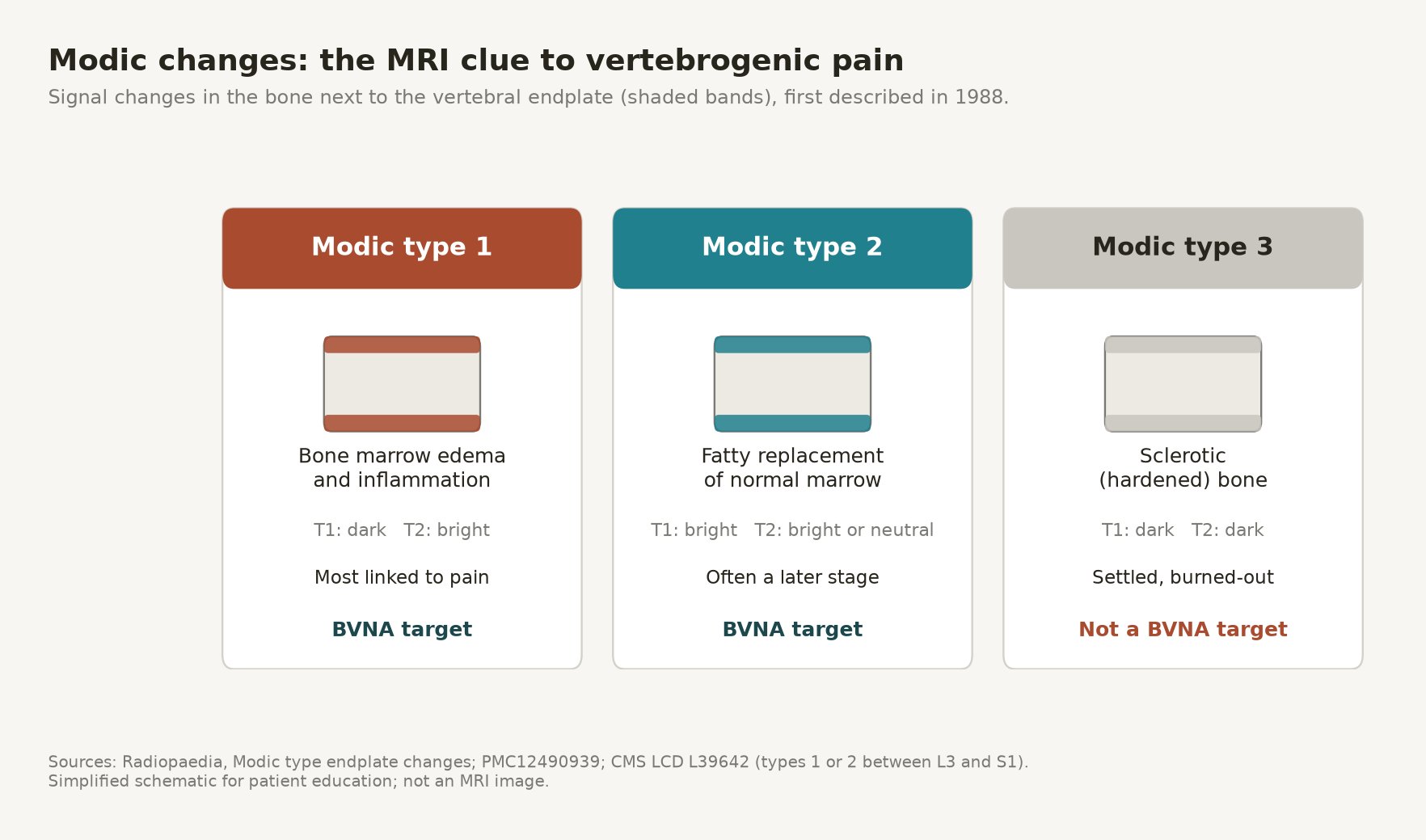
Modic changes are common in people with back pain and uncommon in people without it. A systematic review found them in a median of 43% of patients with nonspecific low back pain, compared with 6% of people without back pain (European Spine Journal). That difference is why they work as a marker. But a Modic change on its own does not prove that it is causing your pain. Many MRI reports mention them only in passing, or not at all, which is one reason vertebrogenic pain is missed.
Who may be a candidate
The trials and the Medicare coverage policies select patients in a similar way. The Noridian Medicare policy, for example, requires all of the following (CMS, LCD L39642):
- Chronic low back pain for at least 6 months, with back pain as the main symptom
- Inadequate improvement despite documented conservative care, using at least 3 approaches such as therapy, exercise, medications or injections
- Type 1 or type 2 Modic changes at the endplates between L3 and S1
- No other cause on exam or imaging that better explains the pain, such as fracture, tumor, infection or deformity
- An assessment of the patient’s physical and psychological ability to tolerate and benefit from the procedure
The same policy lists situations that need extra justification. These include leg pain or stenosis as the main problem, spondylolisthesis, symptomatic facet joints, osteoporosis with a T-score below −2.5, active infection, bleeding risk and implanted electronic devices (CMS, LCD L39642). The trials also required an Oswestry Disability Index (ODI) of at least 30 and pain of at least 4 out of 10, and they excluded patients with a BMI over 40 (PubMed Central).
What the procedure involves
BVNA is an outpatient procedure done under X-ray guidance, typically with sedation. A small introducer is passed through the pedicle, the bony bridge at the back of the vertebra, into the vertebral body. A radiofrequency probe is then guided to where the basivertebral nerve branches. In the main sham-controlled trial, that target was typically midline and 40 to 60% of the way from the back to the front of the vertebral body (European Spine Journal). The probe heats a small zone of bone to stop the nerve from transmitting pain. Nothing is left behind in the body.
Three systems are now FDA-cleared in the United States:
- Intracept was first cleared in 2016 (FDA, K153272). It was developed by Relievant Medsystems, which Boston Scientific agreed to acquire in 2023 (Boston Scientific). Almost all of the long-term evidence comes from this system.
- OptaBlate BVN from Stryker received 510(k) clearance in May 2025 (Stryker; FDA, K250213).
- ViaVerte, made by Merit Medical and distributed by Medtronic, is FDA-cleared and has a steerable mechanism for targeting the nerve (Medtronic).
The newer systems were cleared based on similarity to existing devices. They have not been tested in their own randomized trials with long follow-up, so the outcomes below should not be assumed to transfer to them automatically.
What the evidence shows
Two randomized trials form the core of the evidence.
SMART (BVNA vs sham). 225 patients were randomized to real ablation or a sham procedure in which the probe was placed but not turned on. At 3 months, ODI fell 19.0 points with ablation and 15.4 points with sham in the intent-to-treat analysis, a difference that was not statistically significant (p=0.107). In the per-protocol group, who received the intended treatment, the difference was 20.5 vs 15.2 points (p=0.019) (PubMed Central). The sham response was large and lasting, which the investigators acknowledged (European Spine Journal).
INTRACEPT (BVNA vs standard care). 140 patients were randomized to ablation or continued standard care. The trial was stopped early because the ablation arm was clearly superior at the interim analysis (The Spine Journal). At 6 months, ODI improved 26.1 points with ablation compared with 1.6 points with standard care, and pain improved 3.6 points compared with 0.3 (Regional Anesthesia & Pain Medicine).
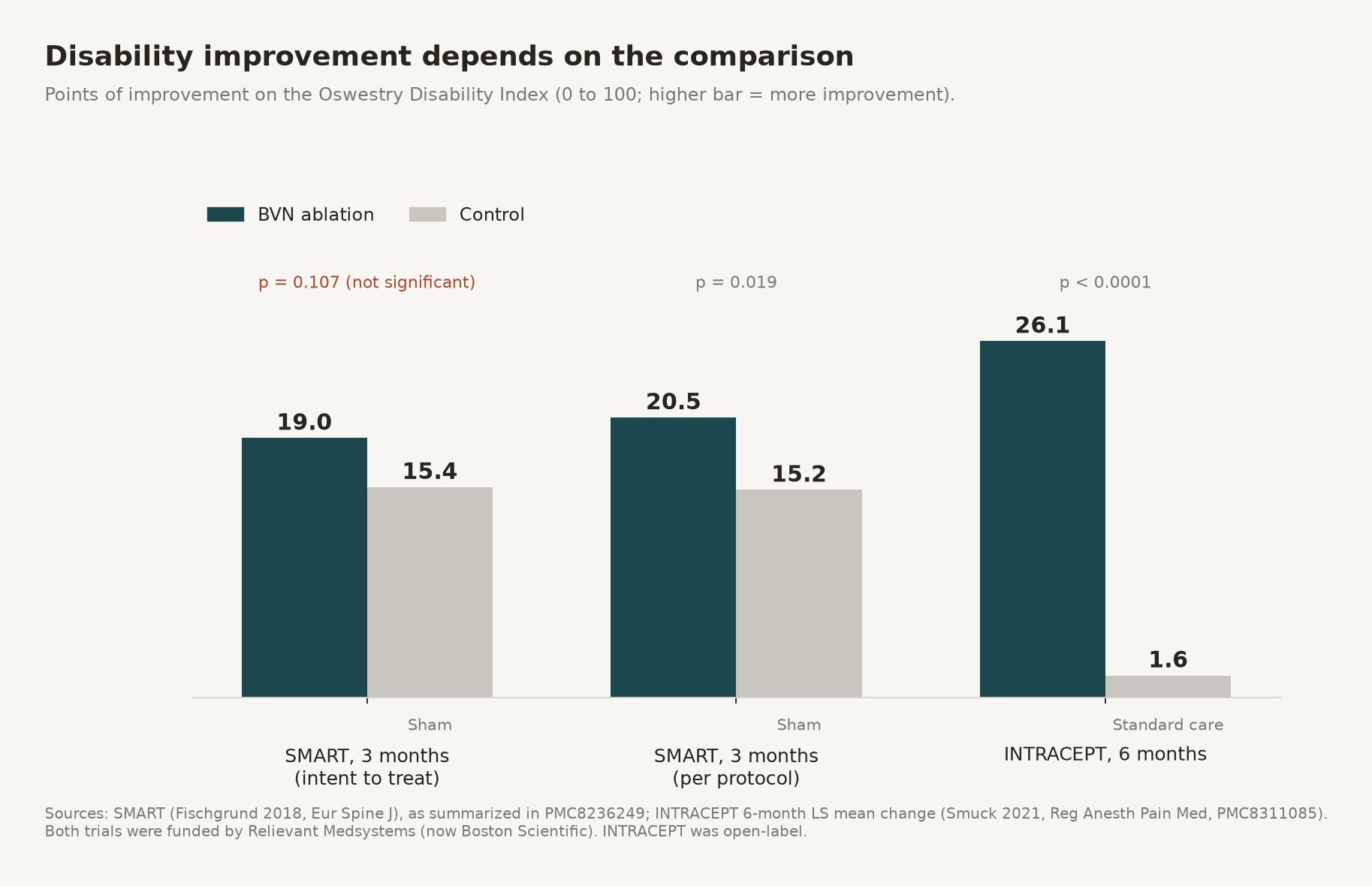
That contrast is the honest heart of the evidence. Against a sham, the specific effect of ablation is modest in the short term. Against usual care, which is the real-world alternative for most patients, the difference is large. An unblinded trial against standard care can exaggerate benefit, and the INTRACEPT authors list this among their limitations (Regional Anesthesia & Pain Medicine).
The five-year data
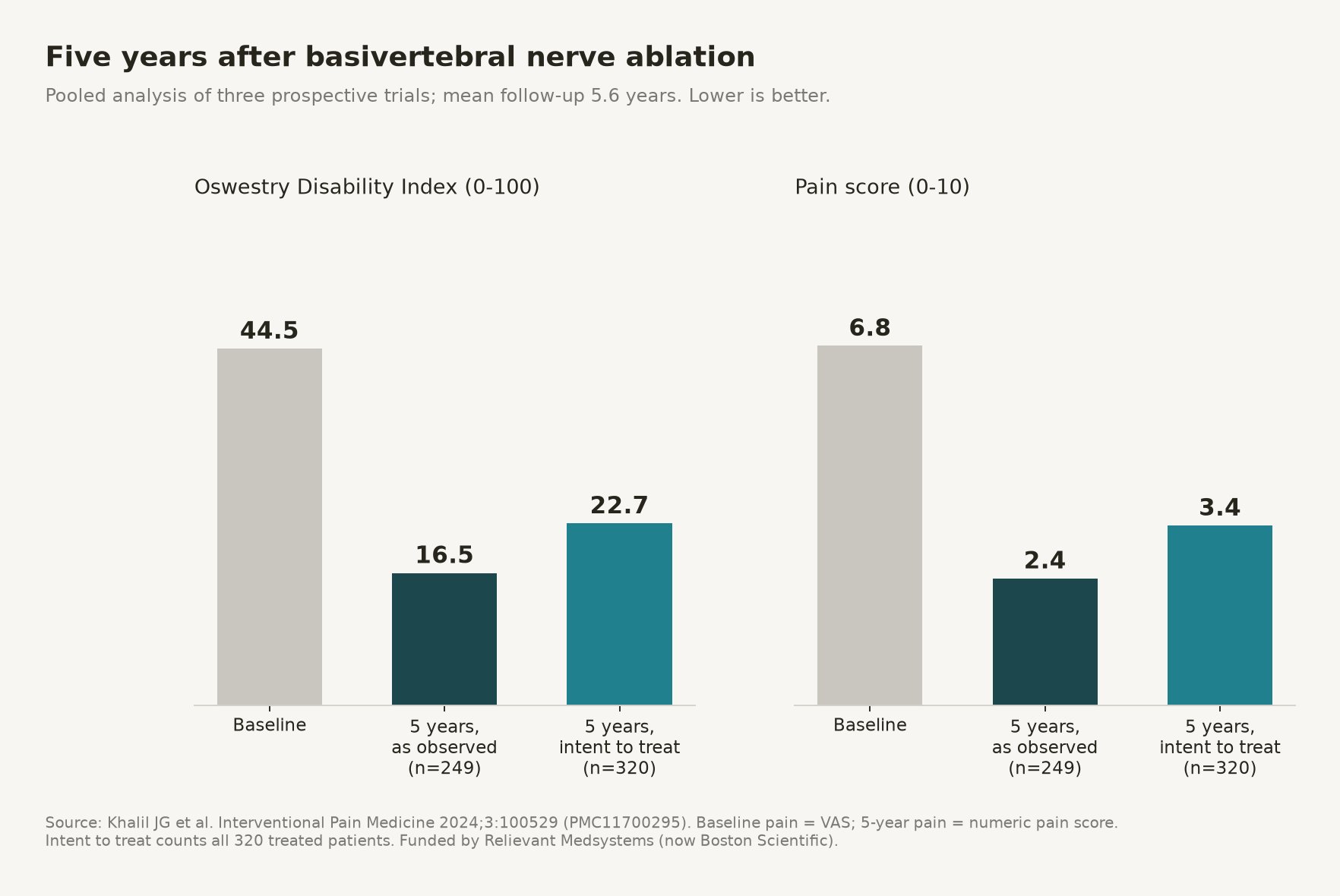
What sets BVNA apart is durability. In the SMART treatment arm, 100 of 117 U.S. patients were followed for a mean of 6.4 years. ODI improved from 42.8 to 16.9, pain fell 4.4 points, and 34% reported complete pain resolution (European Spine Journal, 2020). A pooled analysis of three trials followed 249 of 320 treated patients for a mean of 5.6 years (Interventional Pain Medicine, 2024):
- ODI improved from 44.5 to 16.5 among patients who returned. Counting everyone treated, including those lost to follow-up, it improved from 44.5 to 22.7.
- Pain improved from 6.8 to 2.4 out of 10 among those who returned, and from 6.8 to 3.4 counting everyone.
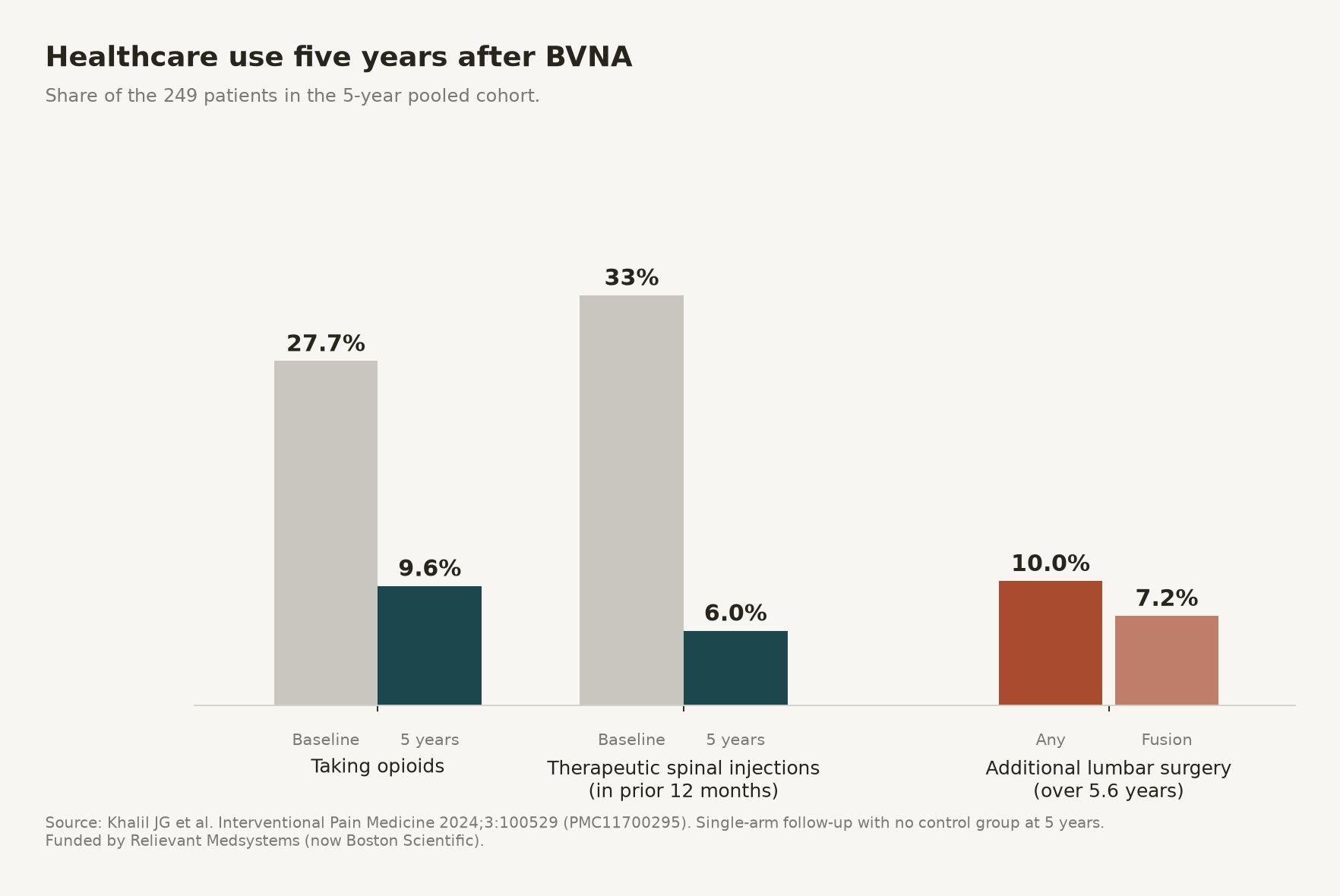
- Opioid use fell from 27.7% to 9.6% of patients.
- Over the full follow-up, 7.2% had a lumbar fusion and 10.0% had some additional lumbar surgery.
A separate pooled analysis of healthcare use found lasting reductions in opioid use and in spinal injections after BVNA (Pain Medicine). A cost-effectiveness model based on INTRACEPT estimated $11,376 per quality-adjusted life year at 5 years, well below common U.S. thresholds (The Spine Journal). A meta-analysis of 414 patients found that about two-thirds had at least 50% pain relief at 6 and 12 months, and rated the overall evidence as moderate quality (PubMed Central).
How BVNA differs from facet ablation and regenerative injections
| Approach | Target | What it does | My view of the evidence |
|---|---|---|---|
| Basivertebral nerve ablation | Nerve inside the vertebral body | Heat stops pain signals from the endplates | Two randomized trials and 5-year follow-up, mostly industry-funded, in a narrowly selected group |
| Facet (medial branch) ablation | Nerves to the facet joints | Heat stops pain signals from the facet joints | Widely used; the same nerves also supply the multifidus, a key spinal stabilizing muscle |
| Intraosseous or disc PRP / BMAC | Endplate, vertebral marrow or disc | Aims to calm inflammation and support repair | Early. Small pilot studies and case series, with no large randomized trials for Modic changes yet |
Why I generally avoid facet ablation. The medial branch nerves that are ablated for facet pain also supply the multifidus muscle, one of the deep stabilizers of the lumbar spine. I would rather not weaken a muscle that patients need for long-term spine health. In fairness, the evidence that facet ablation causes meaningful multifidus atrophy is limited. A 2024 systematic review found only five cohort studies with mixed results, and called the link plausible but of very low certainty (PubMed). The basivertebral nerve is inside the bone and does not supply the paraspinal muscles, so that concern does not apply to BVNA.
Where regenerative treatment fits. Injecting PRP or bone marrow concentrate into the vertebral body or disc is a different idea: it tries to treat the inflamed endplate rather than silence it. Early reports are interesting. In a 10-patient pilot study of Modic type 1 pain, disc PRP reduced pain and endplate edema on MRI at 24 weeks (PubMed Central). But a 2025 review concluded that intraosseous PRP for painful endplates is still in early clinical development (PubMed Central). For vertebrogenic pain specifically, BVNA currently has far stronger evidence than any regenerative option, including the ones I offer.
Limits and risks
| Limit | What it means for you |
|---|---|
| Sham comparison | The main sham-controlled trial missed its intent-to-treat endpoint at 3 months, and the sham response was large (ISASS). |
| Industry funding | The pivotal trials and the 5-year pooled analysis were funded by Relievant, now Boston Scientific (Interventional Pain Medicine). |
| Loss to follow-up | About 22% of treated patients did not return at 5 years. The results that count everyone are less impressive than the results among those who returned. |
| Strict selection | Results apply to patients like those in the trials. They may not apply to people with leg pain, prior fusion, stenosis or many other findings (Regional Anesthesia & Pain Medicine). |
| Side effects | Across trials, 5.9% had non-serious procedure-related events, most often temporary leg pain. One vertebral compression fracture was reported, and it resolved (Interventional Pain Medicine). |
| Not repair | Ablation does not heal the endplate or the disc. Strengthening and load management still matter afterward. |
Coverage and cost
BVNA has its own CPT codes: 64628 for the first two vertebral bodies and 64629 for each additional level (BCBS North Dakota). Medicare contractors Noridian and Palmetto have published coverage policies (CMS, LCD L39642; CMS, LCD L39420). Commercial policies vary by insurer and by plan. Many require detailed documentation of conservative care, MRI findings and, in some cases, a mental health evaluation. Prior authorization is common.
How this fits at Pravida
My job is to find the pain generator first and match the treatment to it. When a patient has midline low back pain that hasn’t improved with good conservative care, I look specifically for Modic changes at L3 to S1 on the MRI, and I check that the exam fits. When the picture fits vertebrogenic pain and the patient meets the selection criteria, I discuss BVNA as an option alongside our CartiNova regenerative spine program. When the main pain source is the disc, the facet joints or the nerves, a different plan makes more sense. For some patients, the right answer is to keep strengthening and wait. A short, honest conversation about which group you fall into is the most useful first step.
Wondering if your back pain is vertebrogenic?
At Pravida Health we review your MRI with you, look for Modic changes and other pain sources, and give you an evidence-graded read on your options.
- MRI review focused on the endplates, disc and facet joints
- Clear discussion of BVNA, regenerative options and conservative care
- Honest guidance on who is, and isn’t, a good candidate
Pravida Health, 1801 Peachtree St NE, Suite 150, Atlanta, GA 30309. Call 404-900-7371, email info@pravida.com or request an appointment.
Frequently asked questions
What is vertebrogenic pain?
It is chronic low back pain that comes from damaged vertebral endplates, the surfaces where bone meets disc. The pain signals travel through the basivertebral nerve inside the vertebra. It is usually deep, midline and worse with sitting or bending.
What are Modic changes on an MRI?
They are changes in the bone marrow next to the vertebral endplates. Type 1 reflects inflammation and edema, type 2 reflects fatty marrow change, and type 3 reflects hardened bone. Types 1 and 2 between L3 and S1 are used to select patients for basivertebral nerve ablation.
How long does basivertebral nerve ablation last?
In a pooled analysis of 249 patients followed for a mean of 5.6 years, improvements in disability and pain were largely maintained. About 10% had additional lumbar surgery during that time.
Is basivertebral nerve ablation the same as facet ablation?
No. Facet ablation targets nerves to the facet joints, which also supply the multifidus muscle. Basivertebral nerve ablation targets a nerve inside the vertebral body that carries pain from the endplates, and it requires Modic changes on MRI.
Is basivertebral nerve ablation covered by insurance?
It has its own CPT codes, 64628 and 64629. Some Medicare contractors and many commercial insurers cover it when strict criteria are met, including at least 6 months of pain, failed conservative care and type 1 or 2 Modic changes. Prior authorization is common.
Sources
- Fischgrund JS, et al. Intraosseous basivertebral nerve ablation for chronic low back pain: a prospective randomized double-blind sham-controlled multicenter study (SMART). Eur Spine J. 2018;27(5):1146–1156. Results summarized in Basivertebral Nerve Ablation: A Narrative Review (PubMed Central).
- Answer to the letter to the editor concerning the SMART trial. European Spine Journal.
- Fischgrund JS, et al. Long-term outcomes following intraosseous basivertebral nerve ablation: 5-year treatment arm results. Eur Spine J. 2020;29:1925–1934. Full text (Boston Scientific).
- Khalil JG, et al. A prospective, randomized, multicenter study of intraosseous basivertebral nerve ablation (INTRACEPT). Spine J. 2019;19(10):1620–1632. PubMed.
- Smuck M, et al. INTRACEPT 12-month results. Reg Anesth Pain Med. 2021;46(8):683–693. PubMed Central.
- Koreckij T, et al. INTRACEPT 24-month treatment arm results. N Am Spine Soc J. 2021;8:100089. PubMed.
- Khalil JG, et al. Intraosseous basivertebral nerve ablation: a 5-year pooled analysis from three prospective clinical trials. Interv Pain Med. 2024;3:100529. PubMed Central.
- McCormick ZL, et al. Low back pain-related healthcare utilization following basivertebral nerve ablation: pooled analysis. Pain Med. 2024;25:20–32. PubMed Central.
- Smuck M, et al. A cost-effectiveness analysis of intraosseous basivertebral nerve ablation. Spine J. 2025;25(2):201–210. PubMed.
- Basivertebral nerve ablation for treatment of lower back pain (review including Conger 2022 meta-analysis). PubMed Central.
- A prospective, single-arm study of basivertebral nerve ablation: 12-month results (inclusion and exclusion criteria). PubMed Central.
- ISASS policy statement 2022: systematic review of intraosseous basivertebral nerve ablation. ISASS.
- ISASS policy statement on intraosseous ablation of the basivertebral nerve. PubMed Central.
- Basivertebral nerve ablation for the treatment of vertebrogenic pain. Pain and Therapy.
- Vertebrogenic pain: a paradigm shift in diagnosis and treatment. PubMed Central.
- Jensen TS, et al. Vertebral endplate signal changes (Modic change): a systematic literature review of prevalence and association with nonspecific low back pain. Eur Spine J. 2008. PubMed Central.
- Modic type endplate changes. Radiopaedia.
- Bone remodeling, not inflammation, as the predominant pathology in Modic changes. PubMed Central.
- Intracept Intraosseous Nerve Ablation System 510(k) clearance letter, K153272 (2016). FDA.
- Boston Scientific announces agreement to acquire Relievant Medsystems. September 2023. Boston Scientific.
- Stryker receives FDA clearance for OptaBlate BVN. May 2025. Stryker; 510(k) K250213, FDA.
- Medtronic and Merit Medical agreement to offer FDA-cleared ViaVerte. March 2026. Medtronic.
- LCD L39642: Intraosseous Basivertebral Nerve Ablation (Noridian). CMS.
- LCD L39420: Thermal Destruction of the Intraosseous Basivertebral Nerve (Palmetto GBA). CMS.
- Basivertebral nerve ablation medical policy and CPT codes 64628/64629. BCBS North Dakota.
- Multifidus atrophy and/or dysfunction following lumbar medial branch radiofrequency ablation: a systematic review. 2024. PubMed.
- Intradiscal PRP in Modic type 1 low back pain: a prospective pilot study. PubMed Central.
- A primer on anatomy, biophysics, pathology, imaging and treatment of vertebrogenic pain. PubMed Central.