
Key takeaways
- Adults need 7 or more hours, and consistency matters as much as hours. In about 61,000 UK Biobank adults, the most regular sleepers had a 20 to 48% lower risk of death than the least regular. Regularity predicted mortality better than sleep duration.
- Three habits do most of the work: a fixed wake time 7 days a week, a protected 7 to 9 hour window, and bright light early with dim evenings.
- For chronic insomnia, CBT-I comes before pills. The American College of Physicians recommends it as the initial treatment, and free VA apps can get you started.
- Long-term sleep-aid use is linked to dementia risk, including over-the-counter “PM” products. These are associations from studies of older adults, not proof of cause.
- Wearables are good for trends, not diagnoses. Sleep apnea is common and mostly undiagnosed. Two free questionnaires and a home sleep test can find it.
Why sleep is a performance skill
When I speak to professional audiences about longevity, sleep draws more questions than any other topic. That makes sense. In a demanding, deadline-driven job, sleep is usually the first thing to go and the last thing we protect. This guide collects the practices with the strongest evidence behind them, so you can make a few changes that actually move the needle.
How much is enough? The National Sleep Foundation recommends 7 to 9 hours a night for adults 18 to 64. The American Academy of Sleep Medicine (AASM) and Sleep Research Society agree that adults should regularly sleep 7 or more hours. Regularly sleeping less is linked to weight gain, diabetes, high blood pressure, heart disease, depression, impaired performance and more errors.
Consistency may matter as much as hours. In about 61,000 UK Biobank participants whose sleep was measured with wrist devices, people with the most regular sleep schedules had a 20 to 48% lower risk of death than the least regular group. Sleep regularity was a stronger predictor of mortality than sleep duration (Windred et al., Sleep 2024). If your schedule changes with deadlines and travel, this is the most useful idea in this guide. A steady wake time protects you even in weeks when the hours fall short.
A note on Why We Sleep
Matthew Walker’s bestseller did a great deal to make sleep a priority, and its core message holds up: sleep is foundational to health and performance. Readers should know, though, that researchers have documented overstated or unsupported claims in the book, such as a WHO-declared sleep-loss epidemic and short sleep doubling cancer risk (Guzey). A Columbia University statistician also raised concerns about how one graph was presented (Gelman). Use the book for motivation, and use the guidance here for specifics.
Don’t chase a perfect score. Sleep clinicians use the term “orthosomnia” for anxiety caused by trying to get perfect sleep data, and that pressure can itself keep you awake (Baron et al., J Clin Sleep Med 2017). Aim for steady habits, not a perfect number every night.
Ten sleep hygiene habits with the best return
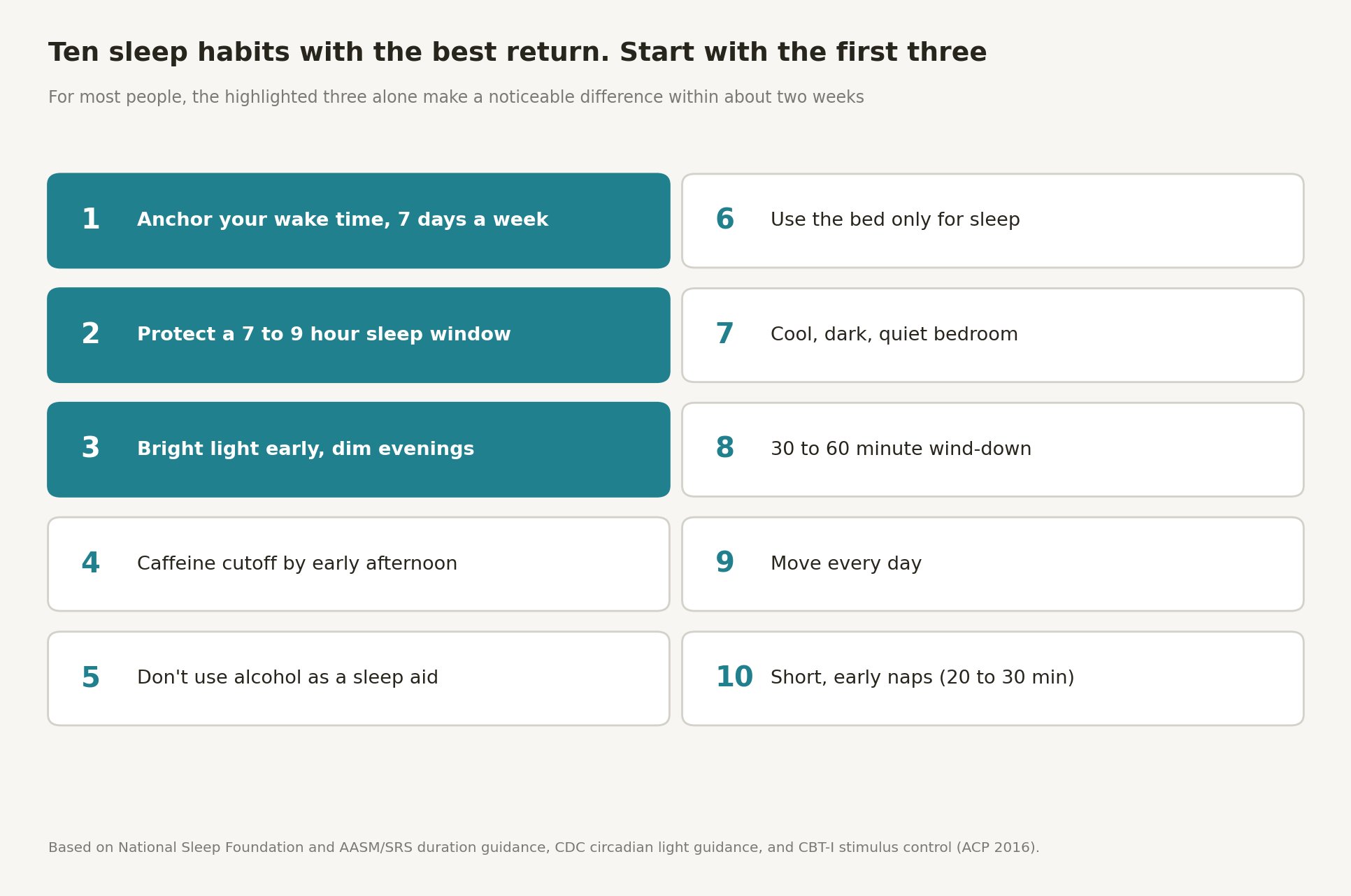
- Anchor your wake time, 7 days a week. Get up within about an hour of the same time every day, weekends included. Sleeping in two or three hours on Saturday shifts your body clock the same way flying a few time zones does.
- Protect a 7 to 9 hour sleep window. Count back from your wake time and treat that bedtime like a client meeting.
- Get bright light early, and keep evenings dim. Outdoor light within an hour of waking moves your body clock earlier, and bright light late in the evening pushes it later (CDC Yellow Book). Step outside for coffee, walk part of your commute, or take your first call by a window.
- Set a caffeine cutoff. In a controlled study, 400 mg of caffeine (about 2 to 3 cups of coffee) taken 6 hours before bed reduced measured sleep by more than an hour, and participants didn’t notice (Drake et al., via AASM). A practical rule: no caffeine after early afternoon.
- Don’t use alcohol as a sleep aid. It can help you fall asleep, but it breaks up sleep in the second half of the night. Leave a few hours between your last drink and bedtime.
- Use the bed only for sleep. If you’re lying awake for what feels like 20 minutes, get up and do something calm in dim light, then return when sleepy. This is stimulus control, a core part of CBT for insomnia.
- Make the bedroom cool, dark and quiet. Use blackout shades, an eye mask, earplugs or white noise, and a cooler temperature. Many people sleep best in the mid-60s °F.
- Build a 30 to 60 minute wind-down. Write tomorrow’s to-do list on paper, set your phone to Do Not Disturb, and stop work email. Your brain needs a clear signal that the workday is over.
- Move every day. Regular exercise improves sleep quality. If hard evening workouts leave you wired, move them earlier.
- Keep naps short and early. If you nap, keep it to 20 to 30 minutes and finish by mid-afternoon so it doesn’t push back your bedtime.
Busy season: when 7 hours isn’t possible
- Keep the wake time steady even when bedtime slips. Your clock recovers faster that way.
- On short nights, a 20-minute nap before mid-afternoon helps more than extra caffeine late in the day.
- Recover by going to bed earlier, not by sleeping until noon on Saturday.
- Watch out for drowsy driving after late nights or red-eye flights. Take a rideshare home if you’re nodding off.
CBT-I: the first-line treatment for chronic insomnia
Insomnia becomes chronic when trouble falling or staying asleep happens at least three nights a week for three months or more and affects how you function during the day. For chronic insomnia, the American College of Physicians recommends cognitive behavioral therapy for insomnia (CBT-I) as the initial treatment for adults, before medication. The AASM also considers CBT-I the standard of care.
CBT-I is not the same as sleep hygiene tips. It’s a structured program, usually 4 to 8 sessions, that retrains how your brain links bed with sleep. It works in person, by video, or through guided digital programs, and its benefits usually last after treatment ends.
| Component | What it involves |
|---|---|
| Sleep diary | Tracking when you go to bed, fall asleep, wake and get up for 1 to 2 weeks. This becomes your baseline. |
| Sleep restriction | Temporarily limiting time in bed to the amount you actually sleep, then expanding it as sleep becomes more solid. It’s the most powerful part of CBT-I, and it’s best done with guidance. |
| Stimulus control | Using the bed only for sleep, getting up when you can’t sleep, and keeping a fixed wake time. |
| Cognitive work | Addressing worries such as “If I don’t sleep tonight, tomorrow’s presentation is ruined,” which fuel nighttime arousal. |
| Relaxation | Breathing, body scans or other techniques to lower physical arousal before bed. |
Free tools to get started
- Insomnia Coach (U.S. Department of Veterans Affairs, free for anyone): a self-guided 5-week training plan with a sleep diary.
- CBT-i Coach (VA, free): designed as a companion app when you’re working with a CBT-I provider.
- A behavioral sleep medicine specialist can guide sleep restriction safely and adjust the plan for your schedule.
Please don’t try strict sleep restriction on your own if you have bipolar disorder, a seizure disorder, untreated sleep apnea, or a job where drowsiness creates a safety risk. Talk to a clinician first.
Sleep medications and dementia risk
Sleep aids can help in the short term, but several common ones carry risks that build up with long-term use. Prescription sleep medications are labeled for short-term use, and guidelines recommend using them for no more than about four to five weeks while CBT-I skills take over.
| Type | Common examples | What the evidence shows |
|---|---|---|
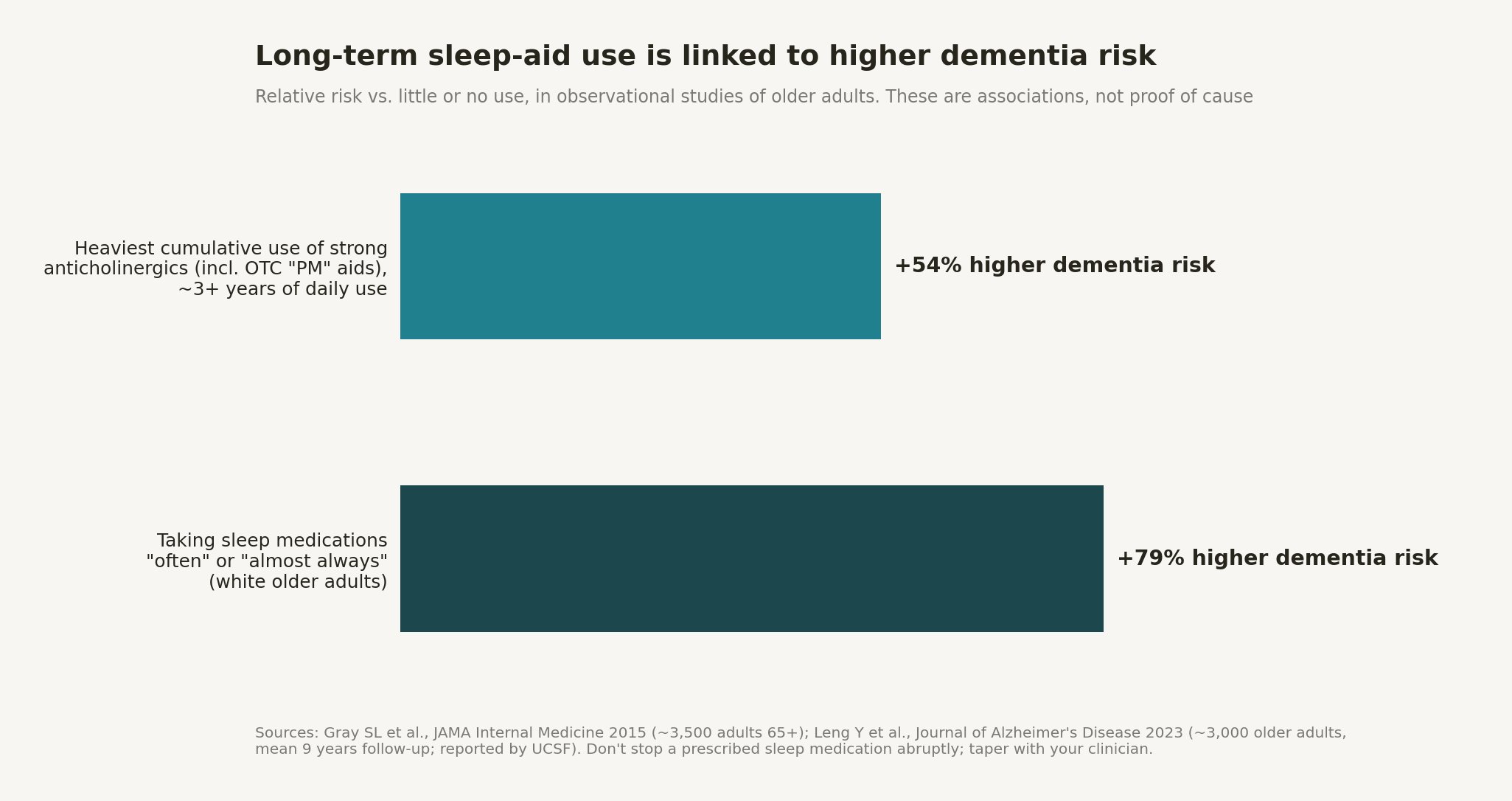
| OTC “PM” aids (antihistamines) | Diphenhydramine (Benadryl, ZzzQuil, most “PM” pain relievers); doxylamine (Unisom) | Strongly anticholinergic. In about 3,500 adults 65 and older, the heaviest cumulative use (roughly 3 or more years of daily use) was linked to a 54% higher risk of dementia (Gray et al., JAMA Intern Med 2015). The lead author specifically warned about OTC sleep aids (UW School of Pharmacy). |
| Benzodiazepines | Temazepam, triazolam, lorazepam, alprazolam | Risk of dependence and withdrawal. The 2023 AGS Beers Criteria recommend avoiding them in older adults because of cognitive impairment, delirium, falls, fractures and car crashes. |
| “Z-drugs” | Zolpidem (Ambien), eszopiclone (Lunesta), zaleplon | Also on the Beers avoid list, with similar adverse effects and only slight gains in sleep onset and duration. They carry a boxed warning for complex sleep behaviors such as sleep-driving (Drugs.com). |
| Frequent use of any sleep medication | Benzodiazepines, Z-drugs, trazodone | In about 3,000 older adults followed for an average of 9 years, white participants who took sleep medications “often” or “almost always” had a 79% higher dementia risk than those who rarely or never did (UCSF; Leng et al., 2023). |
What this means for you
- Most of this research is in older adults, but habits start early. A nightly “PM” pill at 28 can become 30 years of cumulative exposure.
- If you rely on a sleep aid most nights, that’s a sign to address the underlying insomnia with CBT-I, or to check for sleep apnea.
- Don’t stop a prescribed sleep medication abruptly, especially a benzodiazepine. Work with your clinician on a gradual plan.
- Review all your medications, including over-the-counter products, with your doctor at least once a year.
Melatonin, sleep peptides and jet lag
Melatonin is a timing signal, not a sedative
Melatonin tells your body clock what time it is. That’s why it works best for jet lag and shifting your schedule, and only modestly for ordinary insomnia. The CDC notes that 0.5 to 1 mg is often enough to shift the clock, and advises against doses above 5 mg, which can leave melatonin in your system at the wrong time of day.
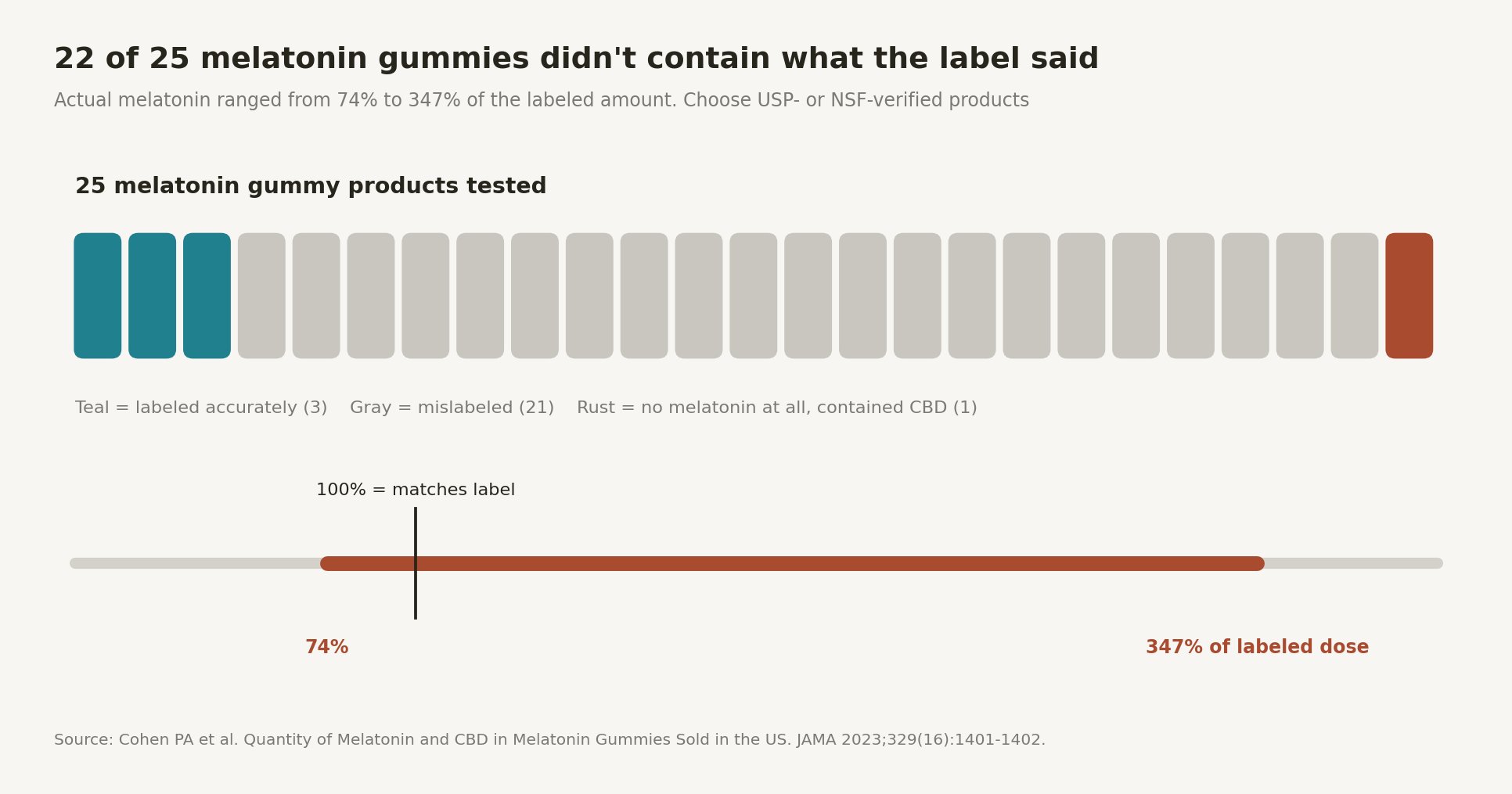
- Labels are often wrong. Of 25 melatonin gummy products tested, 22 were inaccurately labeled, with actual content from 74% to 347% of the label; one contained only CBD (JAMA 2023). Choose products verified by a third party such as USP or NSF (ABC News).
- Use it short-term. A preliminary study of more than 130,000 adults with insomnia, presented in November 2025, linked a year or more of melatonin use to higher rates of heart failure (American Heart Association). It was observational and not yet peer-reviewed, so it can’t prove cause. It’s still a good reason to use melatonin for specific, short-term purposes.
- Other sleep supplements, such as magnesium, L-theanine, glycine, ashwagandha and CBD, have limited or mixed evidence and variable quality. If you try one, choose a third-party verified product and tell your doctor.
Peptides for sleep and “circadian reset”
Peptides such as DSIP (emideltide) and epitalon are promoted online for sleep and for resetting your body clock across time zones. None is FDA-approved. In July 2026, an FDA advisory committee voted 7 to 4 to recommend allowing pharmacies to compound epitalon, and voted 6 to 7 against DSIP (McDermott Will & Schulte). The FDA’s own reviewers had recommended against both and found no clinical data supporting epitalon’s safety (FDA briefing). The votes are only advisory: as of October 2026, neither has been added to the list of substances pharmacies may compound (Holland & Knight). Products sold “for research use only” may have unknown purity and dose. My recommendation: rely on light, timing and, if appropriate, low-dose melatonin. For more context, see our review of the PCAC peptide vote.
Jet lag playbook
| When | Flying east (e.g., Atlanta to London) | Flying west (e.g., Atlanta to Los Angeles or Asia) |
|---|---|---|
| 2 to 3 days before | Shift bedtime and wake time about 1 hour earlier each day. | Shift bedtime and wake time about 1 hour later each day. |
| In flight | Set your watch to destination time. Sleep if it’s night there; stay awake if it’s day. | Same: live on destination time from boarding. |
| Light | Get bright morning light at your destination. Avoid bright light in the evening. | Get light in the evening. Avoid very early morning light. |
| Melatonin (optional) | A low dose (0.5 to 1 mg) before destination bedtime helps advance your clock. | Less useful flying west. Light does most of the work. |
| Short trips (under 2 days) | Consider staying on home time. | Consider staying on home time. |
Adapted from CDC Yellow Book guidance on jet lag.
Which sleep wearables are actually validated?
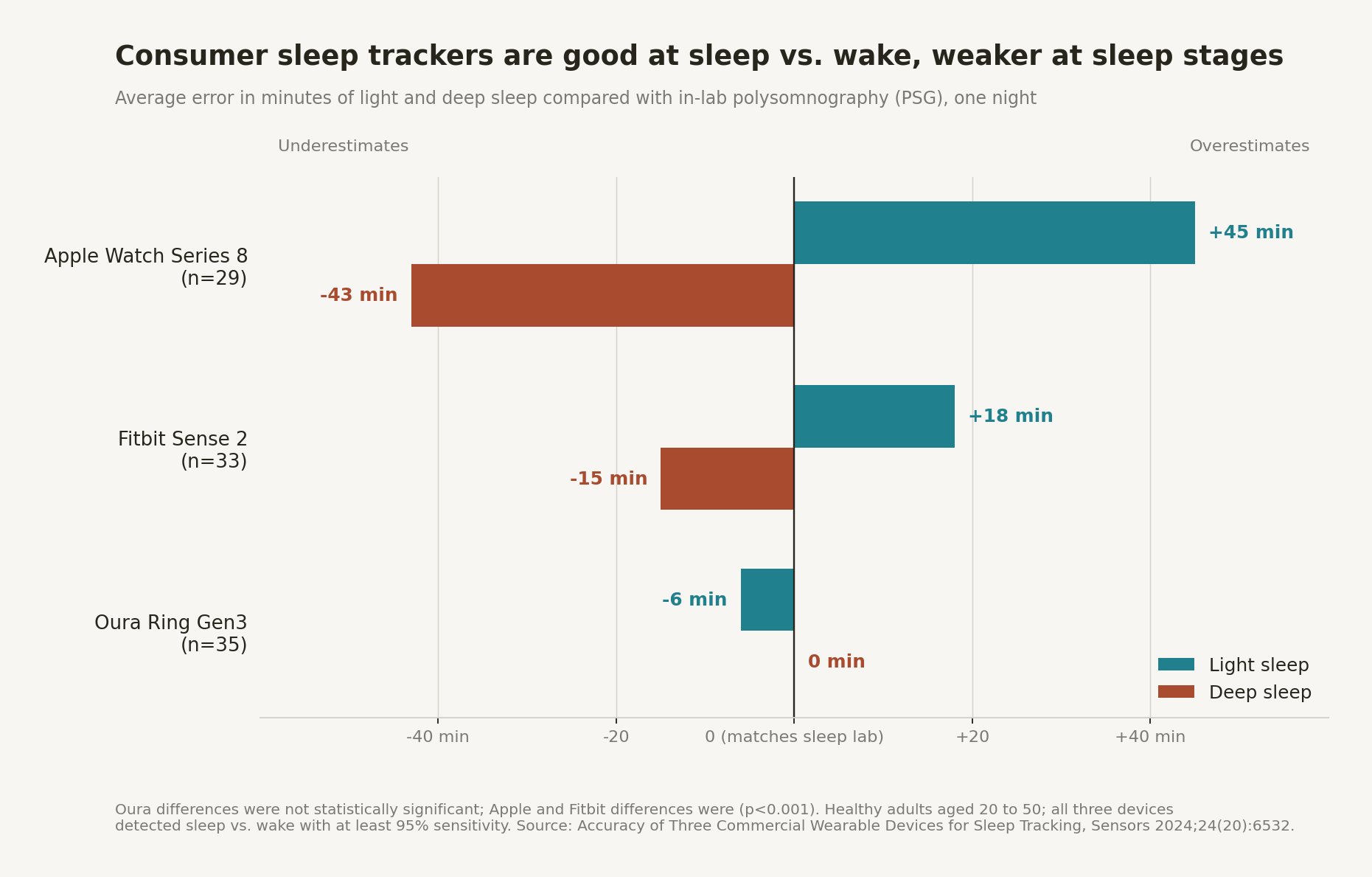
The gold standard for measuring sleep is polysomnography (PSG), the overnight sleep lab study that records brain waves, breathing, oxygen and movement. When you evaluate a device, ask whether it has been tested against PSG, by whom, and in people like you. In a 2024 single-night sleep-lab study, 35 healthy adults aged 20 to 50 wore three devices at once. All three detected sleep versus wake with at least 95% sensitivity, but they were less accurate at telling light, deep and REM sleep apart (Sensors 2024).
| Device | What the validation shows | Best use |
|---|---|---|
| Oura Ring (Gen3) | Closest agreement with PSG in the 2024 study; wake, light, deep and REM estimates did not differ significantly from PSG. | Trends in timing, regularity, heart rate and HRV |
| Apple Watch (Series 8) | Moderate agreement; overestimated light sleep by about 45 minutes and underestimated deep sleep by about 43. Its FDA-cleared Sleep Apnea Notifications run on Series 9 or later, Ultra 2 or later, and SE 3 (Apple). | Total sleep, regularity, an apnea “nudge” |
| Fitbit (Sense 2) | Moderate agreement; overestimated light sleep by about 18 minutes and underestimated deep sleep by about 15. | Duration and consistency |
| Samsung Galaxy Watch | Its sleep apnea feature received FDA De Novo authorization for adults 22 and older, screening over two nights (Samsung). | An apnea “nudge” only, not a diagnosis |
| Eight Sleep Pod | Company reports 78% sleep-stage accuracy against PSG-scored data, with heart rate and HRV validated against ECG; most validation is company-published (Eight Sleep). | Temperature control, heart rate and HRV trends |
| ZOLL WatchPAT | An FDA-cleared home sleep apnea test ordered by a clinician (ZOLL); the AASM guideline accepts its technology for diagnosis. | Diagnosing sleep apnea, not everyday tracking |
Four questions to ask before you trust the data
- Has it been compared with PSG in a peer-reviewed study, ideally by independent researchers?
- Were the people tested similar to you in age, health and sleep problems?
- What exactly is FDA-cleared? A wellness app is different from a cleared medical feature, and a cleared notification is different from a diagnosis.
- Are you using it for trends (where it’s useful) or nightly verdicts (where it isn’t)?
My take: I’ve used both the Oura Ring and the Eight Sleep Pod. Consumer devices are excellent for accountability and for spotting trends, such as a later bedtime, a late meal or a drink that shows up in your heart rate. They can’t diagnose a sleep disorder. A smartwatch that hasn’t flagged sleep apnea doesn’t rule it out, and Apple notes that not everyone with sleep apnea will get a notification.
Sleep apnea: screen yourself in five minutes
Obstructive sleep apnea (OSA) happens when the airway repeatedly narrows or closes during sleep, which drops oxygen levels and fragments sleep. It affects nearly 30 million U.S. adults, and an estimated 80% of cases are undiagnosed (AASM). It isn’t only a condition of older, heavier men. Younger, fit adults and women can have it too, and they often report fatigue, morning headaches or poor focus rather than snoring.
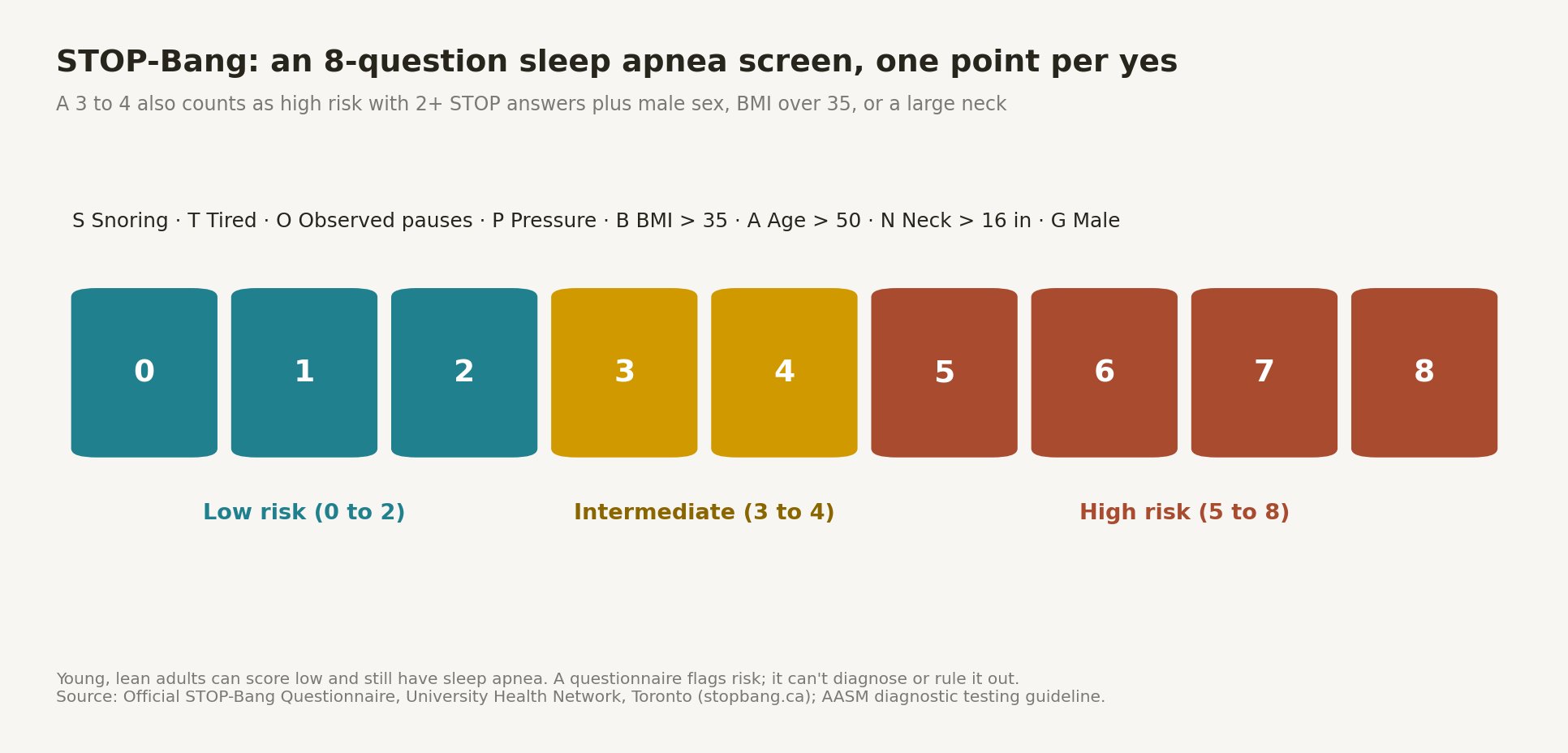
STOP-Bang asks eight yes-or-no questions: loud Snoring; feeling Tired during the day; Observed stopped breathing, choking or gasping; high blood Pressure; BMI over 35; Age over 50; Neck over 16 inches (40 cm); and male Gender. A score of 0 to 2 is low risk, 3 to 4 intermediate, and 5 to 8 high. A 3 to 4 also counts as high risk if you answer yes to at least 2 of the 4 STOP questions plus male sex, BMI over 35, or a large neck (University Health Network, Toronto).
The Epworth Sleepiness Scale (ESS) rates how likely you are to doze off in 8 everyday situations, such as reading, watching TV, sitting in a meeting or stopped in traffic, on a scale of 0 to 3. Scores of 0 to 10 are normal; 11 and above suggest excessive daytime sleepiness worth discussing with a clinician (ESS).
A note for people in their 20s and 30s
STOP-Bang gives points for age over 50 and a high BMI, so young, lean adults often score low even when they have symptoms. Questionnaires can flag risk, but they can’t diagnose or rule out sleep apnea. If you snore loudly, someone has seen you stop breathing, or you’re sleepy despite enough hours in bed, ask to be evaluated.
Home sleep apnea testing at Pravida Health
For the right patients, sleep apnea can be diagnosed with one night of testing in your own bed. Pravida can order the ZOLL WatchPAT, an FDA-cleared home sleep apnea test (HSAT). It uses a finger sensor, a wrist unit and a small chest sensor to measure blood-vessel tone, oxygen, heart rate, movement and snoring overnight.
Who qualifies for home testing. The AASM guideline supports home testing for uncomplicated adults with an increased risk of moderate to severe sleep apnea. That means excessive daytime sleepiness plus at least two of the following: habitual loud snoring, witnessed pauses in breathing or gasping, or diagnosed high blood pressure. An in-lab study is the better choice if you have significant heart or lung disease, a neuromuscular condition, a history of stroke, chronic opioid use or severe insomnia, and it’s the next step if a home test is negative or inconclusive but symptoms continue. The AASM also states that a clinician should evaluate you before a home test is ordered, and that home tests shouldn’t be used to screen people without symptoms.
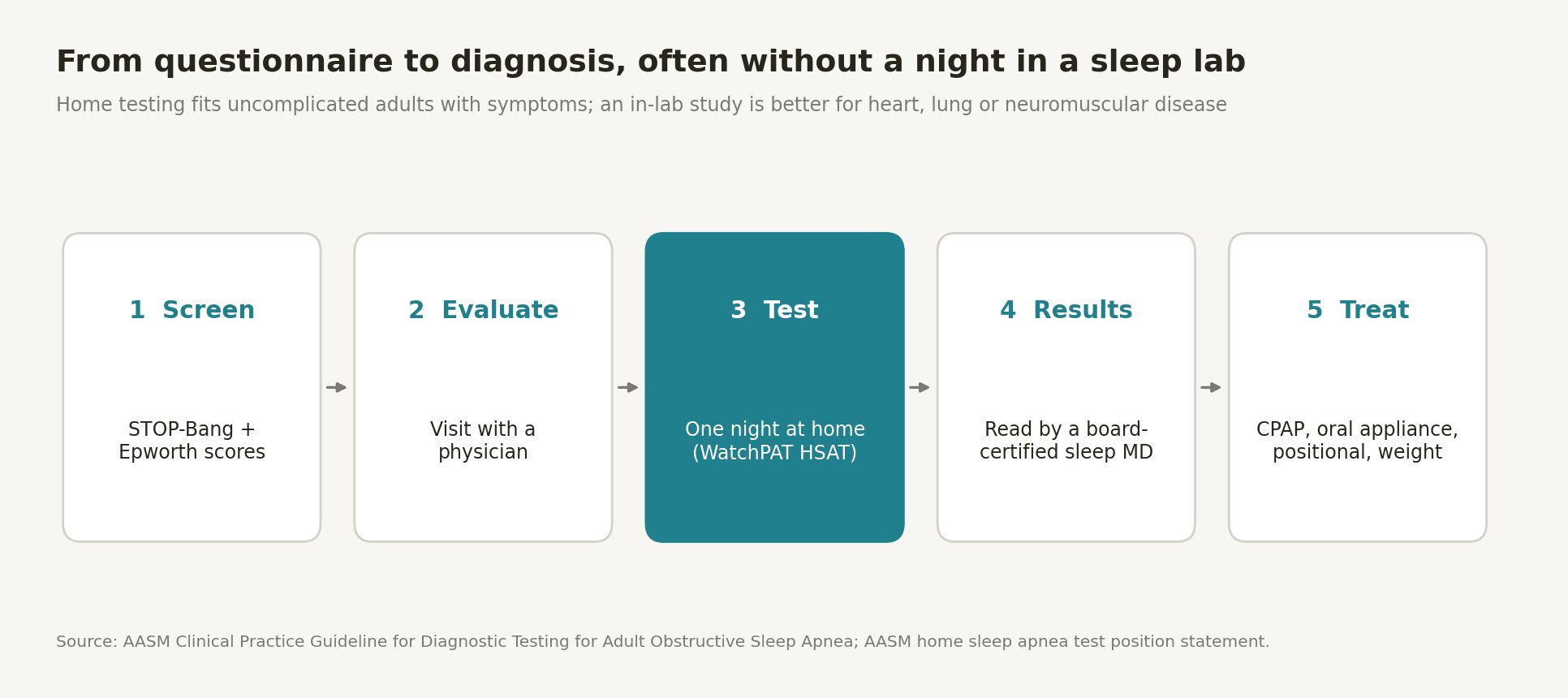
- Screen. Complete STOP-Bang and the Epworth Sleepiness Scale. Bring your scores and any wearable sleep data.
- Evaluate. Meet with Dr. Turner, in person or by telehealth, to review your symptoms and history and decide whether home testing or an in-lab study is the right fit.
- Test. Wear the WatchPAT for one night at home, following your normal bedtime routine.
- Results. Your study is scored and interpreted by a board-certified sleep physician, and we review the results and next steps with you.
- Treat. Depending on severity, options may include CPAP, an oral appliance, positional therapy, weight management, or referral for other procedures. Zepbound (tirzepatide) is FDA-approved for moderate to severe sleep apnea in adults with obesity (FDA).
Your two-week sleep reset
| Week 1: Measure and anchor | Week 2: Build the routine | |
|---|---|---|
| Daily | Keep a simple sleep diary or wearable log. Pick one wake time and keep it all 7 days. | Set your bedtime 7 to 9 hours before your wake time, and start a 30 to 60 minute wind-down. |
| Light | Get outside within an hour of waking. | Dim lights and screens for the last hour before bed. |
| Caffeine and alcohol | Stop caffeine by early afternoon. | Leave a few hours between your last drink and bedtime, or skip alcohol. |
| Check in | Take STOP-Bang and the Epworth Sleepiness Scale. | Review your diary. If problems persist, start a CBT-I program or book an evaluation. |
See a clinician soon if you notice
- Loud snoring with gasping or pauses in breathing that a partner has noticed
- Nodding off while driving, or an Epworth score above 10
- Insomnia three or more nights a week for three months
- Needing a sleep aid most nights to fall or stay asleep
- An urge to move your legs at night that delays sleep
Pravida Health offers sleep evaluations and home sleep apnea testing for patients who meet criteria, at 1801 Peachtree St NE, Suite 150, Atlanta, GA 30309. Call 404-900-7371 or request an appointment.
Frequently asked questions
How many hours of sleep do adults need?
The National Sleep Foundation recommends 7 to 9 hours a night for adults 18 to 64, and the AASM and Sleep Research Society recommend 7 or more hours regularly. Keeping a consistent wake time matters too: in UK Biobank data, the most regular sleepers had a 20 to 48% lower risk of death than the least regular.
What is the most effective treatment for chronic insomnia?
Cognitive behavioral therapy for insomnia (CBT-I). The American College of Physicians recommends it as the initial treatment for adults with chronic insomnia, before medication. It usually takes 4 to 8 sessions and can be done in person, by video or with guided digital programs such as the free VA Insomnia Coach app.
Do sleeping pills increase dementia risk?
Observational studies in older adults link long-term use to higher risk: heavy cumulative use of strong anticholinergics, including OTC diphenhydramine sleep aids, was associated with 54% higher dementia risk, and frequent sleep medication use with 79% higher risk in white older adults. These studies show associations, not proof of cause. Don’t stop a prescribed medication abruptly; taper with your clinician.
Are Oura, Apple Watch and Fitbit accurate for sleep?
In a 2024 sleep-lab study, all three detected sleep versus wake with at least 95% sensitivity. The Oura Ring Gen3 had the closest agreement with polysomnography for sleep stages, while the Apple Watch Series 8 and Fitbit Sense 2 overestimated light sleep and underestimated deep sleep. They are best for trends, not diagnosing sleep disorders.
Can sleep apnea be diagnosed at home?
Yes, for many adults. AASM guidelines support a home sleep apnea test, such as the FDA-cleared ZOLL WatchPAT, for uncomplicated adults with daytime sleepiness plus at least two of loud snoring, witnessed breathing pauses or high blood pressure, after a clinician evaluation. People with significant heart, lung or neuromuscular disease should have an in-lab study.
Sources
- National Sleep Foundation. Sleep Duration Recommendations. thensf.org.
- AASM/SRS. Recommended Amount of Sleep for a Healthy Adult. AASM.
- Windred DP et al. Sleep regularity is a stronger predictor of mortality risk than sleep duration. Sleep, 2024. PubMed.
- Guzey A. Matthew Walker’s “Why We Sleep” Is Riddled with Scientific and Factual Errors. guzey.com.
- Gelman A. Statistical Modeling, Causal Inference, and Social Science, November 2019. Columbia University.
- Baron KG et al. Orthosomnia. J Clin Sleep Med, 2017. PubMed.
- CDC Yellow Book. Jet Lag Disorder. CDC.
- AASM. Late afternoon and early evening caffeine can disrupt sleep at night (Drake et al., 2013). AASM.
- American College of Physicians. CBT as initial treatment for chronic insomnia, 2016. ACP.
- AASM. Clinical Practice Guideline for the Pharmacologic Treatment of Chronic Insomnia in Adults. AASM.
- VA National Center for PTSD. Insomnia Coach and CBT-i Coach.
- Gray SL et al. Cumulative Use of Strong Anticholinergics and Incident Dementia. JAMA Intern Med, 2015. JAMA Network.
- University of Washington School of Pharmacy. Higher dementia risk linked to more use of common drugs. UW.
- American Geriatrics Society. 2023 Updated AGS Beers Criteria. PMC.
- Drugs.com. Benzodiazepines and nonbenzodiazepine sleep medicines. Drugs.com.
- UCSF. Do Sleep Medications Increase Your Chances of Dementia? (Leng et al., 2023). UCSF.
- Cohen PA et al. Quantity of Melatonin and CBD in Melatonin Gummies Sold in the US. JAMA, 2023. JAMA.
- ABC News. Melatonin gummies may not contain what they claim. ABC News.
- American Heart Association. Long-term use of melatonin supplements may have negative health effects, November 2025. AHA Newsroom.
- McDermott Will & Schulte. PCAC backs majority of peptides in two-day public meeting, 2026. McDermott.
- FDA. July 23–24, 2026 Pharmacy Compounding Advisory Committee briefing slides. FDA.
- Holland & Knight. Peptides at a Crossroads, October 2026. Holland & Knight.
- Accuracy of Three Commercial Wearable Devices for Sleep Tracking in Healthy Adults. Sensors, 2024. MDPI.
- Apple Support. Sleep apnea notifications on your Apple Watch. Apple.
- Samsung. Sleep Apnea Feature on Galaxy Watch Authorized by US FDA. Samsung Newsroom.
- Eight Sleep. New Deep Learning Sleep Algorithm (company-reported). Eight Sleep.
- ZOLL Medical. WatchPAT Home Sleep Apnea Test. ZOLL.
- AASM. Clinical Practice Guideline for Diagnostic Testing for Adult Obstructive Sleep Apnea. AASM.
- AASM. Sleep apnea is “more than a snore” campaign. AASM.
- Official STOP-Bang Questionnaire, University Health Network, Toronto. stopbang.ca.
- Epworth Sleepiness Scale. About the ESS. epworthsleepinessscale.com.
- AASM. Clinical use of a home sleep apnea test: updated position statement. AASM.
- FDA. FDA Approves First Medication for Obstructive Sleep Apnea, December 2024. FDA.