
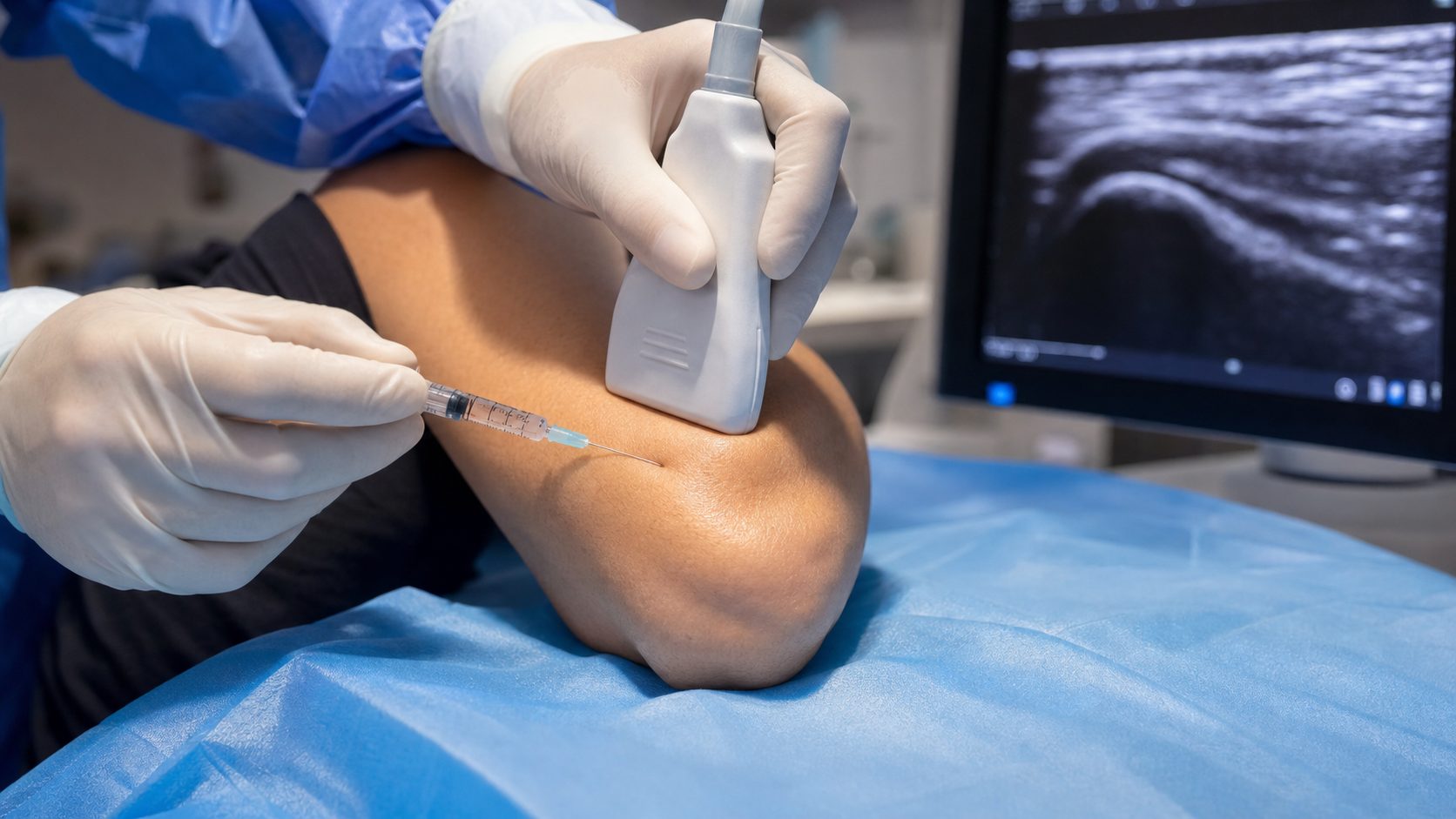
Elbow pain is one of the most common reasons adults see a sports medicine or physical medicine physician — and one of the most frustrating to treat. Lateral epicondylitis, known colloquially as tennis elbow, affects an estimated 1–3% of adults annually and is among the most prevalent chronic tendinopathies in the working-age population. Partial ulnar collateral ligament (UCL) tears, long considered a condition exclusive to elite baseball pitchers, are now increasingly recognized in a broader population of overhead athletes. Two biological interventions — platelet-rich plasma (PRP) and, to a more limited extent, bone marrow aspirate concentrate (BMAC) — have accumulated a meaningful evidence base at the elbow. The literature is messier than the shoulder, and honest interpretation requires engaging with both the positive and the negative trials.
This article is that discussion. It covers what these interventions do, where the evidence is strongest, where critical counterpoints exist, and how we approach patient selection at Pravida Health. The central finding is not a clean endorsement: PRP has earned a defensible role in chronic lateral epicondylitis that has failed conservative care, with consistent long-term superiority over corticosteroid across multiple meta-analyses. For partial UCL tears, the case-series evidence is encouraging but a large real-world MLB cohort study found no advantage — and that nuance belongs in every honest patient conversation.
The Elbow Problem Most Adults — and Many Athletes — Eventually Face
The elbow is a hinge joint subjected to enormous repetitive load in both occupational and athletic contexts, and the soft-tissue pathologies that accumulate there follow predictable anatomic patterns. Understanding the spectrum is essential before evaluating any biologic intervention, because PRP and BMAC behave very differently across these pathologies.
Lateral Epicondylitis (Tennis Elbow)
Lateral epicondylitis is the most common elbow tendinopathy, affecting an estimated 1–3% of adults annually. Despite its name, inflammation is not the dominant pathologic process. Histologically, this is degenerative tendinosis — disorganized collagen, angiofibroblastic proliferation, and failed intrinsic repair at the common extensor origin, principally the extensor carpi radialis brevis (ECRB) attachment on the lateral epicondyle. The classical presentation is lateral elbow pain reproduced by resisted wrist extension, grip loading, and tenderness directly over the lateral epicondyle. It is more accurately described as a failed healing response than an inflammatory condition, which is part of the rationale for growth-factor-mediated biologic interventions.
Medial Epicondylitis (Golfer’s Elbow)
Medial epicondylitis follows a similar tendinopathic mechanism at the common flexor-pronator origin on the medial epicondyle, but is less common — roughly four to five times less prevalent than lateral epicondylitis in epidemiologic studies. The pathology is analogous: degenerative tendinosis rather than acute inflammation. The lateral epicondylitis evidence base is typically extrapolated to medial epicondylitis in clinical practice, though dedicated high-quality RCT data for medial epicondylitis specifically is more limited.
Partial UCL Tears
Partial UCL tears most commonly occur at the proximal humeral attachment of the anterior bundle of the medial UCL, the primary restraint to valgus stress at the elbow during the late-cocking and acceleration phases of throwing. Though classically associated with baseball pitchers — the population in whom Tommy John surgery was developed — partial UCL insufficiency is increasingly documented in other overhead athletes: javelin throwers, tennis players, volleyball players, and gymnasts. Grade and location of the tear, athlete level, and return-to-sport goals are the critical patient-selection variables that make biologic outcomes so heterogeneous in this population.
Biceps Insertional Tendinopathy and Triceps Tendinopathy
Biceps insertional tendinopathy (distal biceps) and triceps tendinopathy are real conditions but substantially less common than lateral epicondylitis or UCL pathology. The biologic evidence for these is limited to small case series, and they are not primary indications for PRP at the elbow based on current data.
The point this spectrum illustrates is fundamental: biologics behave differently across these pathologies. The evidence driving the strongest clinical signal — multiple meta-analyses showing PRP superiority over corticosteroid at 6–12 months — is specific to lateral epicondylitis. Extrapolating those findings to UCL pathology or insertional tendinopathy would be a clinical error.
What “Regenerative Orthopedics” Actually Means at the Elbow
The language of regenerative medicine can obscure meaningful differences between interventions. For elbow pathology, the two most relevant biologics are PRP and BMAC — and they are not interchangeable.
PRP (Platelet-Rich Plasma)
PRP is produced by centrifuging a small volume of the patient’s blood to concentrate platelets above baseline. The concentrate is then delivered under ultrasound guidance to the affected tendon. For lateral epicondylitis, the delivery technique matters: most positive trials, including Mishra 2014, use a needle peppering technique — multiple tendon passes through the lesion — to create controlled microtrauma alongside growth-factor delivery. Platelets release PDGF (platelet-derived growth factor), TGF-β, VEGF, and other cytokines that modulate local inflammation, recruit mesenchymal progenitor cells, and stimulate collagen remodeling in the degenerative tendon. The preparation formulation matters: leukocyte-rich PRP (LR-PRP) is the type used in most positive elbow trials, including Mishra 2014, and should be specified when evaluating or comparing study results. Leukocyte-poor formulations may have different biologic profiles, and cross-study comparisons that ignore this distinction can be misleading.
BMAC (Bone Marrow Aspirate Concentrate)
BMAC at the elbow has a very different evidence profile than PRP. Its use at this anatomic site is largely confined to UCL reconstruction surgery as an adjunct — the literature for percutaneous standalone BMAC injection for lateral epicondylitis or UCL pathology is extremely limited. Most of the headline evidence for elbow biologics is PRP-based. This is meaningfully different from the shoulder, where BMAC has two substantial datasets (Hernigou 2014 and Centeno 2024). Patients asking about BMAC for elbow conditions should understand that the evidence base is currently much thinner than for PRP.
One technical point that applies to both PRP and BMAC: ultrasound guidance is non-negotiable for accurate elbow delivery. The common extensor tendon is small and superficial — and while it may seem straightforward to target, accurate needle placement within the tendinotic zone requires real-time imaging. The UCL is even more demanding to target accurately given its depth and proximity to the ulnar nerve. Image guidance is not optional; it is a prerequisite for any meaningful biologic effect and a patient safety issue for medial-sided injections where the ulnar nerve is at risk.
The Evidence That Matters Most: Lateral Epicondylitis and Partial UCL Tears
The elbow biologic literature is anchored by two clinical questions: does PRP outperform corticosteroid for chronic lateral epicondylitis, and does PRP facilitate return to sport in overhead athletes with partial UCL tears? The answer to the first question is a carefully graded yes. The answer to the second is genuinely uncertain.
6a. Lateral Epicondylitis (Tennis Elbow) — PRP Versus Corticosteroid
The most clinically meaningful pattern in the lateral epicondylitis literature is time-dependent: corticosteroids produce better short-term pain reduction in the first 4–8 weeks, but their benefit is not durable. PRP catches up by 3 months and is consistently superior at 6–12 months across multiple independent meta-analyses. This is not a marginal effect — the long-term advantage is statistically robust in the best available evidence.
Mishra AK, Skrepnik NV, Edwards SG, et al. Efficacy of platelet-rich plasma for chronic tennis elbow: a double-blind, prospective, multicenter, randomized controlled trial of 230 patients. Am J Sports Med. 2014;42(2):463–471. PubMed 24211946 | DOI 10.1177/0363546513494359
Mishra et al. 2014 remains the largest double-blind RCT of PRP for chronic lateral epicondylitis. Two hundred thirty patients with chronic refractory tennis elbow were randomized to either leukocyte-rich PRP delivered using the needle peppering technique or an active needling control. At 24 weeks, VAS pain improvement was 71.5% in the PRP group versus 56.1% in the control group (P=0.019). The advantage persisted at longer follow-up intervals. The use of LR-PRP via peppering technique, double-blinding, and multicenter design make this one of the most methodologically robust PRP trials in the musculoskeletal literature. Honest read: the needling control is itself an active comparator — the PRP advantage was demonstrated against a procedure that itself stimulates a healing response, not against saline injection, which may actually underestimate the true magnitude of PRP benefit over a fully inert comparator.
Maroun M, et al. PRP versus corticosteroid injection for chronic lateral epicondylitis: systematic review and meta-analysis of 26 randomized controlled trials (n=1,877). Eur J Orthop Surg Traumatol. 2025. PubMed 40077872
Maroun et al. 2025 is the most comprehensive meta-analysis of PRP versus corticosteroid for lateral epicondylitis to date — 26 RCTs, 1,877 patients. At short-term follow-up (less than 2 months), VAS scores favored corticosteroid, consistent with the known pattern of early CS superiority. At long-term follow-up (greater than 6 months), VAS scores favored PRP (mean difference −1.60, 95% CI −2.01 to −1.20). DASH scores at long-term follow-up also favored PRP (mean difference −4.87). This is a clinically meaningful functional advantage, not only a pain signal. The evidence from 26 independent RCTs pointing in the same direction at 6+ months is a strong clinical signal that should inform treatment planning in chronic lateral epicondylitis.
Houck DA, Kraeutler MJ, et al. Treatment of lateral epicondylitis with autologous blood, platelet-rich plasma, or corticosteroid injections: a systematic review of overlapping meta-analyses. Orthop J Sports Med. 2019;7(3):2325967119831052. DOI 10.1177/2325967119831052
Houck et al. 2019 systematically reviewed the overlapping meta-analyses comparing PRP, autologous blood, and corticosteroid for lateral epicondylitis. The conclusion was consistent with the Maroun 2025 findings: PRP demonstrates superiority over corticosteroid at 6–24 months for both pain and function. Autologous blood injections (a related but distinct intervention using whole blood rather than a platelet concentrate) were also superior to CS at long-term follow-up, suggesting that the mechanism of benefit may extend beyond concentrated platelet growth factors to include the controlled inflammatory stimulus from blood products more broadly.
The counter-evidence — the Caspian network meta-analysis: A 2022 network meta-analysis published in the Caspian Journal of Internal Medicine analyzed head-to-head trials and found that PRP was not significantly more efficient than placebo at any time point. This is a genuine counterpoint that should be part of every honest patient conversation. PMC9301214. The methodological difference that matters: network meta-analyses incorporating placebo arms and active comparators can yield different conclusions than pairwise meta-analyses of PRP versus CS alone. The Caspian finding does not erase the Maroun 2025 or Houck 2019 signal, but it is a legitimate reason to communicate uncertainty rather than certainty to patients.
Most current synthesis: A 2026 time-dependent network meta-analysis in the Journal of Pain Research (41 trials, n=3,285) confirmed the time-dependent pattern: corticosteroids performed best short-term with a documented long-term rebound effect; PRP was statistically superior to placebo at mid-term; autologous blood and dextrose prolotherapy were also competitive at longer time horizons. PMC13134570. This is the most comprehensive current synthesis and is consistent with the overall pattern: PRP provides modest but durable benefit at 6–12 months for chronic lateral epicondylitis that has failed conservative care. Corticosteroid still wins the first month — but the long-term rebound effect makes it the worse strategic choice for most patients with truly chronic disease.
6b. Partial UCL Tears in Overhead Athletes
This is a more contested area. The foundational case-series evidence is genuinely encouraging — but a large real-world cohort study from Major League Baseball introduced important uncertainty that the case-series optimism did not anticipate.
Podesta L, Crow SA, Volkmer D, et al. Treatment of partial ulnar collateral ligament tears in the elbow with platelet-rich plasma. Am J Sports Med. 2013;41(7):1689–1694. PubMed 23666850
Podesta et al. 2013 is the foundational case series for PRP in partial UCL tears. Thirty-four overhead athletes with partial UCL tears confirmed on MRI and physical examination were treated non-operatively with a single leukocyte-rich PRP injection under ultrasound guidance. 30 of 34 athletes (88%) returned to their prior level of competition at an average of 20 weeks after treatment. Outcomes were measured using validated instruments: KJOC score, DASH score, and dynamic ultrasound measurement of medial joint space. The positive imaging change — improved medial joint space laxity on dynamic ultrasound — suggested structural response beyond symptom management. Honest read: this is a case series (level IV evidence), with no control group. Return to sport from a partial UCL tear with conservative rehabilitation alone, without PRP, is also possible in a meaningful percentage of athletes; the absence of a matched no-PRP arm makes attribution of the 88% RTP rate to PRP specifically uncertain.
Dines JS, Williams PN, ElAttrache N, et al. Platelet-rich plasma can be used to successfully treat elbow ulnar collateral ligament insufficiency in high-level throwers. Sports Health. 2018;10(3):232–237. PubMed 27143218
Dines et al. 2018 reported an additional series of high-level throwers with UCL insufficiency treated with PRP, demonstrating a return-to-sport rate consistent with the Podesta series and corroborating the overall positive case-series signal for partial-grade UCL injuries. The Dines cohort represents higher-level athletes, adding clinical relevance for competitive overhead sports.
Systematic review of PRP for partial UCL tears treated non-operatively. Shoulder Elbow. 2024. PMC11418690
The 2024 systematic review in Shoulder Elbow synthesized 5 studies including 156 athletes with partial UCL tears treated non-operatively with PRP. 75% (97 of 127) returned to sport at a weighted average of 82 days. Two studies demonstrated UCL reconstitution on MRI in 87% of patients and improved humeral-ulnar joint space on dynamic ultrasound. This systematic review represents the strongest aggregate evidence from the case-series literature. The consistent structural and functional signals across independent series are clinically meaningful, even in the absence of a randomized control arm.
Chauhan A, McQueen P, Chalmers PN, et al. Nonoperative treatment of ulnar collateral ligament injuries in Major League Baseball pitchers: predictors of return to play. Am J Sports Med. 2019;47(13):3107–3114. PubMed 31603707
Chauhan et al. 2019 is the critical counter-evidence that every patient asking about PRP for UCL injuries deserves to hear. This matched comparative analysis examined 133 MLB players who received PRP for UCL injury and compared them to matched controls who underwent conservative management without PRP. The overall RTP rate was 54% — substantially lower than the case-series literature — and there was no advantage for the PRP group over matched controls. Furthermore, the PRP group actually had delayed return to throwing and delayed overall return to play compared with the no-PRP group. Honest read: this is not a finding that PRP caused harm — confounding by indication (sicker players may have received PRP) could explain some of the delay. But at the highest level of competition, in the most rigorously matched cohort available in this literature, PRP did not outperform conservative management. This is a sobering counterpoint to the case-series enthusiasm and should anchor a nuanced patient conversation rather than be footnoted away.
The honest synthesis: the case-series evidence for PRP in partial UCL tears is encouraging, particularly for proximal low-grade tears in overhead athletes who are not at the highest elite competition tier. The MLB cohort data is sobering. Patient selection — tear location, grade, athlete level, and return-to-play timeline — appears to matter more than whether PRP is added to the treatment plan.
“At the elbow, biologics shine brightest where the data is best — chronic lateral epicondylitis that has failed conservative care. For partial UCL tears, the case series are encouraging but the larger cohort data is mixed; honest patient counseling matters more than enthusiasm.”
Where Else PRP Fits at the Elbow — and Where It Probably Doesn’t
Beyond lateral epicondylitis and UCL pathology, the elbow biologic literature is sparse. Understanding where evidence ends and extrapolation begins is part of honest clinical practice.
Medial Epicondylitis (Golfer’s Elbow)
Medial epicondylitis follows a pathologically similar tendinopathic process as lateral epicondylitis at the common flexor-pronator origin. The lateral epicondylitis evidence is generally extrapolated to medial epicondylitis in clinical practice, given the shared pathologic mechanism. However, dedicated high-quality RCT data for medial epicondylitis is limited, and the proximity of the ulnar nerve to medial-sided injections introduces an additional anatomic risk that requires careful ultrasound-guided technique. Patients with golfer’s elbow refractory to conservative care are reasonable PRP candidates in the right clinical context, with appropriate informed consent that the evidence base is thinner than for lateral epicondylitis.
Biceps Insertional Tendinopathy and Partial Distal Biceps Tears
Small case series have described PRP for partial distal biceps tears and insertional tendinopathy, with generally positive short-term signals. This is not a first-line indication, and the evidence does not yet support PRP for distal biceps pathology as standard care. Surgical referral for complete distal biceps ruptures is the appropriate first step; partial tears with persistent symptoms following conservative care represent a case-by-case discussion with limited evidence guidance.
Olecranon Bursitis and Elbow Osteoarthritis
Olecranon bursitis is primarily an inflammatory condition managed conservatively, with aspiration when indicated. It is not a primary indication for biologics. Elbow osteoarthritis — much less common than knee or hip OA — has a very limited biologic evidence base at the elbow specifically. The PRP evidence for osteoarthritis is strongest at the knee; direct application to elbow OA requires caution given the different anatomy and the absence of dedicated elbow OA biologic trials.
Triceps Tendinopathy
Triceps tendinopathy is rare, and the biologic evidence at this site is minimal — primarily anecdotal case reports. It is not a standard indication for PRP based on current evidence.
How We Approach This at Pravida Health
Pravida Health is located at 1801 Peachtree St NE, Ste 150, Atlanta, GA 30309. Our approach to elbow biologics is structured around confirmed diagnosis, a genuine trial of conservative care, and honest evidence communication specific to the pathology in question.
Patient selection logic for elbow regenerative procedures:
- Lateral epicondylitis: diagnosis confirmed by physical examination — tenderness over the lateral epicondyle, pain with resisted wrist extension (Cozen’s test) — supported by ultrasound showing hypoechoic tendon, neovascularization, or cortical irregularity at the ECRB origin. Symptoms must be refractory to a genuine 6–8 week eccentric loading physical therapy program before injection therapy is discussed.
- Partial UCL tears: diagnosis confirmed by physical examination (moving valgus stress test, milking maneuver, medial elbow tenderness) corroborated by MRI demonstrating partial-thickness tear and/or dynamic ultrasound showing medial elbow gapping with valgus stress. Tear morphology matters — proximal low-grade partial tears are the best candidates for non-operative biologic management. High-grade or complete tears, particularly in young competitive throwers with elite return-to-play goals, should have a simultaneous surgical consultation.
- LR-PRP delivered via ultrasound-guided peppering technique for lateral epicondylitis, following the Mishra 2014 protocol. Ultrasound guidance on all injections — elbow anatomy tolerates no shortcuts on this.
- Outcomes tracked: PRTEE (Patient-Rated Tennis Elbow Evaluation), DASH or QuickDASH, VAS pain score, grip strength dynamometry. For overhead athletes — KJOC score and standardized return-to-throwing benchmarks with structured progression milestones.
- Surgical referral criteria: high-grade complete UCL tears in young competitive throwers; lateral epicondylitis refractory after multiple injections with advanced tendon degeneration on imaging; distal biceps complete rupture; triceps avulsion injury.
- All injections ultrasound-guided. Non-negotiable for both safety and accuracy. Contact us to discuss whether your clinical picture is appropriate for evaluation.
If you are considering a regenerative approach for elbow pathology and would like an evidence-grounded evaluation, contact us at Pravida Health to discuss your specific situation with a board-certified physician.
Risks, Limitations & What the Evidence Doesn’t Yet Show
Any honest discussion of elbow biologics requires clear accounting of what the procedures involve and what the evidence cannot yet confirm.
- Post-injection flare: The needle peppering technique for lateral epicondylitis reliably causes a post-injection pain flare that can last 5–10 days. This is an expected part of the procedure — the controlled microtrauma is part of the mechanism — but patients must be counseled to anticipate it and plan accordingly before treatment.
- Ulnar nerve risk with medial-sided injections: Injections to the medial elbow — UCL, medial epicondyle, common flexor origin — require meticulous ultrasound-guided technique due to proximity of the ulnar nerve. Ulnar nerve dysfunction following medial elbow PRP has been reported as a documented complication. JSES 2020 case report (PMC10426667). This risk is manageable with proper technique but cannot be dismissed.
- Infection, bleeding, transient nerve irritation: Standard procedural risks of any percutaneous injection apply. Ultrasound guidance and sterile technique minimize but do not eliminate these risks.
- PRP preparation variability: Leukocyte-rich versus leukocyte-poor formulations, platelet concentration multiples, and activation method differ substantially across studies and providers. The LR-PRP used in positive trials like Mishra 2014 is not necessarily what every provider is delivering. Asking for specifics about preparation methodology is appropriate and reasonable.
- For lateral epicondylitis: Multiple meta-analyses favor PRP at 6–12 months over corticosteroid — but the Caspian network meta-analysis found no significant PRP advantage over placebo. The evidence is encouraging but not uniformly positive across all study designs.
- For partial UCL tears: Case-series evidence is promising in appropriately selected patients; the Chauhan MLB matched cohort data showed no advantage and delayed return in the real-world MLB population. These findings must both be communicated honestly.
- Cost: PRP and BMAC for elbow conditions are not covered by most commercial insurers or Medicare. Full cost information should be provided upfront before scheduling.
- Not a substitute for surgery when surgery is the right answer: High-grade complete UCL tears in young competitive throwers with elite-level return-to-play timelines, complete distal biceps ruptures, and lateral epicondylitis with severe tendon degeneration after multiple failed injections are situations where surgical consultation should precede any further biologic intervention.
What You Can Do Today
- For tennis elbow: Commit to an eccentric loading protocol for 6+ weeks before considering any injection. The Tyler Twist and reverse Tyler Twist exercises have the strongest evidence base in the lateral epicondylitis PT literature. Most cases of lateral epicondylitis resolve with structured eccentric loading alone given adequate time and compliance.
- Optimize counterforce bracing and activity modification: A forearm counterforce brace reduces stress at the lateral epicondyle during provocative activities. Reducing repetitive wrist extension load — keyboard height, tool handle diameter, grip strength demands — addresses the underlying mechanism. These are not consolation prizes; they are the foundation that makes any injection more likely to succeed.
- If you’ve had a corticosteroid injection that helped briefly and then regressed, that is the textbook pattern documented in the literature. A PRP consultation is a reasonable next step — but only after re-establishing a structured PT program, not as an immediate reflex response to the rebound.
- For overhead athletes with medial elbow pain: Get the diagnosis right first. MRI and dynamic ultrasound together define tear grade, location, and medial elbow laxity — these findings drive the treatment decision more than any other variable. Skipping imaging and proceeding directly to injection because a case series had positive results is clinically imprecise.
- When evaluating a regenerative provider: Ask about ultrasound guidance (mandatory), PRP preparation methodology (LR-PRP vs. LP-PRP, platelet concentration multiple), outcome tracking (PRTEE, DASH, VAS, grip strength), and whether the provider can cite the specific evidence for and against their recommendation. Providers who can articulate both the positive and negative literature — and who tell you when surgery is the better option — are the ones worth trusting. Contact Pravida Health if you want an evidence-grounded evaluation before committing to any treatment.
Frequently Asked Questions
Does PRP actually work for tennis elbow?
The honest answer depends on the time horizon and study design. Multiple meta-analyses — including Maroun et al. 2025 (26 RCTs, n=1,877) and Houck 2019 — consistently show PRP outperforms corticosteroid at 6–12 months for pain and DASH scores. The largest double-blind RCT (Mishra 2014, n=230) demonstrated a statistically significant VAS improvement of 71.5% in the PRP group versus 56.1% in the needling control at 24 weeks. However, a 2022 network meta-analysis (Caspian J Intern Med) found PRP was not significantly more efficient than placebo at any time point — a genuine counterpoint that means the evidence is not uniformly positive. The most defensible summary: PRP provides modest but durable benefit at 6–12 months for chronic lateral epicondylitis that has failed a genuine trial of conservative care.
Should I get a cortisone shot or PRP for my tennis elbow?
Corticosteroid injections provide better short-term pain relief in the first 4–8 weeks. The problem is rebound: the short-term superiority of CS does not hold at 6+ months, and multiple meta-analyses document a pattern of long-term inferiority compared with PRP. If you need rapid short-term pain control, CS can be reasonable. If you have had a cortisone shot that helped briefly and then rebounded — which is the pattern documented across the literature — PRP is worth a serious evidence-based conversation. The evidence strongly favors PRP for long-term outcomes in chronic disease. A genuine 6–8 week eccentric loading PT program should come before either injection; most cases resolve with structured conservative care alone. Contact us to discuss your situation.
Will PRP help me avoid Tommy John surgery for a partial UCL tear?
This is one of the most important and honest questions in elbow regenerative medicine. The case-series evidence is encouraging: Podesta et al. 2013 (34 overhead athletes, 88% RTP) and the 2024 systematic review (156 athletes, 75% RTP) suggest meaningful return-to-sport rates. However, the large MLB matched cohort (Chauhan et al. 2019, n=133) showed no advantage for PRP over conservative management and found delayed return to throwing in the PRP group. Patient selection appears to matter more than whether PRP is added: proximal low-grade partial tears in non-elite overhead athletes represent the best candidate profile. High-grade complete UCL tears in young competitive throwers with realistic elite return-to-play goals should have a surgical consultation concurrent with any non-operative consideration.
How long does PRP for the elbow take to work?
For lateral epicondylitis, most patients who respond to PRP begin noticing improvement between 4 and 8 weeks post-injection, with the most substantial benefit in the 3–6 month window. Expect a post-injection pain flare from the peppering technique lasting 5–10 days — this is expected, not a sign of treatment failure. For partial UCL tears in overhead athletes, the Podesta 2013 series reported return to prior competition at an average of 20 weeks, with a structured return-to-throwing program running in parallel. Skipping the rehabilitation phase substantially reduces the probability of a successful outcome regardless of what was injected.
Is this offered at Pravida Health?
Yes. Pravida Health offers ultrasound-guided PRP injections for appropriately selected elbow patients at our Atlanta clinic at 1801 Peachtree St NE, Ste 150, Atlanta, GA 30309. Our approach begins with confirmed diagnosis on physical exam and imaging, a genuine trial of conservative care, and a frank discussion of what the evidence shows for your specific pathology. We track outcomes using validated instruments — PRTEE, DASH, VAS, grip strength — and refer for surgical consultation when surgery is the better answer. To discuss your situation with a board-certified physician, contact us to schedule a consultation.
Ready to discuss your elbow with an evidence-grounded physician?
At Pravida Health, we start with your diagnosis, your imaging, and your goals — not a preferred procedure. If PRP makes sense for your lateral epicondylitis or partial UCL tear, we will explain exactly why and what the evidence says. If surgery or PT is the better answer, we will tell you that too.
Book a Consultation