

Key takeaways
- Evident is a blood test that looks for tumor-shed extracellular vesicles, not DNA. It is made by Mercy BioAnalytics and is aimed at annual screening of average-risk postmenopausal women.
- The best data so far are genuinely encouraging. In blood banked up to 12 months before diagnosis, it flagged 82.9% of high-grade serous ovarian cancers at 97.7% specificity, and 8 of 9 early-stage cases. CA-125 caught 5 of those 9.
- The headline early-stage figure rests on 9 women, with a confidence interval from about 57% to 98%. Most authors work for or consult for the company.
- For a rare cancer, false positives dominate. At this accuracy, roughly 1 in 60 positive results would be cancer before follow-up testing.
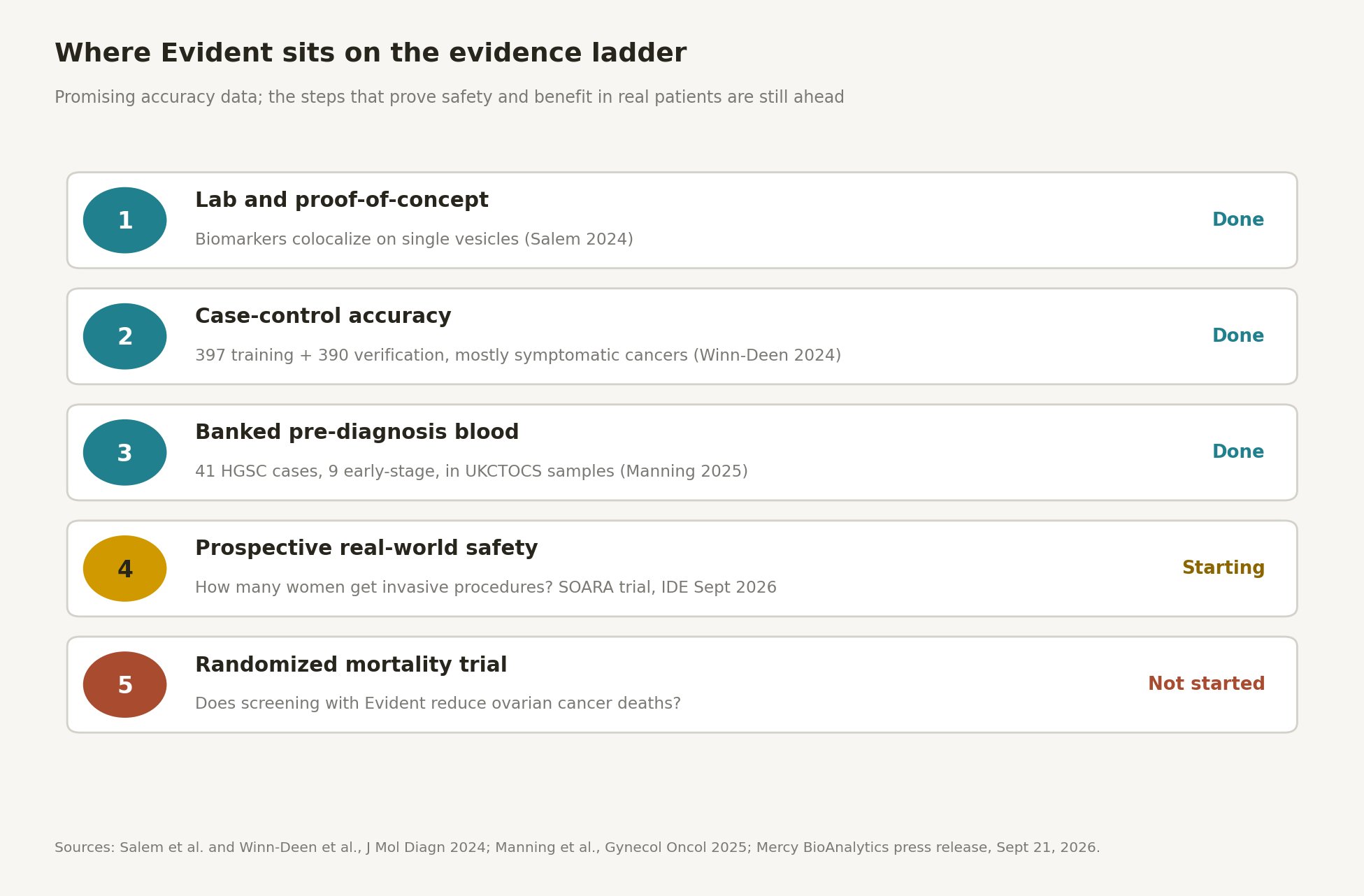
- No study has yet shown it saves lives or tested its safety in real practice. It is not FDA cleared, costs $795 and is not covered by insurance. A prospective safety trial (SOARA) is only now starting.
Why I’m writing about this test
I recently met with a representative from Mercy BioAnalytics, the company behind the Evident ovarian cancer screening test. The pitch was focused and the published data looked better than anything I’d seen for ovarian cancer screening, so I went back and read the primary studies myself. This article is what I found.
To be clear about where I stand: Pravida Health has no financial relationship with Mercy BioAnalytics, and meeting a sales representative is not an endorsement. My job here is to grade the evidence honestly, explain what a positive or negative result would actually mean for a patient, and lay out the questions I’d want answered before recommending the test to a woman in my practice.
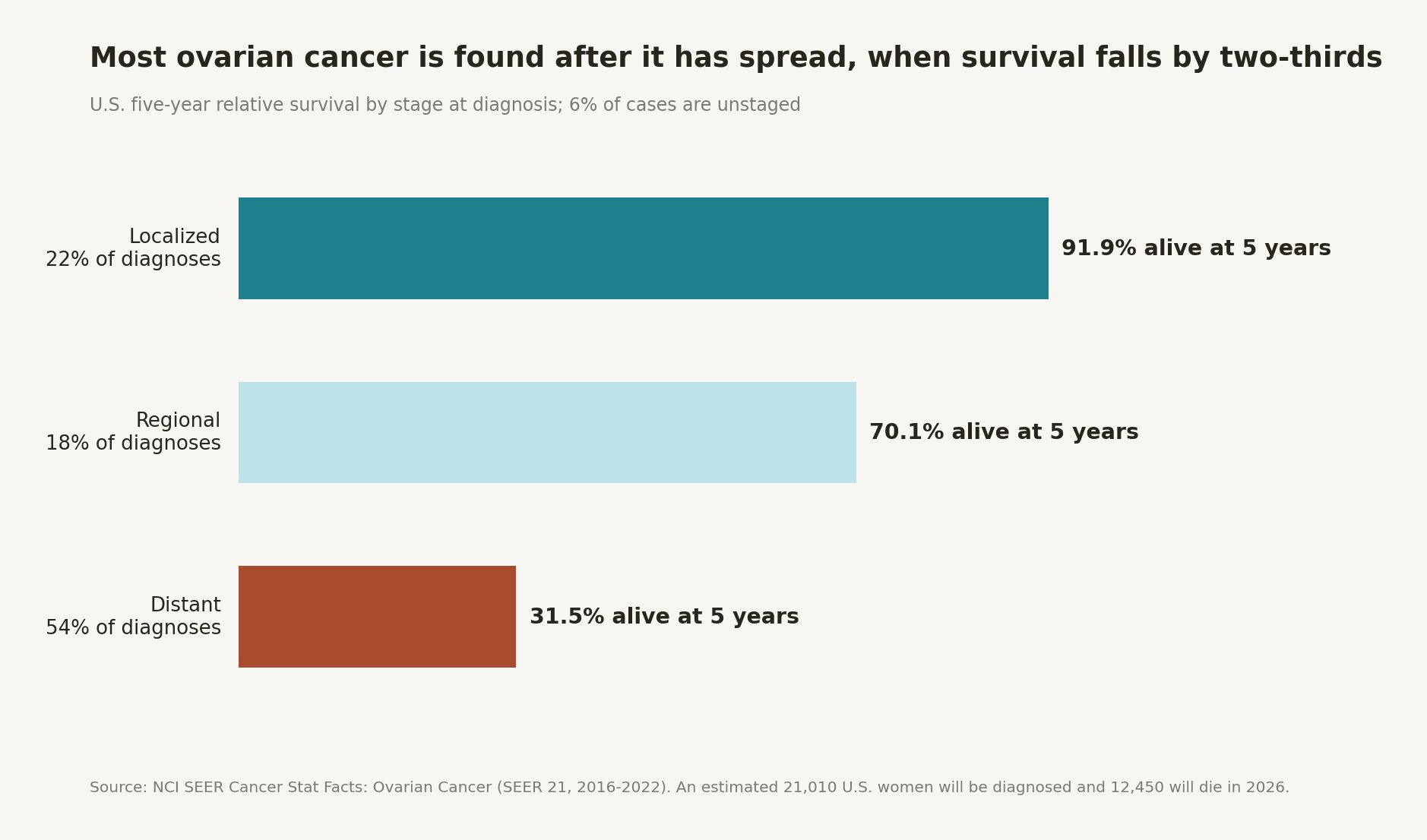
The reason this matters is simple. Ovarian cancer is one of the deadliest cancers in women because it is usually found late. An estimated 21,010 U.S. women will be diagnosed in 2026 and 12,450 will die of it. Only about 22% of cases are caught while still localized, when five-year survival is 91.9%. For disease that has already spread to distant sites, it is 31.5% (NCI SEER).
Why ovarian cancer screening has failed so far
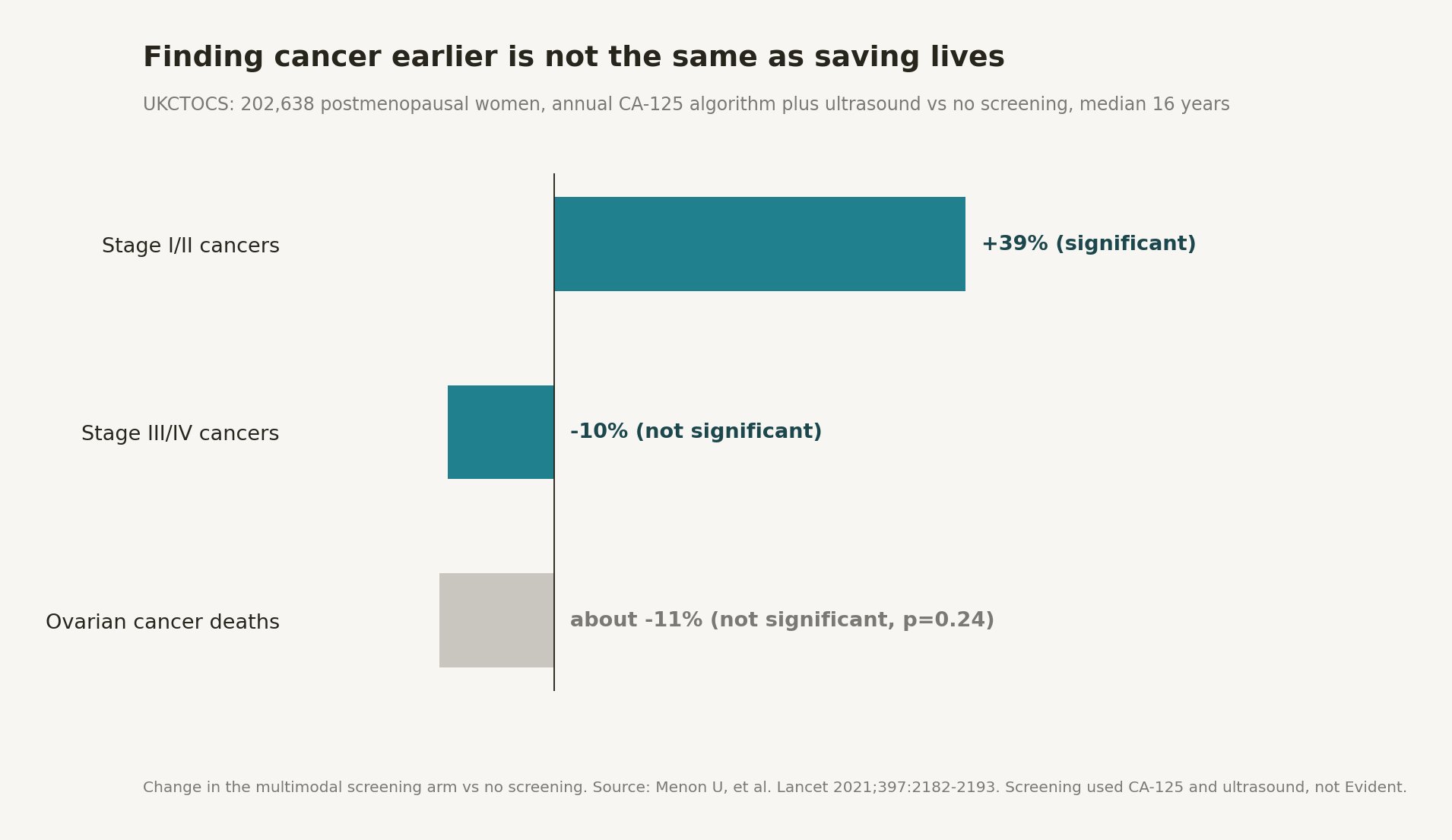
We have tried to screen for this cancer before, carefully and at scale. The U.K. Collaborative Trial of Ovarian Cancer Screening (UKCTOCS) randomized 202,638 postmenopausal women aged 50 to 74 to annual CA-125 testing interpreted with a risk algorithm followed by ultrasound, annual ultrasound alone, or no screening, and followed them for a median of about 16 years. The CA-125 strategy did shift diagnoses earlier: stage I or II cancers were 39% more common, and stage IV cancers were about 25% less common. But ovarian cancer deaths were not significantly reduced; the estimated reduction was 11% with p=0.24 (Menon et al., Lancet 2021).
That result is why the U.S. Preventive Services Task Force gives ovarian cancer screening in asymptomatic, average-risk women a Grade D, meaning it recommends against it. The Task Force found adequate evidence that screening does not reduce mortality, and noted that most women with a positive screening result do not have cancer (USPSTF 2018). The American College of Obstetricians and Gynecologists likewise states that no current early-detection strategy reduces ovarian cancer mortality (ACOG Committee Opinion 716).
A 2026 modeling analysis of UKCTOCS data offers a sobering explanation. High-grade serous cancer, the most common and lethal subtype, appears to stay detectable at an early stage for only about 3 to 4 months before it spreads. The authors estimated that a meaningful mortality benefit of about 20% would require a test that can catch disease across roughly a one-year early window with at least 70% sensitivity (UKCTOCS secondary analysis, 2026). In other words, an annual test has to see the cancer very early, and probably at the fallopian tube stage, where most of these cancers seem to start.
That is the bar Evident has to clear.
What Evident measures
Most of the “cancer blood tests” people ask me about, including the multi-cancer cell-free DNA tests, look for fragments of tumor DNA. Evident takes a different approach. Tumor cells constantly shed tiny membrane-bound particles called extracellular vesicles into the blood. Mercy’s platform, called Mercy Halo, captures those vesicles and uses a DNA-tagged detection method (proximity-ligation PCR) to check whether two or three cancer-associated proteins sit together on the same vesicle (Evident for Providers).
The idea is that a single protein, like CA-125, is also made by normal tissue and rises with benign conditions. Requiring several markers on one particle should be more specific to cancer. In the platform paper, the named ovarian markers included BST-2, folate receptor-alpha and MUC1, and colocalized detection discriminated better than any single marker (Salem et al., J Mol Diagn 2024).
The report itself is simple: “Signal Detected” or “Signal Not Detected,” along with a quantitative risk score. It is a standard blood draw intended to be ordered once a year in average-risk postmenopausal women.
What the clinical data show
Step 1: a case-control accuracy study (2024)
The company first locked its test design in a training set of 397 women, then checked it in an independent, blinded set of 390 serum samples provided by University College London. In that verification set, it correctly identified 97.0% of high-grade serous cancers (64 of 66) and 97.0% of controls (128 of 132), with an AUC of 0.97. It detected 73.5% of other ovarian cancer types and produced fewer false positives than CA-125 in women with benign ovarian tumors, other cancers and inflammatory conditions (Winn-Deen et al., J Mol Diagn 2024).
Those are strong numbers, but they come from a design that always overstates real-world performance. Most of these cancers were already diagnosed, many were advanced, and the comparison group was hand-selected. It is the right first step, not proof of screening value.
Step 2: banked blood drawn before diagnosis (2025)
The more important study used blood that was drawn and frozen during UKCTOCS, months or years before any woman knew she had cancer. Researchers blindly tested samples from women in the ultrasound and no-screening arms who later developed ovarian cancer, each matched by age to 10 women who did not. The primary analysis looked at high-grade serous cancers diagnosed within 12 months of the blood draw (Manning et al., Gynecol Oncol 2025).
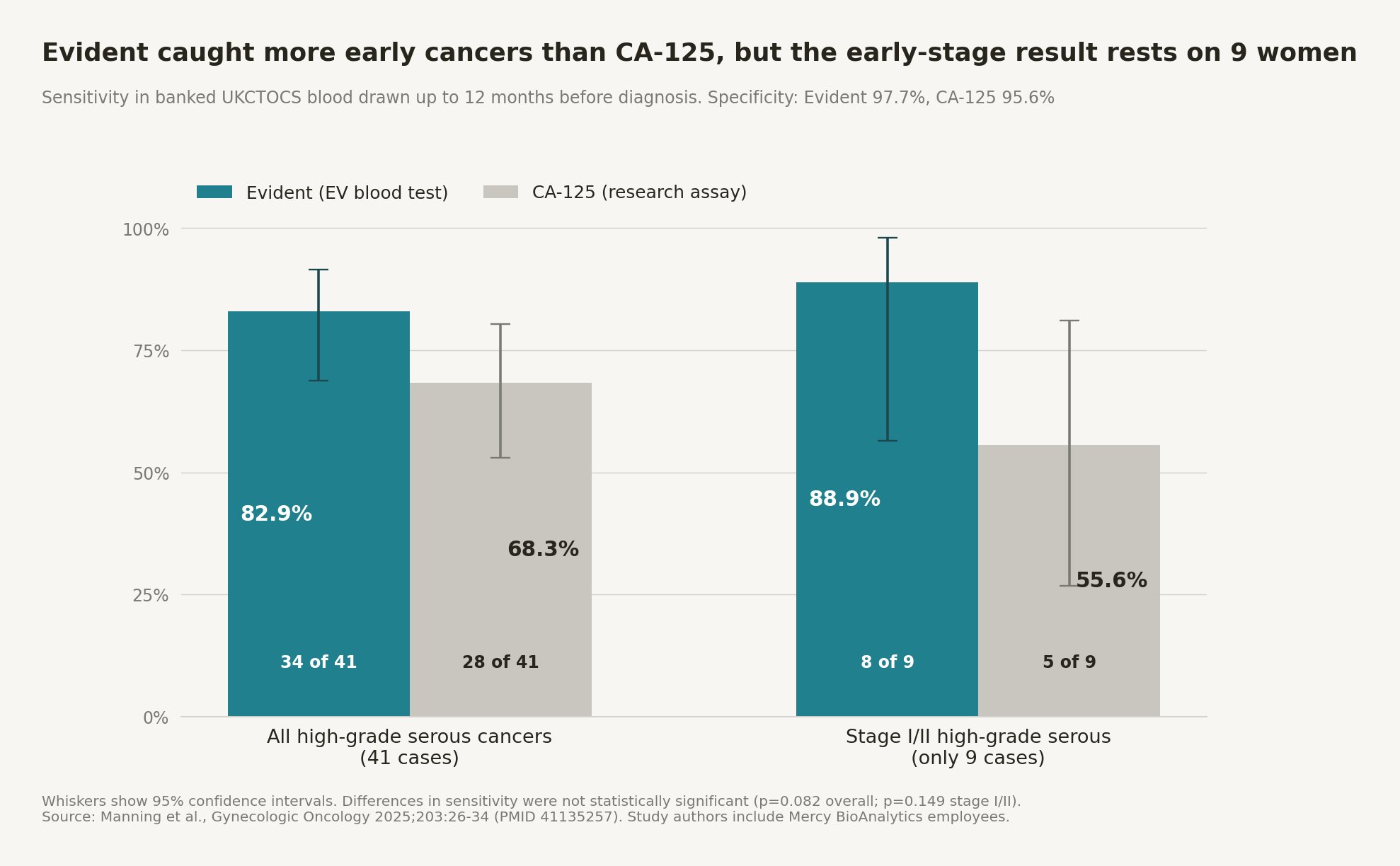
- All high-grade serous cancers (41 cases): Evident flagged 82.9% (95% CI 68.7–91.5%), compared with 68.3% for a research CA-125 assay.
- Specificity (1,176 controls): 97.7% for Evident versus 95.6% for CA-125, a statistically significant difference.
- Stage I/II high-grade serous cancers: Evident flagged 8 of 9 (88.9%; 95% CI 56.5–98.0%); CA-125 flagged 5 of 9.
This is the source of the company’s headline claim of “89% sensitivity for stage I/II at 98% specificity” (Mercy BioAnalytics). I think it is the most promising early-detection result I’ve seen for this cancer. It is also important to read it precisely:
- 89% is 8 out of 9 women. The confidence interval runs from about 57% to 98%, so the true early-stage sensitivity could be far lower.
- The sensitivity advantage over CA-125 was not statistically significant (p=0.082 overall and p=0.149 for early stage). The specificity advantage was.
- Banked samples were processed within 28 hours under research conditions. Real-world handling may differ.
- Most authors are Mercy employees, former employees or paid consultants, and the UCL investigators who supplied samples reported consulting fees from the company. Industry funding doesn’t make data wrong, but it raises the bar for independent replication.
- The lead UKCTOCS investigator has said the next step is to test performance in the trial’s third arm, the multimodal screening group (Mercy BioAnalytics). That result isn’t published yet.
One more detail worth knowing: the company’s provider page cites different ranges (92–97% sensitivity across stages and 93–97% specificity) drawn from earlier case-control work (Evident for Providers). When you see a number, ask which study and which population it came from. For screening decisions, the pre-diagnosis UKCTOCS study is the one that matters.
The math that decides whether a screening test helps
This is the part sales conversations rarely get to. Accuracy figures describe how a test performs in people we already know have, or don’t have, cancer. Patients need the reverse: if my test is positive, how likely is it that I have cancer? That is the positive predictive value (PPV), and it depends heavily on how common the disease is.
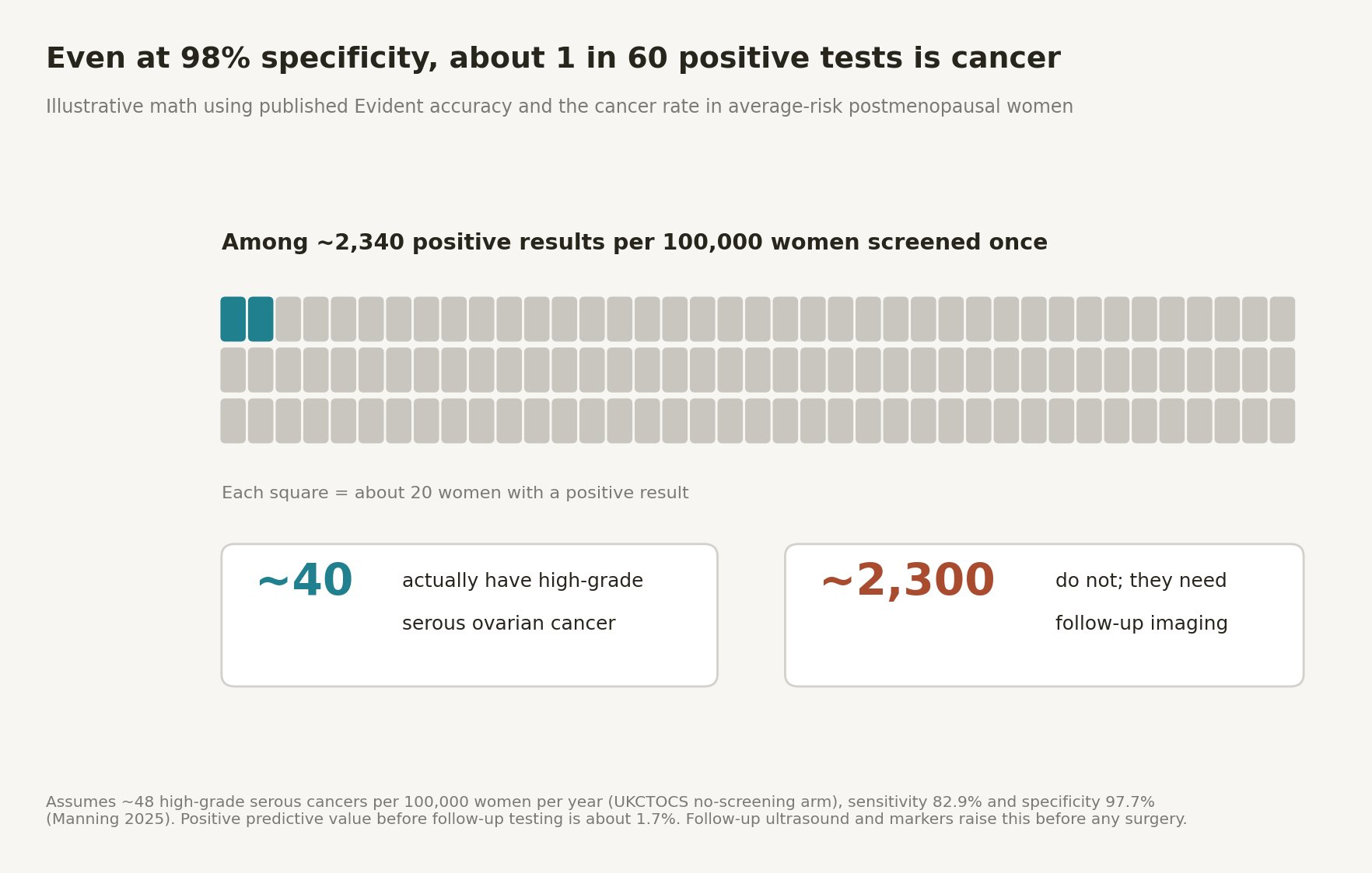
High-grade serous ovarian cancer is uncommon. In the UKCTOCS no-screening arm, it occurred at roughly 48 cases per 100,000 women per year. If 100,000 average-risk postmenopausal women took Evident once, using the published 82.9% sensitivity and 97.7% specificity, my estimate is about 40 true positives and about 2,300 false positives. That works out to a PPV of about 1.7%, or roughly 1 cancer for every 60 positive results, before any follow-up testing.
For decades, ovarian cancer researchers have argued that a screening strategy should reach a PPV of about 10%, or one cancer for every 10 operations, and that hitting that bar in a population with this cancer rate requires specificity above 99.6% (Bast et al., JNCI 2001). Evident is better than CA-125 on this curve, but on its own it is still well short.
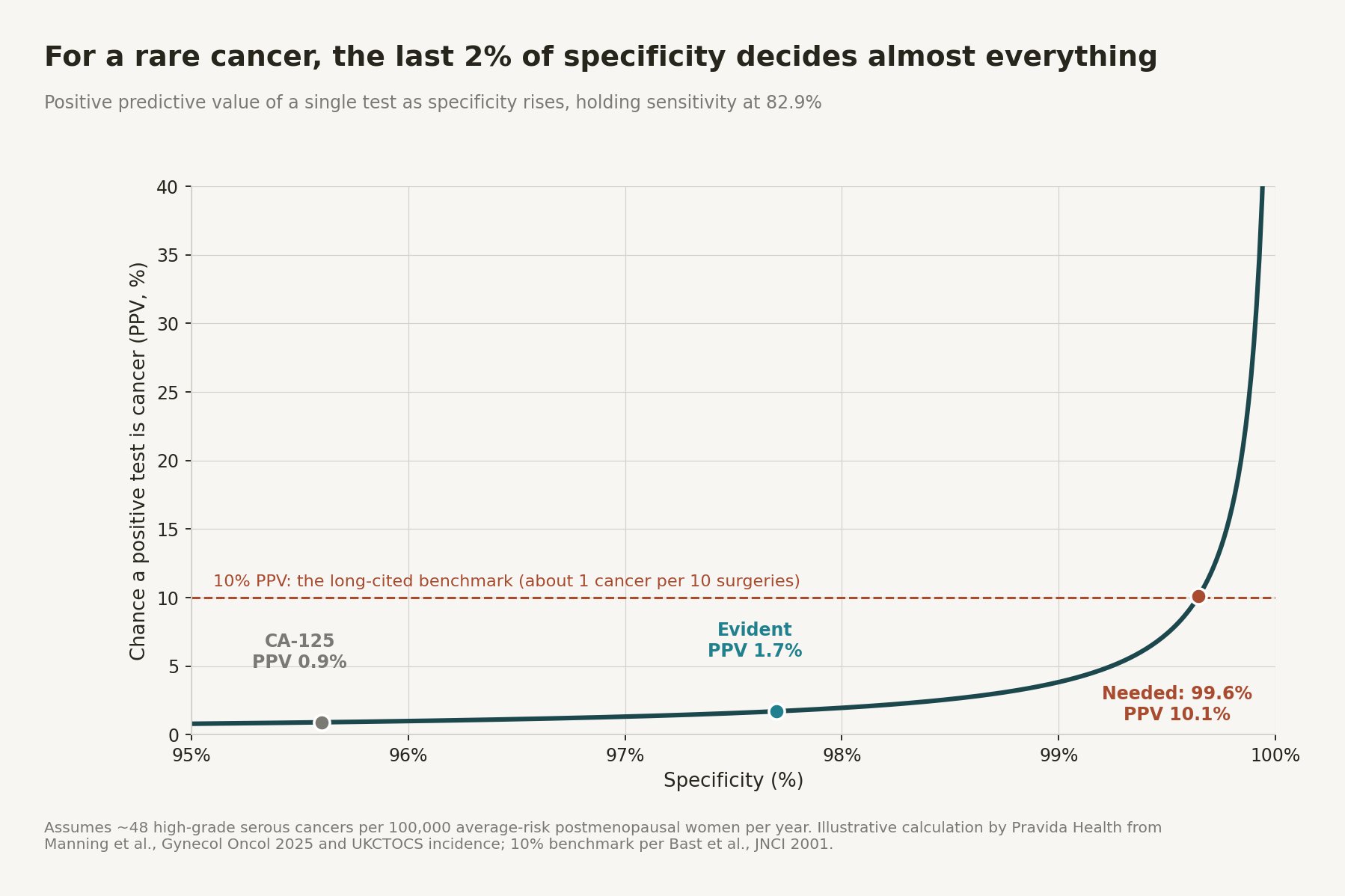
That doesn’t make the test useless. In practice, Evident is designed to be a first step, with a positive result leading to transvaginal ultrasound and possibly CA-125 or HE4. A two-step pathway can raise the PPV considerably before anyone is offered surgery. But how well that works, and how many women end up with an unnecessary operation, is exactly what hasn’t been measured yet. Definitive diagnosis of ovarian cancer still requires surgery.
Regulatory status, cost and the SOARA trial
- Not FDA cleared or approved. Evident is a laboratory-developed test performed in Mercy’s CLIA-certified lab (Evident).
- FDA Breakthrough Device Designation was granted in May 2024 for screening asymptomatic postmenopausal women (Mercy BioAnalytics). That designation speeds review; it is not approval.
- In September 2026, FDA approved an Investigational Device Exemption for SOARA, a prospective pivotal study in average-risk women (Mercy BioAnalytics). Its key measure is how many invasive procedures result per woman screened. Positive results go to transvaginal ultrasound, with CA-125 or HE4 at the physician’s discretion (Contemporary OB/GYN). The company’s CEO has acknowledged that banked-sample studies could not establish the test’s safety profile.
- Cost: the list price is $795. It is not covered by commercial insurance, Medicare or Medicaid. HSA/FSA payment and payment plans are offered (Evident billing FAQ).
My evidence grade
Dr. Turner’s read on Evident, October 2026
- Accuracy in banked samples: promising, moderate certainty. Consistent signal across two studies, better specificity than CA-125, but small early-stage numbers and mostly company-affiliated authors.
- Real-world safety (false positives leading to surgery): unknown. SOARA is designed to answer this.
- Reduction in ovarian cancer deaths: unproven. No randomized evidence yet, and UKCTOCS shows that earlier detection alone may not be enough.
- Bottom line: a reasonable option to discuss with an informed, average-risk postmenopausal woman who understands the limits and has a plan for a positive result. It is not something I would call standard of care, and it doesn’t override the current USPSTF and ACOG guidance.
Who this test is and isn’t for
Possibly reasonable to discuss
- Postmenopausal women at average risk who strongly value early detection, accept the uncertainty and the out-of-pocket cost, and want to make an informed choice, ideally as part of a broader prevention-focused workup.
- Women who may qualify to take part in the SOARA study instead, which would also help answer the open questions.
Not the right tool
- Women with symptoms. Persistent bloating, pelvic or abdominal pain, feeling full quickly, or new urinary urgency should prompt a diagnostic evaluation with your physician, not a screening test (American Cancer Society).
- Women at high inherited risk, such as BRCA1/2 or Lynch syndrome carriers or those with a strong family history. They need genetic counseling and a risk-reduction plan; a negative Evident result should not delay that. Our genomics-guided medicine overview explains how inherited risk is assessed.
- Women with a known pelvic mass. Evaluating a mass is a different question that uses different, validated tools and a gynecologic surgeon.
- Premenopausal women. The published data are in postmenopausal women.
One prevention point deserves mention because it is often overlooked. Many high-grade serous cancers appear to start in the fallopian tubes, and ACOG has moved toward more strongly supporting removal of the tubes (opportunistic salpingectomy) when women are already having pelvic surgery for another reason (Prevent Cancer Foundation). If you’re planning a hysterectomy or tubal procedure, ask your surgeon about it.
Questions to ask before you order it
A checklist for patients and clinicians
- Am I truly average risk? Have I reviewed my family history and considered genetic testing?
- If the result says “Signal Detected,” who orders the ultrasound, who reads it, and when would I see a gynecologic oncologist?
- What happens if the ultrasound is normal? Do I repeat the test, watch, or do more?
- Am I comfortable with the chance of a false positive, the anxiety it can cause, and the small chance it leads to surgery I didn’t need?
- Will a negative result change any decisions I would otherwise make? It shouldn’t mean ignoring symptoms.
- Am I prepared to pay $795 a year out of pocket for a test whose mortality benefit isn’t yet known?
At Pravida, we approach any new screening test the same way we approach full-body MRI and cfDNA testing: evidence first, a clear plan for every result, and shared decisions. If you’d like to talk through whether this kind of testing fits your health plan, book a consultation.
Frequently asked questions
Is the Evident ovarian cancer test FDA approved?
No. Evident is a laboratory-developed test performed in Mercy BioAnalytics’ CLIA-certified lab and has not been cleared or approved by the FDA. It received Breakthrough Device Designation in 2024, and in September 2026 the FDA approved an Investigational Device Exemption so the company can run its prospective pivotal SOARA study.
How accurate is Evident for early-stage ovarian cancer?
In blood banked up to 12 months before diagnosis in the UKCTOCS trial, Evident detected 82.9% of high-grade serous ovarian cancers at 97.7% specificity, and 8 of 9 stage I/II cases (88.9%). Because the early-stage figure rests on 9 cases, the true value could be anywhere from about 57% to 98%.
Should average-risk postmenopausal women be screened for ovarian cancer?
Current U.S. guidance says no. The USPSTF recommends against screening asymptomatic, average-risk women (Grade D) because past screening with CA-125 and ultrasound did not reduce deaths and caused harm from false positives. Newer tests like Evident may change that in the future, but they have not yet been shown to save lives.
How much does the Evident test cost, and does insurance cover it?
The list price is $795. It is not currently covered by commercial insurance, Medicare or Medicaid, so patients pay directly. HSA and FSA funds can be used, and the company offers payment plans and a patient assistance program.
Can Evident replace genetic testing or a workup for symptoms?
No. Women with symptoms such as persistent bloating or pelvic pain need a diagnostic evaluation, and women with a BRCA mutation, Lynch syndrome or a strong family history need genetic counseling and a risk-reduction plan. Evident was studied as a screening test for women at average risk.
The bottom line
Evident is the first ovarian cancer blood test I’ve reviewed that shows a credible early-stage signal in blood drawn before diagnosis, and it clearly beats CA-125 on specificity. That’s real progress in a disease where progress has been painfully slow. But accuracy in banked samples is not the same as benefit in living patients. The open questions are how many women a positive result sends to surgery, and whether finding these cancers earlier changes how many women die. Until SOARA and longer-term studies answer them, I’ll treat Evident as a promising option for informed, shared decisions, not a routine screening test.
If you’re a postmenopausal woman weighing your options, or a clinician deciding whether to offer it, you can contact Pravida here to talk it through.
Key sources referenced in this article
- Manning B, Banerjee S, Hawkins TB, et al. Extracellular vesicle and particle-based blood test for ovarian cancer screening of average risk population: a promising nested case control study using preclinical samples. Gynecol Oncol. 2025;203:26–34. PubMed 41135257.
- Winn-Deen ES, Bortolin LT, Gusenleitner D, et al. Improving specificity for ovarian cancer screening using a novel extracellular vesicle-based blood test: performance in a training and verification cohort. J Mol Diagn. 2024;26(12):1129–1148. PubMed 39326669.
- Salem DP, Bortolin LT, Gusenleitner D, et al. Colocalization of cancer-associated biomarkers on single extracellular vesicles for early detection of cancer. J Mol Diagn. 2024;26(12):1109–1128. PubMed 39326670.
- Menon U, Gentry-Maharaj A, Burnell M, et al. Ovarian cancer population screening and mortality after long-term follow-up in the UK Collaborative Trial of Ovarian Cancer Screening (UKCTOCS). Lancet. 2021;397:2182–2193. The Lancet.
- Can ovarian cancer screening work? A secondary analysis of the UK Collaborative Trial of Ovarian Cancer Screening. 2026. PMC13464898.
- U.S. Preventive Services Task Force. Ovarian cancer: screening. Final recommendation statement, February 13, 2018. USPSTF.
- American College of Obstetricians and Gynecologists. Committee Opinion No. 716: The role of the obstetrician–gynecologist in the early detection of epithelial ovarian cancer in women at average risk. ACOG.
- Bast RC Jr, et al. Future for ovarian cancer screening: novel markers from emerging technologies. J Natl Cancer Inst. 2001;93(19):1437. JNCI.
- National Cancer Institute. SEER Cancer Stat Facts: Ovarian Cancer. SEER.
- Mercy BioAnalytics. Publishes validation study in Gynecologic Oncology (Oct 28, 2025); Breakthrough Device Designation (May 29, 2024); FDA IDE approval for SOARA (Sept 21, 2026). 2025 release; 2024 release; 2026 release.
- Evident by Mercy BioAnalytics. Clinical data and publications; For Providers; Billing FAQ. Clinical data; Providers; Billing FAQ.
- Contemporary OB/GYN. Evident ovarian cancer screening test: what SOARA will measure. October 2026. Contemporary OB/GYN.
- American Cancer Society. Ovarian cancer early detection, diagnosis and staging. ACS.
- Prevent Cancer Foundation. Statement on ACOG guidelines for ovarian cancer prevention. October 2026. Prevent Cancer Foundation.